
Sardi ke Laddu: 7 Winter Laddus Made in Shekhawati Homes

Sardi ke laddu are the winter laddus Rajasthani homes make from November to February: gond, methi, atta-gud, dry fruit, alsi, til-gud and sonth laddu or panjiri. Most are atta or seeds slow-roasted in ghee, bound with jaggery and nuts, and keep two to four weeks. One small laddu a day is plenty.
By the middle of November the mornings in our village turn sharp. The tubewell water stings your hands, the ghee in the jar has gone solid, and someone in the house says it is time to roast the atta. That is when sardi ke laddu begin. From then until the end of February, most Shekhawati kitchens keep a steel dabba of some winter laddu on the top shelf.
There is no single winter laddu. Each house has two or three it always makes, and the choice depends on who will eat them: children, elders with stiff knees, a new mother, or a son working in another city. Here are the seven we see most often in our part of Rajasthan, what goes into each, how long they keep, and how much ghee they really need.
What are sardi ke laddu?
Sardi ke laddu simply means winter laddus. They are dense, slow-roasted sweets made with ghee, a grain or seed, nuts and jaggery, shaped by hand while the mixture is still warm. Elders say they keep the body warm. In plain terms, they are rich, filling food for the cold months.
Most of them share one method. Something is roasted slowly in ghee until it smells nutty. Nuts and spices are mixed in. Jaggery goes in once the mixture is warm, not hot, and the laddus are pressed firmly in the palm. Learn that once and you can make all seven.
The 7 winter laddus of Shekhawati homes
1. Gond ke laddu
The best known of all. Edible gum (gond) is fried in ghee until it puffs white, then mixed with roasted atta, dry fruit, dry coconut and jaggery. Families make them every winter, and in bigger batches after a baby is born. They keep three to four weeks. One tip: bite a piece of fried gond before you mix it in, and if it is chewy, fry it again. Our full gond ke laddu recipe has the quantities and every step.
2. Methi ke laddu
Fenugreek seed powder, roasted atta, gond, sonth, nuts and jaggery. They are bitter by nature, and in our village the older people eat one through winter for their joints, as tradition goes. Soaking the methi powder in warm milk overnight, or roasting it well in ghee, takes away much of the bitterness. They keep three to four weeks. Our methi ke laddu recipe gives the Shekhawati method in detail.
3. Atta-gud laddu
The everyday one. Coarse whole wheat atta is roasted in ghee on a low flame until golden brown, then bound with grated jaggery and a handful of nuts. In Punjab a close cousin is called pinni. They keep two to three weeks. Tip: keep roasting until the atta smells like atta halwa and the mixture turns loose.
4. Dry fruit laddu
Dates or dried figs ground with almonds, cashews, walnuts, pistachios and sometimes makhana, held together with a spoon or two of ghee. Many families skip jaggery here because the dates are sweet enough. They keep about two weeks in a cool place, a little longer in the fridge. Tip: roast the nuts lightly in ghee first. Raw nuts give a dull, chewy laddu.
5. Alsi ke laddu
Flaxseed (alsi) is dry-roasted until it crackles, ground coarse, then mixed with roasted atta, gond, jaggery and ghee. The taste is nutty and a little earthy. Grind the alsi only on the day you make them, because ground flaxseed goes stale quickly. Make small batches that finish in two to three weeks.
6. Til-gud laddu
Sesame and jaggery, the laddu of Makar Sankranti in January. White til is roasted until it starts to pop, stirred into jaggery cooked to a thick syrup, and shaped fast with greased palms. These need very little ghee, just enough to grease your hands and the plate. They keep three to four weeks. Tip: drop a little syrup into a katori of cold water. If it hardens and snaps, it is ready.
7. Sonth laddu and panjiri
Atta roasted in ghee with sonth (dry ginger powder), ajwain, gond, nuts and jaggery. Panjiri is much the same mixture left loose and eaten by the spoon. Both are made mostly for new mothers in the weeks after delivery, and the sonth gives a warm, slightly sharp bite. They keep two to three weeks. Tip: add the sonth after you take the kadhai off the flame, so it does not burn and turn bitter.
Which ghee is best for winter laddus?
Ghee is not a background ingredient here. It is a large part of every atta-based laddu, and you taste it in every bite.
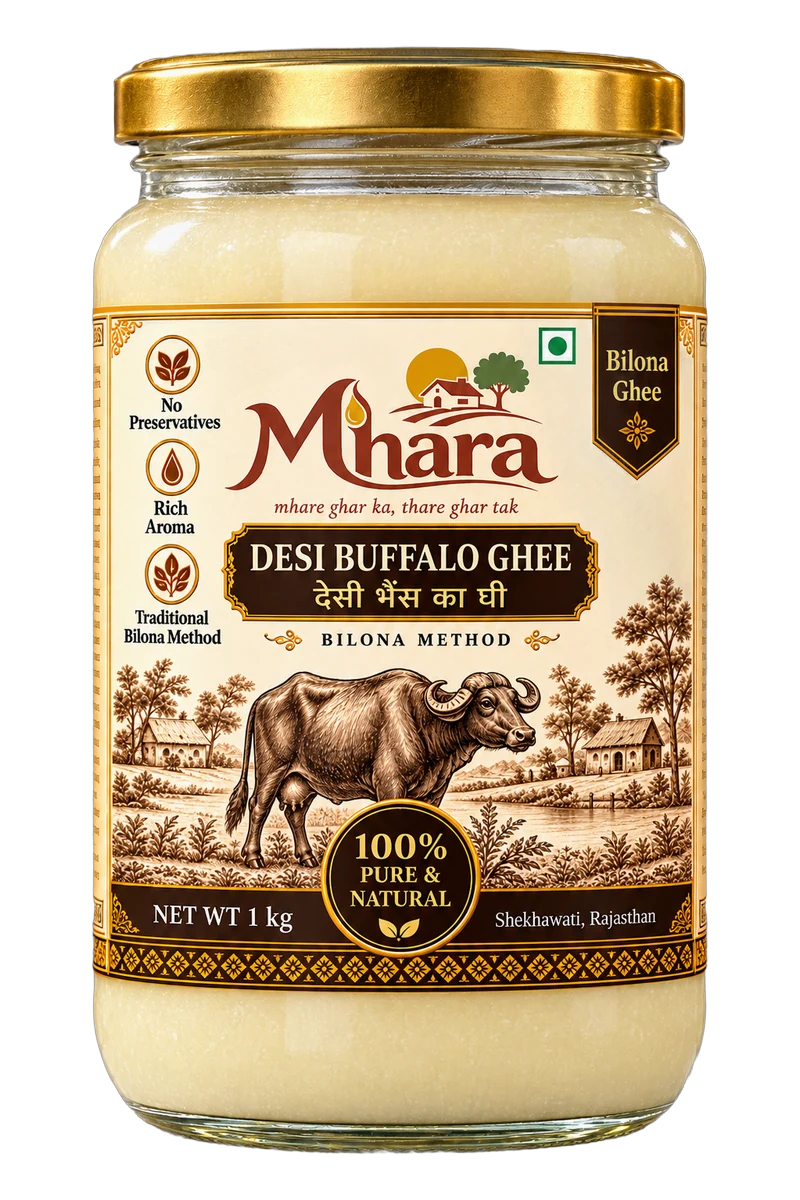
- Buffalo ghee is rich, mild and ivory white. It gives a soft, melt-in-the-mouth laddu. It is our pick for dry fruit, atta-gud and gond laddus when you want a sweet, full taste.
- Desi cow bilona ghee is deep golden with a strong nutty aroma. It suits methi, sonth and alsi laddus, where the ghee has to stand up to the spices.
Both work in every laddu on this list. If you want the difference explained properly, read cow ghee vs buffalo ghee. For winter sweets, our Desi Buffalo Ghee is made from whole buffalo-milk curd, churned with a wooden bilona and slow-cooked in our village kitchen.
How much ghee do laddus really need?
A working village rule for atta-based laddus is about ½ cup of ghee for every cup of atta, plus a little extra if you fry gond in it. That is roughly what our gond laddu recipe uses, and it comes to close to two teaspoons of ghee in each lime-sized laddu.
Til-gud laddus need almost none. Dry fruit laddus need a spoon or two for the whole batch. If an atta laddu crumbles in your palm, add warm melted ghee one tablespoon at a time, not a big pour. Too much ghee makes laddus greasy, and they slump on the plate by evening.
Are sardi ke laddu healthy? An honest answer
Tradition says winter laddus keep the body warm, help stiff joints and help new mothers get their strength back. What is plainly true is that they are dense in energy. Ghee, atta, nuts and jaggery together pack a lot of calories into a small ball, which made sense when people worked in the fields all day in the cold.
Some ingredients have more going for them than others. Flaxseed and sesame bring fibre and useful fats, and nuts are good food. Fenugreek has been studied for blood sugar, but the evidence is limited, and a sweet laddu full of jaggery is not a medicine. None of these laddus cure anything.
- One small laddu a day is plenty. Not five.
- Count its ghee in your day. One atta laddu can take up most of a sensible daily amount of ghee.
- People with diabetes should ask their doctor first. Jaggery and dates are still sugar.
- For new mothers, gond laddu, sonth laddu and panjiri are a strong family custom, but diet after delivery depends on the birth and the mother's health. Follow your family doctor.
- In pregnancy, ask your doctor before eating methi or sonth laddus regularly.
How to store winter laddus
Let them cool fully before you close the box. Warm laddus sweat inside a closed dabba, and that moisture spoils them early. A steel or glass dabba with a tight lid, kept away from the stove, is all you need. If you are sending sardi ke laddu to family in another city, line the dabba with butter paper and pack them snug so they do not break on the way.
If you want a gentler start before the winter batch, our besan ladoo recipe uses the same slow roast and is good practice for your hands.
This is general information from a ghee-making family, not medical advice.
Questions people ask
Which laddu is best to eat in winter?
There is no single best one. Gond ke laddu and atta-gud laddu are the most common in Rajasthani homes. Methi laddus are made for elders, til-gud for Sankranti, and sonth laddu or panjiri for new mothers. Choose by who will eat them and how much bitterness they enjoy.
How long do winter laddus last?
Most winter laddus keep two to four weeks in an airtight steel or glass box at room temperature in the cold months. Gond, methi and til-gud laddus last longest. Dry fruit and alsi laddus are best finished in about two weeks. Always cool them fully before closing the box.
How many winter laddus can I eat in a day?
One small laddu a day is enough for most healthy adults. An atta-based laddu can carry close to two teaspoons of ghee, plus jaggery and nuts, so it is a rich food. If you have diabetes or another health condition, ask your doctor before making it a daily habit.
Which ghee is best for making laddu?
Both cow and buffalo ghee work well. Buffalo ghee is rich and mild and gives a soft, melt-in-the-mouth laddu, which suits dry fruit and atta-gud laddus. Desi cow bilona ghee has a stronger nutty aroma that stands up to spiced laddus like methi and sonth.
Can diabetics eat sardi ke laddu?
Winter laddus contain jaggery or dates, which raise blood sugar like any other sugar. Some people make versions with only nuts and seeds, but these are still high in fat and calories. If you have diabetes, ask your doctor before eating them regularly, and keep the portion small.
Why do my laddus turn hard in winter?
Ghee sets solid in the cold, so laddus firm up overnight in a cold room. That is normal and they soften in the mouth. Laddus that are truly rock hard usually had the jaggery cooked into a thick syrup. Shape them while the mixture is still warm.