
Besan ladoo recipe the slow way (and why yours turn hard or sticky)
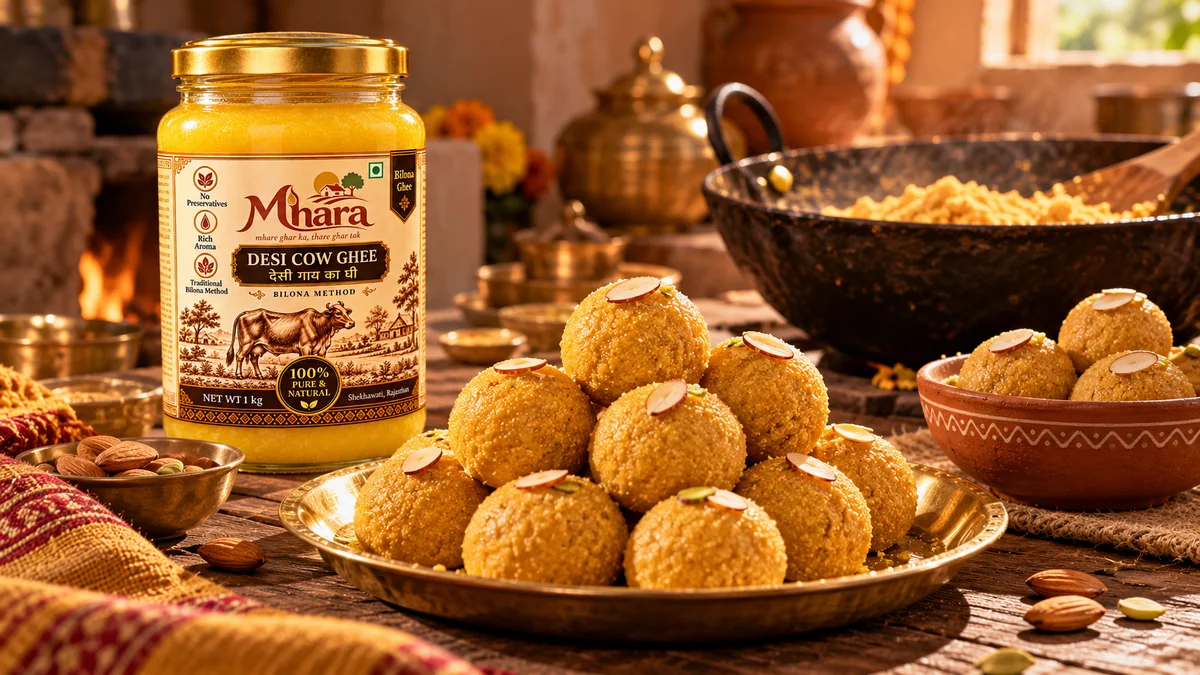
This besan ladoo recipe roasts 2 cups (250 g) of coarse besan in about 130 g of ghee on a low flame for 25 to 30 minutes, until golden and nutty. Cool it to warm, mix in boora and cardamom, and shape. Adding sugar while the besan is hot is what makes ladoos sticky.
There is a moment, about twenty minutes into roasting besan, when the whole kitchen changes. The raw, beany smell that hung over the kadhai is gone, and in its place comes something warm and nutty, close to roasted peanuts and fresh biscuits. In our kitchen nobody watches the clock for besan ladoo. We wait for that smell, and then we wait a few minutes more.
This besan ladoo recipe is the slow way, the way it is made in our Shekhawati kitchen every Diwali. Coarse besan, enough ghee, a low flame and patience. Below you will find the ratio that works, what to look for while roasting, and a plain section on why ladoos turn out hard, sticky or raw, with the fix for each. Exact quantities are in the recipe card.
Besan ladoo recipe: the ratio that works
For about fifteen medium ladoos we use:
- 2 cups (250 g) coarse besan, sold as ladoo besan or mota besan.
- About 1/2 cup plus 2 tbsp (130 g) ghee, with a spoon or two extra kept warm.
- 1 1/4 to 1 1/2 cups (150 to 180 g) boora or powdered sugar, depending on how sweet your family likes it. Weigh it if you can; a cup of fluffy boora weighs less than you think.
- Cardamom, and a handful of chopped almonds, cashews or pistachios.
That is roughly half the weight of besan in ghee. Many recipes cut this down to look lighter, and that is the most common reason for ladoos that are dry and crumble in the hand. The besan needs this much ghee to roast evenly and to bind later.
If you double this besan ladoo recipe for Diwali, use a wider kadhai or roast in two batches. A deep layer of besan roasts unevenly. The bottom browns while the top stays raw, and you end up stirring for forty-five minutes with an aching arm.
Which besan, and which ghee, for besan ladoo?
Coarse besan feels a little sandy between your fingers. It gives the ladoo its grain, the soft bite that melts slowly. Fine besan, the kind for pakoras, works but makes a pasty ladoo that sticks to the teeth. If fine besan is all you have, add two tablespoons of sooji to it.
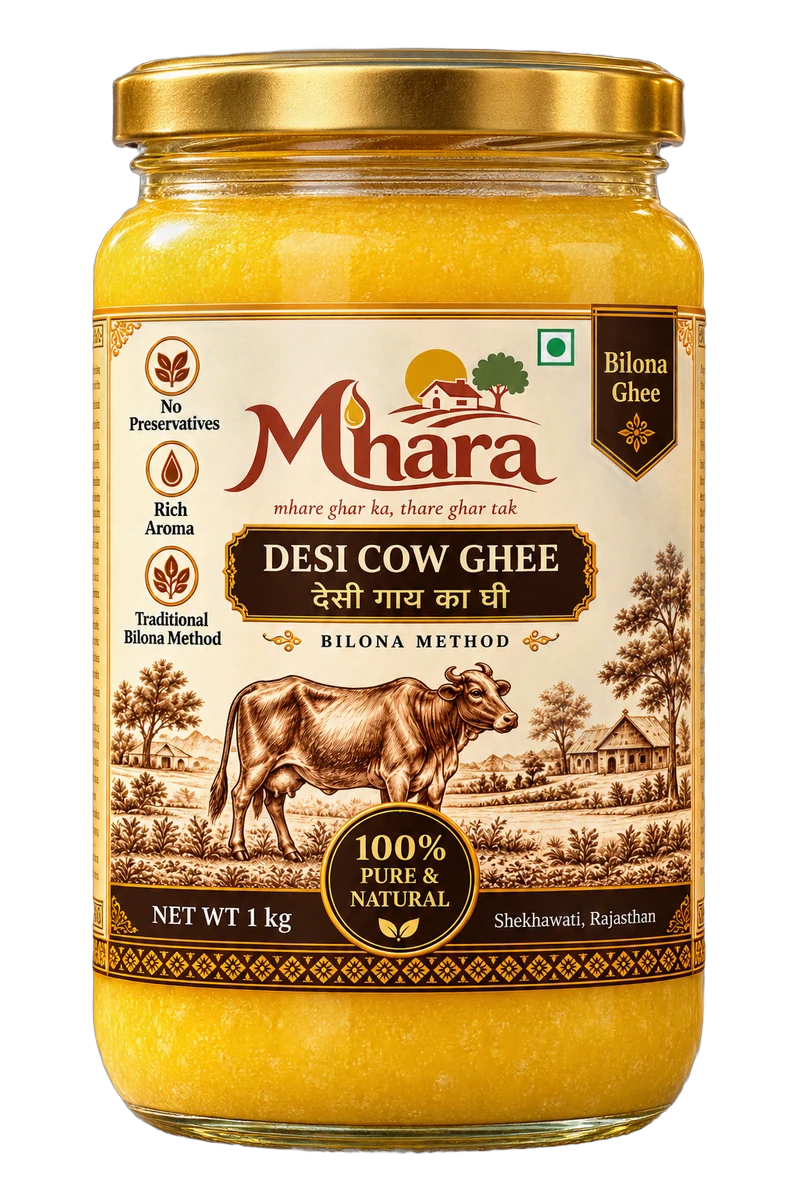
For besan ladoo with ghee, we use cow bilona ghee. This is a sweet where the aroma of the ghee is half the taste, and cow ghee carries that nutty smell straight into the ladoo. Buffalo ghee makes a paler, firmer ladoo that holds its shape well in a warm room, and plenty of families prefer it. We explain the difference in cow ghee vs buffalo ghee.
Whichever you use, it should be real ghee with a clean smell. The besan absorbs every bit of flavour from it, good or bad.
How to roast besan for ladoo
Use a heavy kadhai and keep the flame low from start to end. Melt the ghee, add the besan and start stirring. You will see the mix change in stages:
- The first 5 to 8 minutes. Thick and lumpy, like wet sand. It feels like there is not enough ghee. Do not add more yet.
- Around 10 to 15 minutes. The besan loosens and turns smoother, and the ghee starts to show at the edges. The raw smell begins to fade.
- Around 20 minutes. Light golden, and that nutty, biscuit smell arrives. Most people stop here. Do not.
- 25 to 30 minutes. A deeper golden brown, loose and almost flowing, with small bubbles. Take it off the flame now.
Keep scraping the bottom and the corners of the kadhai the whole time. Besan catches fast, and a few burnt bits make the whole batch bitter. If at around 15 minutes it still looks dry and does not loosen, add a tablespoon of ghee.
The besan keeps cooking in a hot kadhai, so tip it into a wide thali straight away. It will darken by a shade as it sits. This same slow roast is the base of our besan chakki recipe, so once you know the smell, you can make both.
Cooling, sugar and shaping
Spread the roasted besan in the thali and let it cool for 15 to 20 minutes. You want it warm, not hot: you should be able to keep your palm pressed into it comfortably. This is the most important wait in the whole recipe.
Now add the boora or powdered sugar, cardamom and nuts, and mix with your hands until even. Boora, the traditional dry, crumbly sugar, gives the best melt-in-the-mouth texture. Sugar powdered at home in the mixer is next best. Do not use regular granulated sugar; it stays crunchy and the ladoos do not bind.
Take a fistful, squeeze it firmly so it holds, then roll it between your palms into a round. Press an almond sliver on top if you like. If the mixture crumbles, rub in a tablespoon of warm ghee and try again.
Why are my besan ladoos hard, sticky or raw?
When a besan ladoo recipe fails, it almost always comes down to ghee, heat or timing. Here is what usually went wrong.
- Besan ladoo hard: too little ghee, roasting on high heat until the besan turned too dark, or sugar mixed in while the besan was hot so it melted and set like candy. Next time keep the ghee at half the besan's weight and roast on low.
- Besan ladoo sticky or melting: sugar added while the besan was still hot, or too much ghee. Let the mix cool for 10 more minutes, then shape again. If it is very soft, add a spoon of roasted besan or a little more boora.
- Raw, beany taste: under-roasted. Colour alone fools you; trust the smell. You cannot fix this after the sugar goes in, so roast longer next time.
- Cracking while shaping: the mix has cooled too much or is a little dry. Add 1 tablespoon of warm ghee and press firmly.
- Bitter edge: some besan caught at the bottom of the kadhai. Keep scraping, and use a heavy pan.
How long do besan ladoos last?
Let the ladoos sit uncovered for an hour so they set and cool completely, then store them in a closed steel tin or glass jar at room temperature. They keep well for two to three weeks, a little longer in winter. If you added milk while roasting, finish them within about ten days. Warm ladoos packed into a closed tin sweat and go soft at the bottom, so do not rush this.
Because they keep so long and travel well, besan ladoos are the first Diwali ladoo we make, about a week before, and the ones we pack for relatives. If you are planning more, our list of Diwali sweets with desi ghee shows what to make first and what to leave for the last day. For dal baati days, the same village kitchen makes churma ladoo, which uses even more ghee.
Recipe card
Ingredients
- 2 cups (250 g) coarse besan (ladoo or mota besan)
- 1/2 cup + 2 tbsp (about 130 g) cow bilona ghee
- 1–2 tbsp extra ghee, warm, if needed while roasting or shaping
- 1 1/4 to 1 1/2 cups (150–180 g) boora or finely powdered sugar
- 1/2 tsp green cardamom powder
- 2 tbsp chopped almonds and cashews
- 1 tbsp chopped pistachios
- 1 tbsp milk (optional, for a more danedar texture)
- A few almond slivers to press on top (optional)
Method
- Melt the ghee in a heavy kadhai on a low flame and add the besan.
- Stir and scrape continuously. For the first 5–8 minutes it will look thick and lumpy; do not add more ghee yet.
- Keep roasting on low. By 10–15 minutes it loosens and the ghee shows at the edges. If it still looks dry, add 1 tbsp ghee.
- Continue for 25–30 minutes in all, until the besan is golden brown, loose and smells nutty like biscuits.
- If using milk, sprinkle 1 tbsp over the besan and keep stirring for 2–3 minutes, until the froth settles and the besan looks loose again.
- Tip the besan into a wide thali at once so it stops cooking in the hot kadhai.
- Let it cool for 15–20 minutes until warm, not hot. You should be able to keep your palm in it comfortably.
- Add the boora or powdered sugar, cardamom, almonds, cashews and pistachios, and mix with your hands until even.
- Take a fistful, squeeze it firmly, then roll it between your palms into a round ladoo. Press an almond sliver on top if you like.
- If the mixture crumbles, rub in 1 tbsp warm ghee. If it is too soft, let it cool 10 minutes more.
- Leave the ladoos uncovered for about an hour to set, then store in an airtight tin for 2–3 weeks (about 10 days if you added milk).
Questions people ask
How much ghee do I need for besan ladoo?
Use roughly half the weight of besan in ghee. For 2 cups (250 g) of besan, that is about 1/2 cup plus 2 tablespoons (130 g) of ghee, with a spoon or two extra kept warm in case the mixture is dry when shaping.
Why are my besan ladoos hard?
Usually there was too little ghee, the besan was roasted on high heat until too dark, or the sugar went in while the besan was hot and set like candy. Keep the ghee at half the besan's weight, roast on low and cool to warm before adding sugar.
Why are my besan ladoos sticky and not holding shape?
The sugar was probably added while the besan was still hot, so it melted, or there was too much ghee. Let the mixture cool for another 10 minutes and shape again. If it is still soft, mix in a little more boora.
How do I know when the besan is roasted enough?
Go by smell first. On a low flame it takes 25 to 30 minutes. The raw smell disappears, a nutty, biscuit-like aroma comes, the besan turns golden brown and becomes loose and almost flowing. Stopping at light yellow leaves a raw taste.
Can I use normal sugar in besan ladoo?
Not granulated sugar straight from the packet. It stays crunchy and the ladoos do not bind well. Use boora, the traditional dry sugar, or grind regular sugar to a fine powder at home in the mixer before adding it.
How long do besan ladoos stay fresh?
Kept in a closed steel tin or glass jar at room temperature, besan ladoos stay fresh for two to three weeks, a little longer in winter. Let them cool and set fully for about an hour before closing the tin.