Ghee residue uses: 7 ways our kitchen uses the khurchan
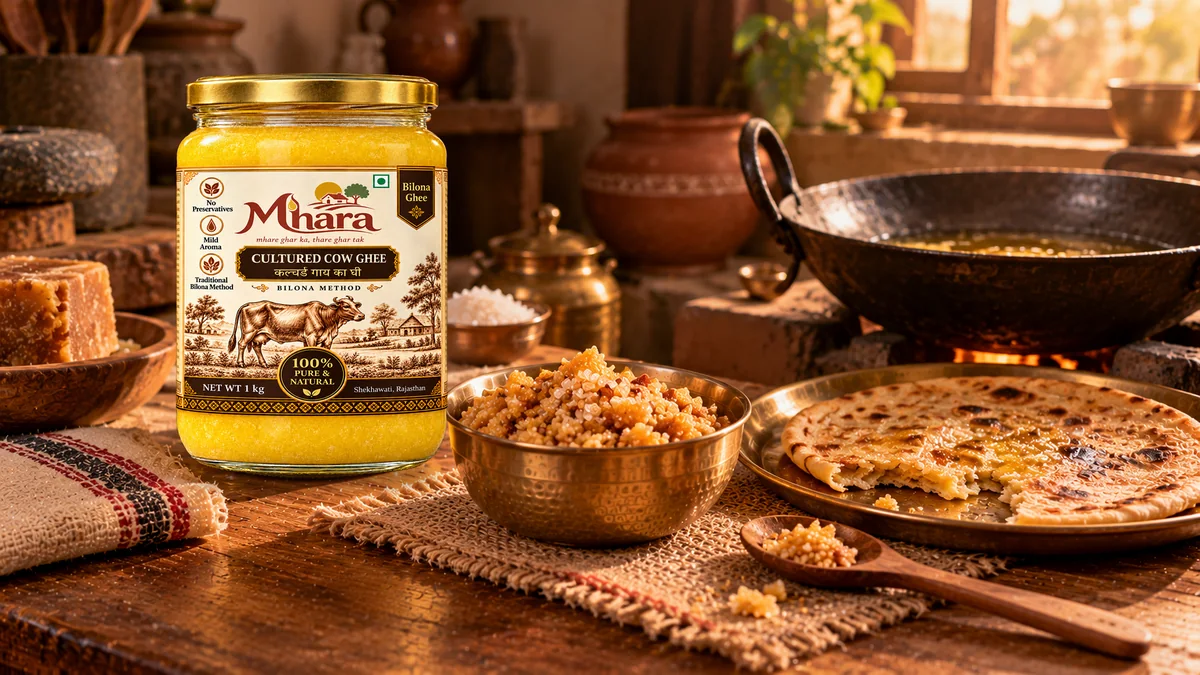
The best ghee residue uses are the simplest: mix the golden-brown khurchan with sugar, knead it into paratha atta, stir it into dal or kadhi, or turn it into a quick barfi. It is toasted milk solids, so keep it in the fridge and finish it within four or five days.
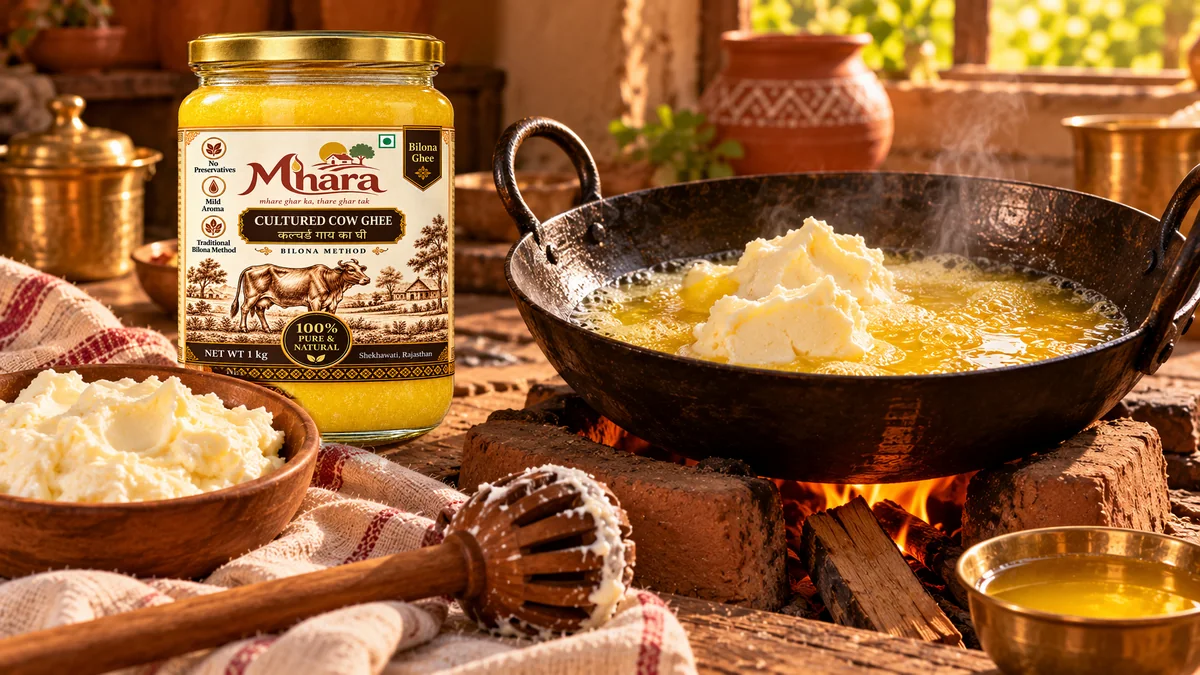
When the ghee has been strained and the jar is set aside to cool, there is a small race in our kitchen for the kadhai. At the bottom sits a crumbly golden-brown layer, still warm, smelling of toasted milk. Whoever gets there first scrapes it out with a steel spoon and sprinkles a little boora over it, and any children in the house already have their hands out. That brown layer is khurchan, and there are more good ghee residue uses than most people realise. These are the seven we come back to.
What is ghee residue, or khurchan?
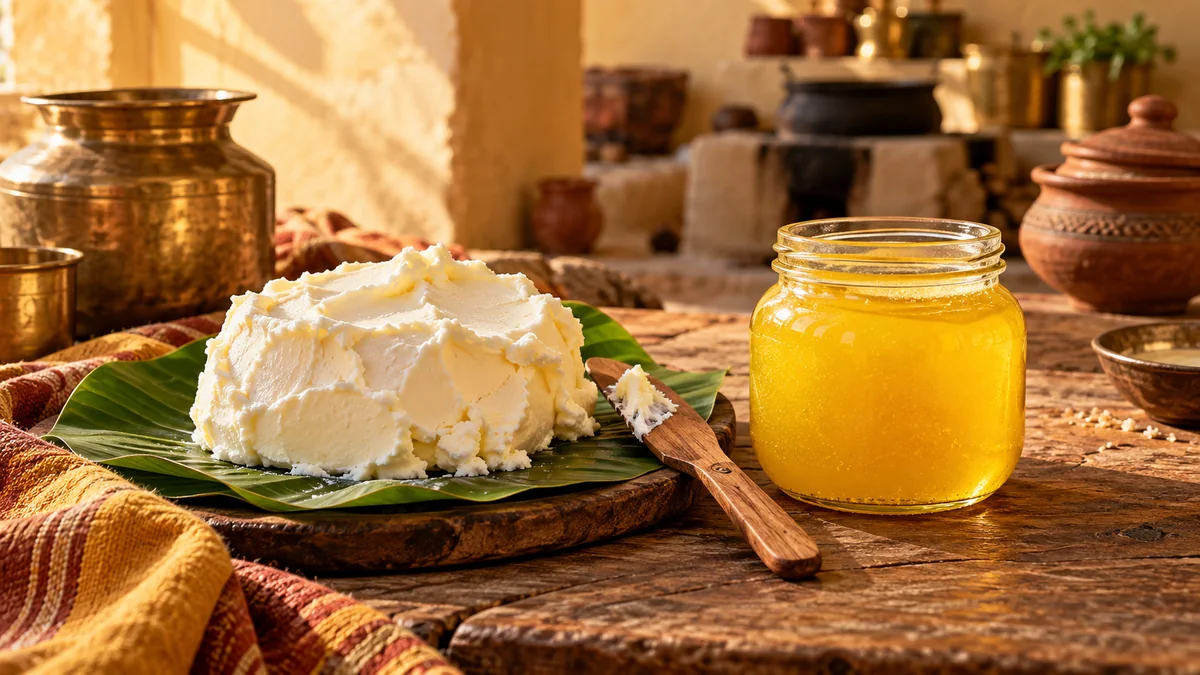
When makkhan or malai is cooked into ghee, the water boils off and the milk solids, mostly protein with a little milk sugar, separate from the fat. They sink to the bottom and slowly toast in the hot ghee, turning from white to golden-brown. That is the residue. It still holds a fair amount of ghee, which is why it tastes so rich.
Homes call it by different names. Khurchan, from scraping the kadhai. Kitt in some villages. Ghee ki tali, the bottom of the ghee. In English recipes you may see it called ghee residue or brown butter solids. It is all the same thing.
Good khurchan vs burnt: when to throw it away
- Golden to medium brown, nutty smell, a little sweet: perfect. Use it.
- Dark brown, slightly bitter at the edges: still fine in savoury food like dal or paratha, where spices cover it.
- Black, smoky or bitter: throw it away. Burnt khurchan tastes harsh, and nothing you mix it into will hide that. Taste the ghee as well, because if the solids burnt, the ghee may have caught a burnt smell too.
Good khurchan starts in the kadhai. Switch off when the solids are golden-brown. Our step-by-step guide on how to make ghee at home shows that moment.
Ghee residue uses: 7 ways our kitchen uses the khurchan
1. With sugar, the village children's treat
Warm khurchan, a spoon of boora or powdered sugar, mixed with a finger. That's all. It tastes like a rough, toasty milk sweet, somewhere between mawa and caramel. Some homes use crushed gur instead. This is the oldest of all ghee residue uses, and in winter a bowl rarely lasts an hour.
2. In atta for parathas and rotis
Crumble two or three tablespoons of khurchan into the atta for four or five parathas and knead as usual. The parathas turn out soft and flaky, and they smell of ghee. It works in bajra atta too, and a little in missi roti dough is lovely. Add salt and ajwain if you want it savoury.
3. Khurchan barfi or ladoo with atta
The most festive use. Roast half a katori of wheat atta in a spoon of ghee until it smells nutty. Turn off the flame, then add one katori of khurchan, a third of a katori of boora and a pinch of cardamom. Taste, add more sugar if you like, and mix well while warm. Press it into a greased plate and cut barfi once it sets, or roll small ladoo between your palms. It tastes a little like homemade milk cake. If you enjoy this, our churma recipe works on the same idea of atta roasted with ghee.
4. In dal tadka and kadhi
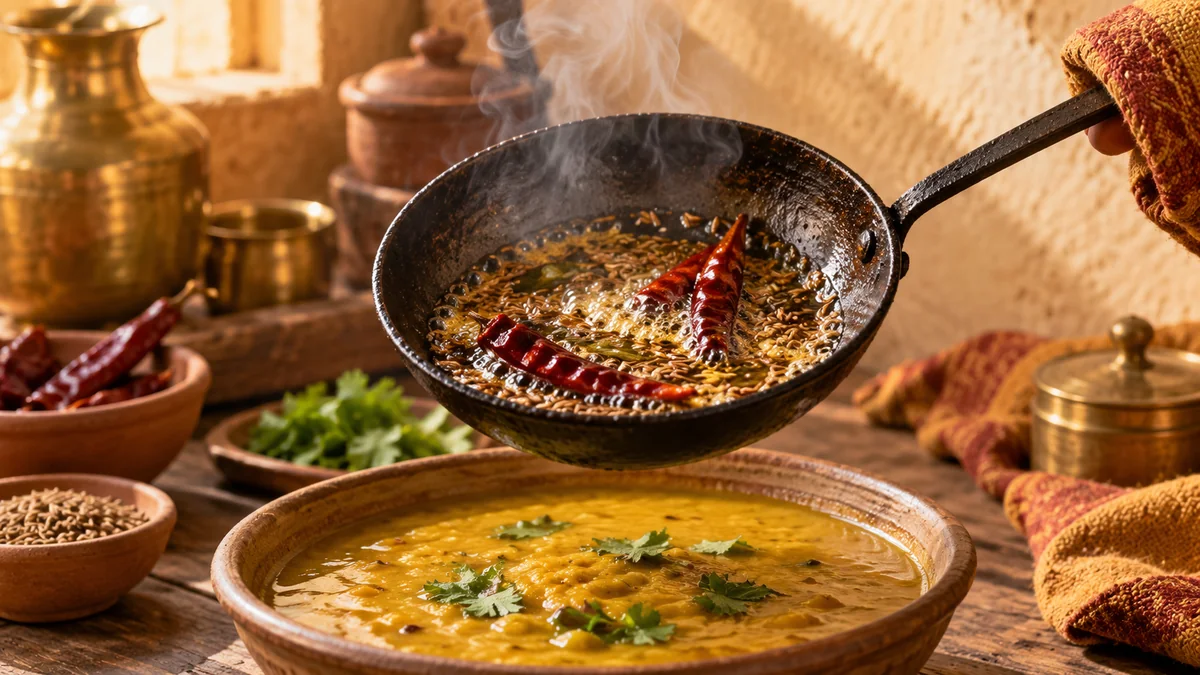
Add a spoonful of khurchan to dal while it simmers, or stir it into the tadka at the end. It gives the dal a deep, slightly sweet roasted note. In Rajasthani kadhi, a little khurchan stirred in just before serving makes it richer without adding more ghee to the tadka.
5. On hot rice or khichdi
A teaspoon of khurchan over hot rice and dal, or crumbled on moong dal khichdi, is a small comfort. Children who refuse plain khichdi often eat it this way.
6. In cakes, cookies and nankhatai
Khurchan behaves a lot like brown butter. Swap a few tablespoons of the butter or ghee in a cake, cookie or nankhatai recipe for khurchan, and the bake gets a toffee-like, toasted milk flavour. Keep the amount small, because it adds moisture and milk solids.
7. On halwa, kheer or sheera
Sprinkle a spoon of khurchan over suji halwa, atta sheera or kheer just before serving. It adds a little crunch and a mawa-like taste for no extra work.
Why there's no khurchan in a jar of ghee
If you buy your ghee, khurchan doesn't come with it. The solids are strained out before the ghee goes into the jar, and good ghee should be free of them. People sometimes mistake the grains in a danedar jar for residue. They are not. Those grains are the ghee itself, set slowly into crystals, and they melt the moment they touch a hot roti. We explain this in danedar ghee.
A few dark specks at the very bottom of a homemade jar are bits of khurchan that slipped through the strainer. They are harmless, though they can shorten the ghee's life a little. So if you love khurchan, the only way to get it is to make a batch of ghee yourself, and for everyday cooking in between, a good jar does the job.
How long does khurchan last, and how to store it
Ghee keeps for months because it has almost no water in it. Khurchan is different. It is milk solids with some moisture still inside, and that makes it spoil quickly. Keep it in a clean, airtight box in the fridge and finish it within four or five days. If it smells sour or cheesy, or shows any mould, throw it out. Warm it in a pan for a minute before using and it softens again.
If a lot of ghee is still clinging to the khurchan, press it in a strainer while warm to get some of that ghee back, then store the solids. The ghee you press out keeps like the rest of your jar, and our how to store ghee guide covers that.
Is ghee residue healthy?
Khurchan is rich: milk protein and a little milk sugar, plus the ghee it holds. That makes it tasty and filling, and also heavy. Treat it like a sweet, not a health food, and a spoon or two in a dish is plenty. Since the residue is where the milk protein and milk sugar end up, people who don't do well with milk may find it harder to digest than ghee itself.
Used that way, a spoonful at a time, khurchan is one of the small rewards of making ghee at home. In our village nobody would dream of throwing it out, and once you have had it warm with a little boora, you won't either.
Questions people ask
What is ghee residue called?
In most Indian homes it is called khurchan, from scraping the kadhai. Some villages call it kitt, and others say ghee ki tali, the bottom of the ghee. In English it is known as ghee residue or brown butter solids. They are toasted milk solids left after making ghee.
Can we eat ghee residue?
Yes, if it is golden to medium brown and smells nutty. Families eat it with sugar, in parathas, dal, barfi and halwa. If the residue is black, smoky or bitter, it has burnt and should be thrown away.
How long can I store ghee residue?
Keep khurchan in a clean, airtight box in the fridge and use it within four or five days. Unlike ghee, it still has some moisture, so it spoils quickly. Throw it out if it smells sour or shows mould.
How do you make khurchan barfi?
Roast half a katori of atta in a spoon of ghee until nutty. Off the flame, mix in one katori of khurchan, about a third of a katori of boora and a pinch of cardamom. Press into a greased plate, let it set and cut into pieces.
Why is my ghee residue black and bitter?
The ghee was cooked on too high a flame or for too long, so the milk solids burnt. Next time, cook on a low flame and switch off when the solids are golden-brown. The hot ghee keeps cooking them for a minute after.
Are the grains in danedar ghee residue?
No. The grains in danedar ghee are the ghee itself, crystallised as it cooled slowly. They melt as soon as they touch something hot. Khurchan is strained out before ghee is jarred.