
Gond ke laddu recipe: the Shekhawati winter laddu, step by step
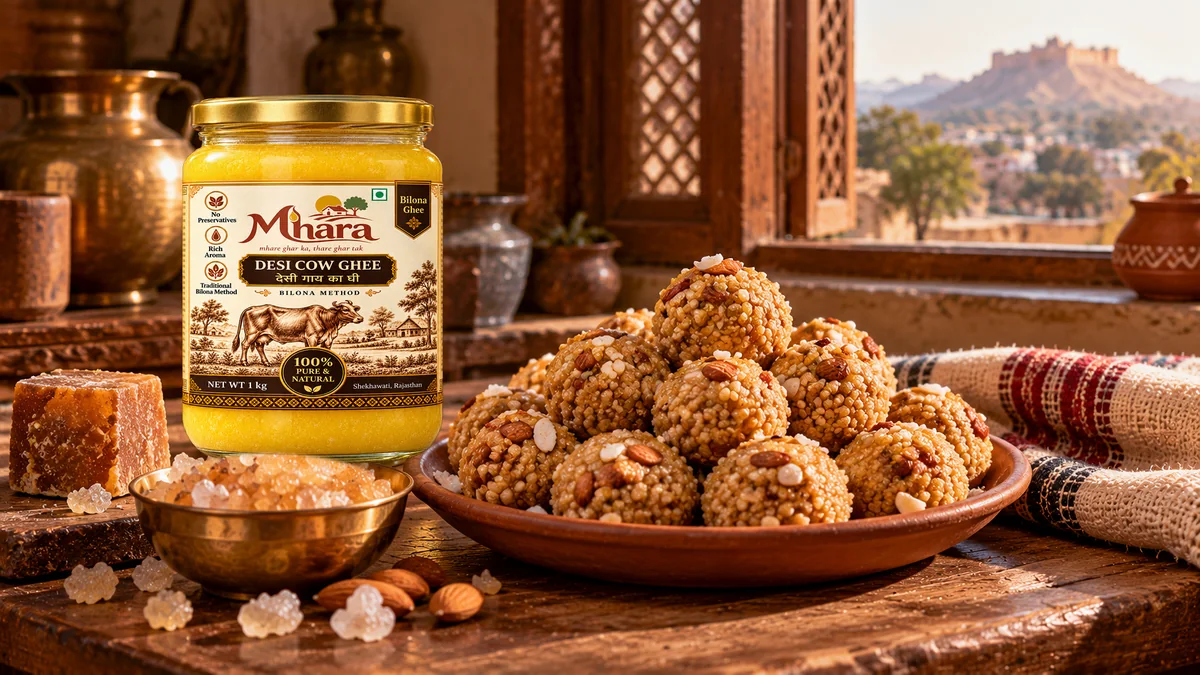
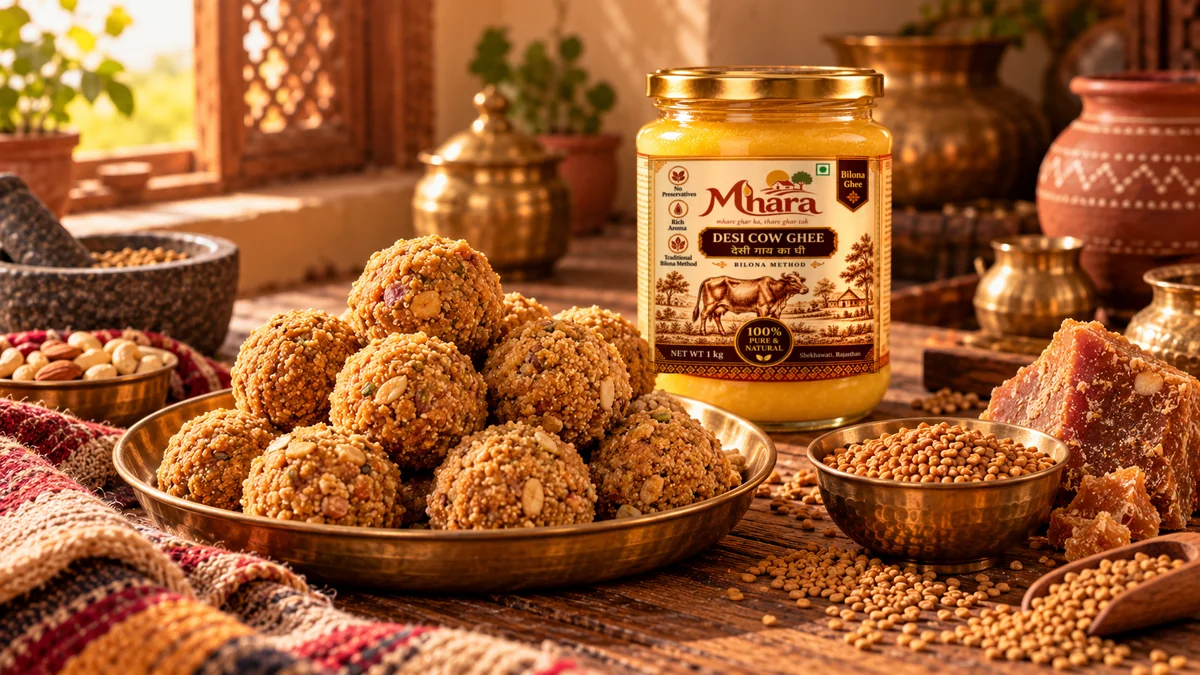
This gond ke laddu recipe fries edible gum (gond) in ghee until it puffs, then mixes it with whole wheat atta roasted in ghee, dry fruit, dry coconut, cardamom and jaggery or boora. The laddu are shaped while warm and keep for three to four weeks.
In Shekhawati, winter mornings start at around 4 °C, and by the first week of December most kitchens in our village have a steel dabba of gond ke laddu on the top shelf. One with a glass of hot milk before going out to the fields, and the cold feels a little further away. When a baby is born in the family, the same laddu arrive in bigger dabbas, made by the elders of the house. This gond ke laddu recipe is the one we make at home: gond puffed in ghee, atta roasted in ghee, dry fruit, a little dry ginger (sonth), and jaggery to bind it all.
It is not hard to make. It needs one hour, a heavy kadhai and a willingness to handle warm laddu mixture with your bare hands.
What is gond, and which one should you buy?
Gond is edible gum, the dried resin of the acacia (babool) tree. It comes as hard, pale yellow to light brown crystals, sold loose at kirana and pansari shops, especially in winter. In Maharashtra the same laddu are called dink ladoo.
Do not confuse it with gond katira. Gond katira is a different gum, whitish and flaky, that is soaked in water and added to summer drinks. It does not puff in ghee and it will not work here. If you are not sure, ask the shopkeeper for the gond used in laddu.
Buy clean, clear crystals without bits of bark. If the pieces are bigger than a chickpea, put them in a cloth and tap them with a rolling pin to break them down. Small, even pieces fry evenly.
Frying gond in ghee until it puffs
This is the one step that can go wrong. Heat about ⅓ cup of ghee in a kadhai on a medium flame. Drop in one piece of gond. If it puffs up white within a few seconds, the ghee is ready. If it sinks and sits there, the ghee is too cool. If it browns at once, it is too hot.
Fry the gond in small batches, a tablespoon or two at a time, stirring. Each piece should swell to two or three times its size and turn white and crunchy, like a tiny piece of popcorn. Lift it out with a slotted spoon. Once cool, crush it with the bottom of a katori or a rolling pin. Some people like it in small chunks, others nearly powdered.
Test one before moving on. Bite it. It should crunch and then melt. If it is chewy or sticks to your teeth, it did not puff fully. Fry it again. Chewy gond in a laddu is the most common complaint, and it is entirely avoidable.
Roasting the atta
Use whole wheat atta, coarse if you can get it. Add about ½ cup of ghee to the kadhai along with whatever is left from frying the gond. Add 2 cups of atta and roast on a low flame, stirring all the time, for 20 to 25 minutes. It is done when the colour turns light brown, the mixture loosens and the kitchen smells like freshly roasted wheat, close to the smell of a good atta halwa.
Keep the flame low. Atta burns easily, and burnt atta makes the whole batch bitter. Our besan chakki recipe and besan ladoo recipe use the same slow roast with besan, if you want to practise on something smaller.
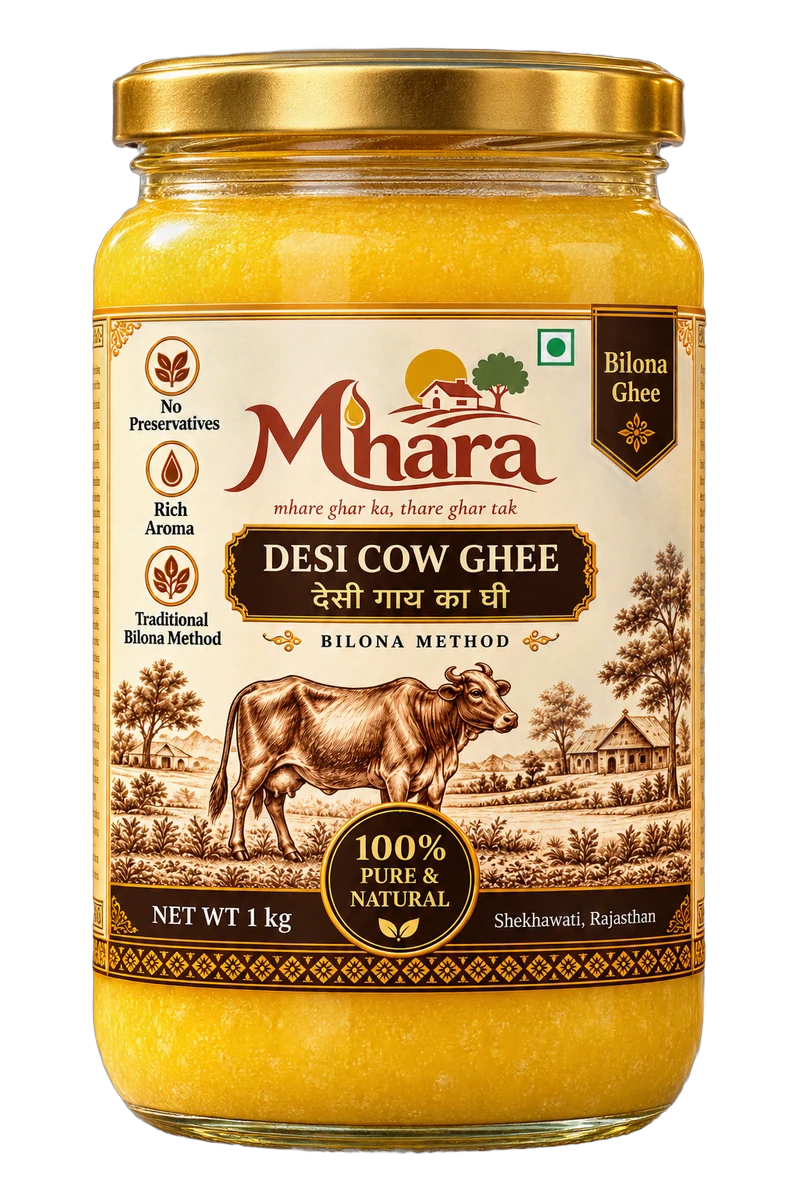
The ghee you roast in becomes the taste of the laddu, so this is a good place for desi cow bilona ghee. Its nutty aroma goes deep into the roasted atta and pairs well with jaggery. Buffalo ghee also works and gives a richer, softer laddu.
Jaggery or boora, dry fruit and sonth
While the atta roasts, prepare the rest:
- Nuts: ½ cup each of almonds and cashews, lightly roasted in a spoon of ghee and chopped coarse. Some families also add ½ cup of roasted, crushed makhana.
- Dry coconut: ½ cup grated, roasted for a minute in the kadhai until it smells toasty.
- Spice: 1 teaspoon cardamom powder and 1 teaspoon sonth (dry ginger powder). Sonth is optional but traditional in winter laddu.
- Sweetness: 1 cup (200 g) grated jaggery or boora. Jaggery is the village choice. Boora gives a lighter, sweeter laddu.
Mix the roasted atta, crushed gond, nuts, coconut and spices in a large parat. Let it cool until you can hold your hand in it comfortably, then add the jaggery or boora and mix well. If you add jaggery to very hot atta, it melts into lumps.
Gond ke laddu recipe: shaping while warm
Take a fistful of the warm mixture and press it hard in your palm. Then roll it into a round laddu between both palms. If it holds, keep going. If it crumbles, add 1 to 2 tablespoons of warm melted ghee and mix again. Warm ghee is the only fix you need.
Shape all the laddu while the mixture is warm. As it cools, the ghee sets and the mixture stops binding. If that happens, warm it for a minute in the kadhai on the lowest flame. This quantity gives 18 to 20 laddu, each about the size of a lime.
Gond laddu benefits: what tradition says, honestly
Gond ke laddu are made for winter and for new mothers after delivery because they are dense in energy: ghee, wheat, nuts and jaggery in one bite. In our tradition they are said to keep the body warm and help a mother recover her strength. Gond itself is mostly soluble fibre.
What there is not is good scientific evidence that gond laddu do anything special beyond being a filling, calorie-rich food. Most of the "benefits" you read online are tradition, not research. That does not make them useless. It means one laddu a day is plenty, not three. Each laddu from this batch carries close to two teaspoons of ghee, which is already most of a sensible daily amount, as we explain in how much ghee per day.
For new mothers, diet after delivery depends on the birth, weight and any conditions like diabetes, so check with your doctor before following any family plan. We wrote more about this in ghee in pregnancy. People with diabetes should be careful with the jaggery.
Troubleshooting and how long they keep
- Chewy gond: not puffed fully. Fry in hotter ghee next time.
- Laddu won't bind: mixture too cold, or not enough ghee. Warm it, add warm ghee.
- Bitter taste: atta or gond burnt on a high flame.
- Too hard: jaggery cooked into a syrup.
Gond ke laddu keep 3 to 4 weeks in an airtight steel or glass box at room temperature through winter. Let them cool fully before closing the box. If you are sending them to family in another city, pack them in a steel dabba lined with butter paper. A gond ke laddu recipe like this one travels well, because there is no milk or water in it to spoil.
Recipe card
Ingredients
- 1/2 cup (60–70 g) edible gum (gond), broken into chickpea-sized pieces
- About 1 cup (200 g) desi cow bilona ghee in all: 1/3 cup to fry the gond, 1/2 cup to roast the atta, the rest to bind
- 2 cups (250 g) whole wheat atta, coarse if possible
- 1/2 cup (70 g) almonds
- 1/2 cup (70 g) cashews
- 1/2 cup (40 g) grated dry coconut
- 1/2 cup roasted makhana, crushed (optional)
- 1 tsp green cardamom powder
- 1 tsp sonth (dry ginger powder), optional
- 1 cup (200 g) grated jaggery or boora
Method
- Heat 1/3 cup ghee on a medium flame. Test with one piece of gond: it should puff white within a few seconds.
- Fry the gond in small batches, stirring, until each piece swells and turns white and crunchy. Lift out and let cool.
- Bite a piece. If it is chewy, fry it again. Crush the puffed gond with a katori or rolling pin.
- Lightly roast the almonds and cashews in a spoon of ghee and chop them coarse. Roast the coconut for a minute until it smells toasty.
- Add 1/2 cup ghee to the kadhai with the leftover ghee. Add the atta and roast on a low flame, stirring, for 20–25 minutes until light brown and fragrant.
- In a large parat, mix the roasted atta, gond, nuts, coconut, makhana, cardamom and sonth.
- Let it cool until you can comfortably hold your hand in it, then mix in the jaggery or boora.
- Press a fistful. If it crumbles, add 1–2 tbsp warm melted ghee and mix again.
- Shape into laddu while the mixture is warm. If it cools and stops binding, warm it for a minute on the lowest flame.
- Cool fully, then store in an airtight box at room temperature for 3–4 weeks.
Questions people ask
Why is the gond in my laddu chewy?
The gond did not puff fully while frying, usually because the ghee was not hot enough or too much went in at once. Fry small batches in medium-hot ghee until each piece swells, turns white and crunches when you bite it.
What is the difference between gond and gond katira?
Gond is edible acacia gum that puffs in hot ghee and is used in winter laddu. Gond katira is a different gum that is soaked in water for summer drinks. Gond katira does not puff in ghee and will not work in this recipe.
How many gond ke laddu can I eat in a day?
One a day is plenty for most adults. Each laddu is rich in ghee, wheat, nuts and jaggery, so it is a filling, high-calorie food. If you are watching your weight or blood sugar, keep it occasional and check with your doctor.
Are gond ke laddu good after delivery?
They are a traditional food for new mothers in many Indian families because they are energy-dense. There is little scientific research on specific benefits. Diet after delivery depends on the mother's health, so check with your doctor before following any plan.
Why are my gond laddu not binding?
The mixture is either too cold or has too little ghee. Warm it for a minute in the kadhai on the lowest flame, add 1 to 2 tablespoons of warm melted ghee, and shape the laddu while the mixture is still warm.
How long do gond ke laddu last?
About 3 to 4 weeks in an airtight steel or glass box at room temperature in winter. Let them cool fully before closing the box so no steam stays inside, and keep the box away from the stove.