
Methi ke Laddu Recipe: Not Bitter, the Shekhawati Way
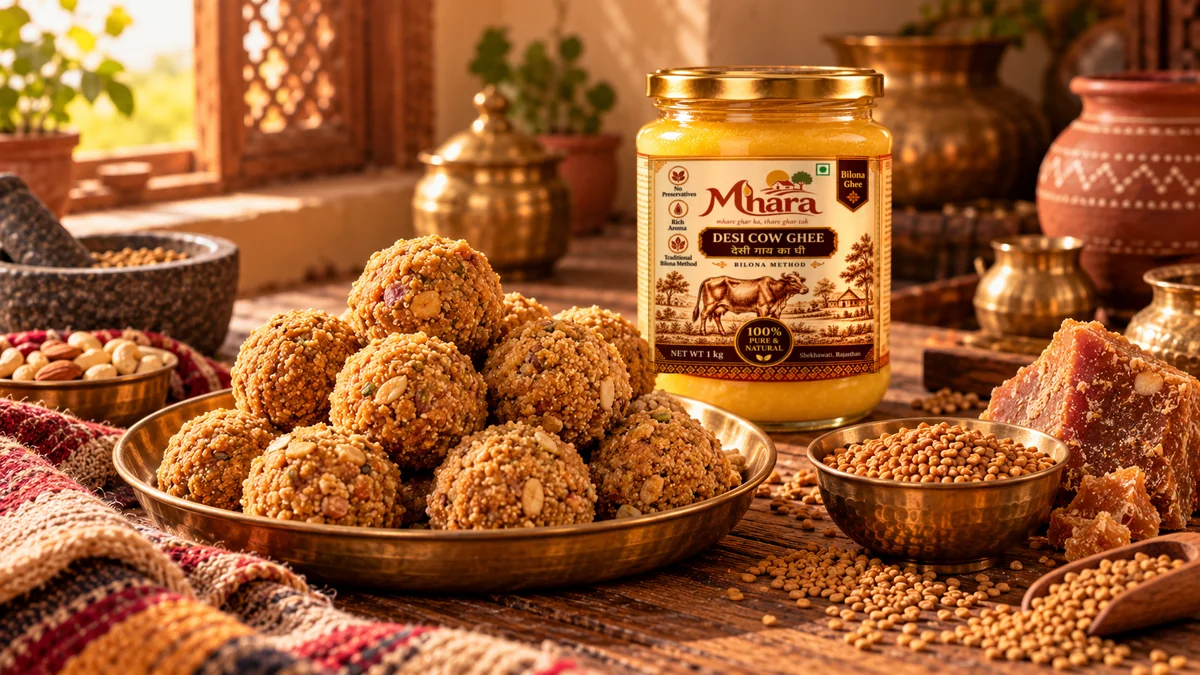
This methi ke laddu recipe makes about 20 Rajasthani winter laddus from whole wheat atta roasted in desi ghee, methi dana soaked overnight in milk to soften its bitterness, fried gond, sonth, nuts and melted jaggery. Keep methi to about a sixth of the atta and roast on a low flame.
Around the end of November, when the nights in our village drop to 4 or 5 °C and the morning curd takes longer to set, a new smell comes out of Shekhawati kitchens: wheat roasting slowly in ghee, with something sharp and slightly bitter underneath. That is methi. This methi ke laddu recipe is the way we make them at home, with the methi dana soaked overnight in milk so the laddus taste warm and nutty instead of harsh.
Many people are wary of methi laddu because one bad batch can be so bitter that nobody finishes the tin. The bitterness is manageable. It depends on how much methi goes in, how the seeds are treated first, and how well the atta is roasted. Exact quantities for about 20 laddus are in the recipe card.
What are methi ke laddu?
Methi ke laddu are winter laddus made from whole wheat atta roasted in ghee, ground fenugreek seeds (methi dana), edible gum (gond), dry ginger (sonth), nuts and jaggery. In Rajasthani homes they sit in a steel dabba from November to February, one eaten each morning with tea or milk. They belong to the same family as gond and til laddus, which we have written about together in sardi ke laddu.
A good methi laddu is mostly atta, ghee and jaggery. The methi is a flavour, not the base. If the first thing you taste is bitterness, either there was too much methi or it went in untreated.
How much methi should go into methi laddu?
This is where many recipes go wrong. Some use almost as much methi as atta, and the result tastes more like a home remedy than a sweet. In our kitchen we keep methi at about one-sixth of the atta by weight: 50 g of methi seeds (a little over 1/4 cup) to 300 g of atta (2 1/2 cups). That gives a clear methi taste which the jaggery and roasted wheat can balance.
If the family is not used to the taste, start with 40 g. You can add more next winter, but you cannot take bitterness out of a finished batch.
How to remove bitterness from methi dana
There are two home methods. We prefer the first.
- Soak in milk overnight. Grind the methi seeds to a fine powder, stir it into 1/2 cup of warm milk, cover and leave for 8 to 10 hours. The powder swells into a thick paste. Next day it is roasted dry in a little ghee. The milk softens the sharp edge of the bitterness.
- Dry roast, then grind. If you forgot to soak, roast the whole seeds in a dry kadhai on a low flame for 4 to 5 minutes, until they turn one shade darker and smell nutty. Cool and grind. Quicker, but a little more bitter.
Two warnings. Never let the seeds go dark brown, because burnt methi is far more bitter than raw methi. And if you soak in milk, the paste must be roasted until it is dry, crumbly and leaves the sides of the pan. Moisture left in it is the usual reason methi laddu spoil in a week instead of a month. In a warm kitchen, soak the methi in the fridge.
Roasting the atta, the step that decides everything
Use whole wheat atta, coarse if your chakki will grind it that way, because it gives the laddu a pleasant grain. Roast it in ghee on a low flame for 20 to 25 minutes, stirring the whole time and scraping the bottom of the kadhai. You will know it is done when:
- the colour has moved from pale cream to a light biscuit brown,
- the smell is nutty, like biscuits baking,
- the mixture has turned loose and light, and ghee shows at the edges.
Under-roasted atta tastes raw and pasty, and it makes the methi taste even more bitter. Keep the flame low throughout. A high flame browns the flour outside while it stays raw inside, and there is no reason to push ghee anywhere near its smoke point.
What else goes into a methi ke laddu recipe?
- Gond (edible gum): fried in hot ghee until each piece puffs up white and crunchy, then crushed. Half-puffed gond stays chewy. Our gond ke laddu recipe shows this step in detail.
- Sonth (dry ginger powder): a gentle warmth that suits methi. About 1 1/2 teaspoons.
- Ajwain: optional. A teaspoon added in the last minute of roasting the atta.
- Nuts: almonds and cashews, lightly roasted and chopped coarse. Some homes add dry coconut or makhana.
- Cardamom: a teaspoon of powder rounds off the sweetness.
Which ghee for methi laddu, and how much?
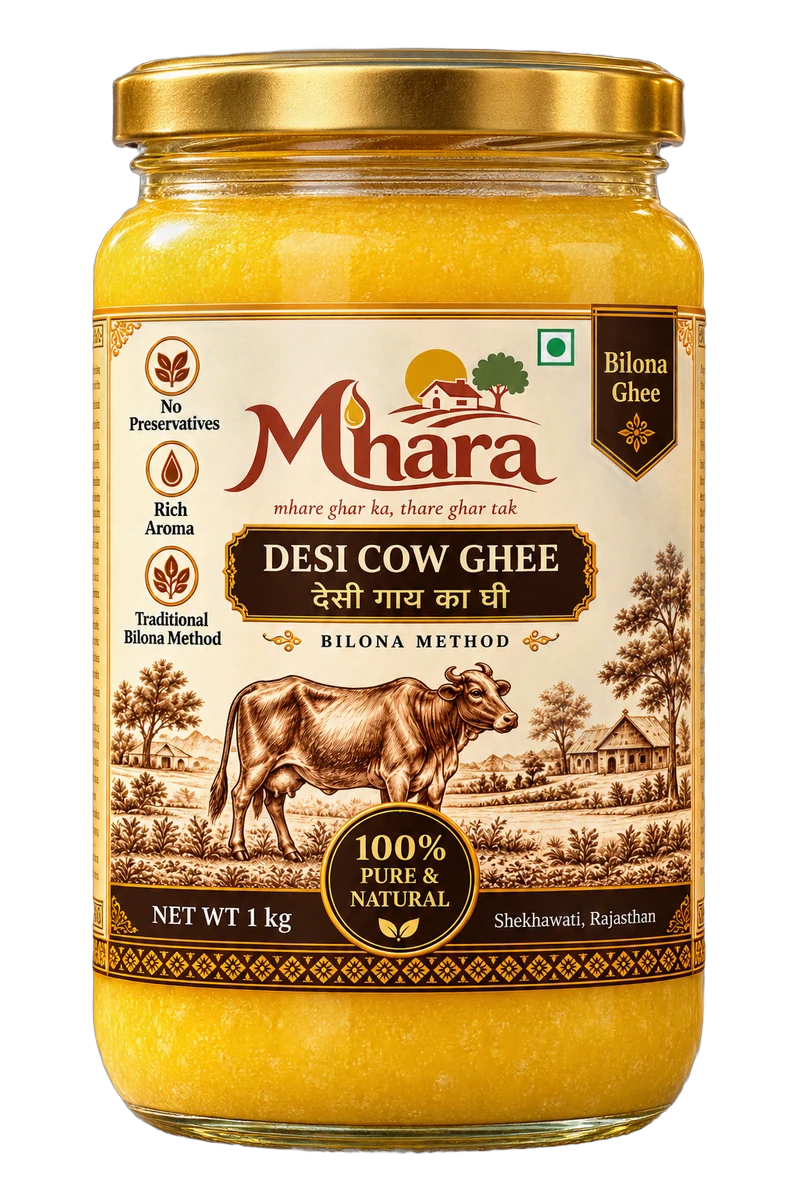
We use desi cow bilona ghee for methi laddu. Its strong, nutty aroma stands up to methi and gives the laddus a golden colour. Buffalo ghee makes a richer, softer laddu, though its milder smell lets the methi come forward more.
The whole batch takes about 1 cup plus 2 tablespoons (around 225 g) of ghee, used in stages, with the largest share going to roast the atta. That works out to a little over two teaspoons of ghee in each laddu. One laddu already covers much of a sensible daily amount, as we explain in how much ghee per day.
Binding with jaggery, and fixing common problems
Many Rajasthani homes melt the jaggery with a little ghee and a spoon of water on the lowest flame, only until it turns liquid and starts to bubble at the edges. Do not cook it further into a syrup, because a thick syrup sets hard and the laddus turn rock-like. Pour it over the warm atta mixture and mix quickly, first with a spoon, then by hand.
Press a fistful. If it holds its shape, start making laddus straight away while the mixture is warm. Once it cools, the ghee sets and the laddus crack.
- Won't bind: the mixture has cooled, or there is too little ghee. Warm it for a minute on the lowest flame and add 1 to 2 tablespoons of warm ghee.
- Too hard: the jaggery was cooked too long.
- Too bitter: too much methi, or seeds roasted too dark.
- Raw, pasty taste: atta under-roasted or roasted on a high flame.
Methi ladoo benefits: what is true and what is not
Elders in the village say methi laddu keep the body warm in winter and help stiff joints. In many North Indian homes they are also given to new mothers in the weeks after delivery. That is tradition, worth respecting, but not proof.
On the science side, fenugreek seeds have been studied mostly for blood sugar, and some small studies suggest a modest effect. That is not evidence that a methi laddu treats anything, and a laddu sweetened with jaggery is not a food for diabetes. These are calorie-dense laddus with ghee, nuts and jaggery. One a day in winter is plenty.
If you have diabetes or take medicine for it, if you are pregnant, or if you are a new mother, please ask your doctor before making methi laddu a daily habit. Large amounts of fenugreek are usually advised against in pregnancy, and doctors look at each new mother's needs differently. We wrote more in ghee in pregnancy.
How long do methi ke laddu keep?
A methi ke laddu recipe like this one leaves no water in the laddus once the methi paste is roasted dry, so they keep 3 to 4 weeks in an airtight steel or glass box at room temperature through the winter. Cool them fully before closing the lid, and take them out with dry hands. In a warm kitchen, eat them within a week or two. They travel well, so a dabba is a good thing to send to someone living away from home this winter.
Recipe card
Ingredients
- 1/4 cup + 1 tbsp (50 g) methi dana (fenugreek seeds), ground to a fine powder
- 1/2 cup (120 ml) warm milk, for soaking the methi
- About 1 cup + 2 tbsp (225 g) desi cow bilona ghee in all: 2 tbsp for the methi, 1/4 cup for the gond, 1/2 cup for the atta, 2 tbsp for the jaggery, the rest to bind
- 2 1/2 cups (300 g) whole wheat atta, coarse if possible
- 1/4 cup (35 g) edible gum (gond), broken into small pieces
- 1/2 cup (70 g) almonds
- 1/4 cup (35 g) cashews
- 1 1/2 tsp sonth (dry ginger powder)
- 1 tsp ajwain (optional)
- 1 tsp green cardamom powder
- 1 1/2 cups (300 g) grated jaggery
- 1 tbsp water, for melting the jaggery
Method
- Stir the methi powder into the warm milk, cover and leave for 8–10 hours (in the fridge if your kitchen is warm).
- Heat 2 tbsp ghee in a kadhai and roast the methi paste on a low flame for 8–10 minutes, stirring, until completely dry and crumbly. Set aside.
- Heat 1/4 cup ghee on a medium flame and fry the gond in small batches until each piece puffs up white and crunchy. Lift out and crush it.
- Roast the almonds and cashews for a minute in the same ghee, then chop them coarse.
- Add 1/2 cup ghee to the kadhai, add the atta and roast on a low flame for 20–25 minutes, stirring all the time, until light brown and nutty. Add the ajwain in the last minute.
- Tip the atta into a large parat and mix in the methi, gond, nuts, sonth and cardamom. Let it cool until just warm.
- Melt the jaggery with 2 tbsp ghee and 1 tbsp water on the lowest flame only until liquid and bubbling at the edges. Do not cook it into a syrup.
- Pour the warm jaggery over the warm mixture and mix quickly, first with a spoon and then with your hands.
- Taste a pinch. If it is too bitter, mix in 2–3 tbsp atta roasted in a spoon of ghee and a little more jaggery.
- Press a fistful. If it crumbles, add 1–2 tbsp warm ghee and mix again.
- Shape into 20–22 laddus while the mixture is warm. If it cools and stops binding, warm it for a minute on the lowest flame.
- Cool fully, then store in an airtight steel or glass box for 3–4 weeks in winter.
Questions people ask
How do I make methi laddu less bitter?
Use methi at about one-sixth of the atta by weight, soak the methi powder in warm milk overnight and roast it dry in ghee, roast the atta well, and use enough jaggery. Never let the methi seeds turn dark brown, because burnt methi is far more bitter.
Can I make methi laddu without soaking the methi?
Yes. Dry roast the whole methi seeds on a low flame for 4 to 5 minutes until they turn one shade darker and smell nutty, then cool and grind them. The laddus come out a little more bitter than with the overnight milk soak, but they are quicker.
How many methi laddu can I eat in a day?
One small laddu a day in winter is enough for most adults. Each one carries a little over two teaspoons of ghee plus jaggery and nuts, so they are rich. People with diabetes, pregnant women and new mothers should ask their doctor first.
Are methi laddu good for diabetes?
Fenugreek seeds have been studied for blood sugar and some small studies show a modest effect, but a methi laddu also contains jaggery and ghee, so it is not a diabetic food. If you have diabetes, talk to your doctor before eating them regularly.
Why are my methi laddu not binding?
Usually the mixture has cooled or there is too little ghee. Warm it for a minute on the lowest flame, add one or two tablespoons of warm ghee and press again. Always shape the laddus while the mixture is still warm.
How long do methi ke laddu last?
About 3 to 4 weeks in an airtight steel or glass box at room temperature in winter, as long as the soaked methi was roasted completely dry. Cool them fully before closing the box. In warm weather, eat them within a week or two.