Ghee vs butter: which one to cook with
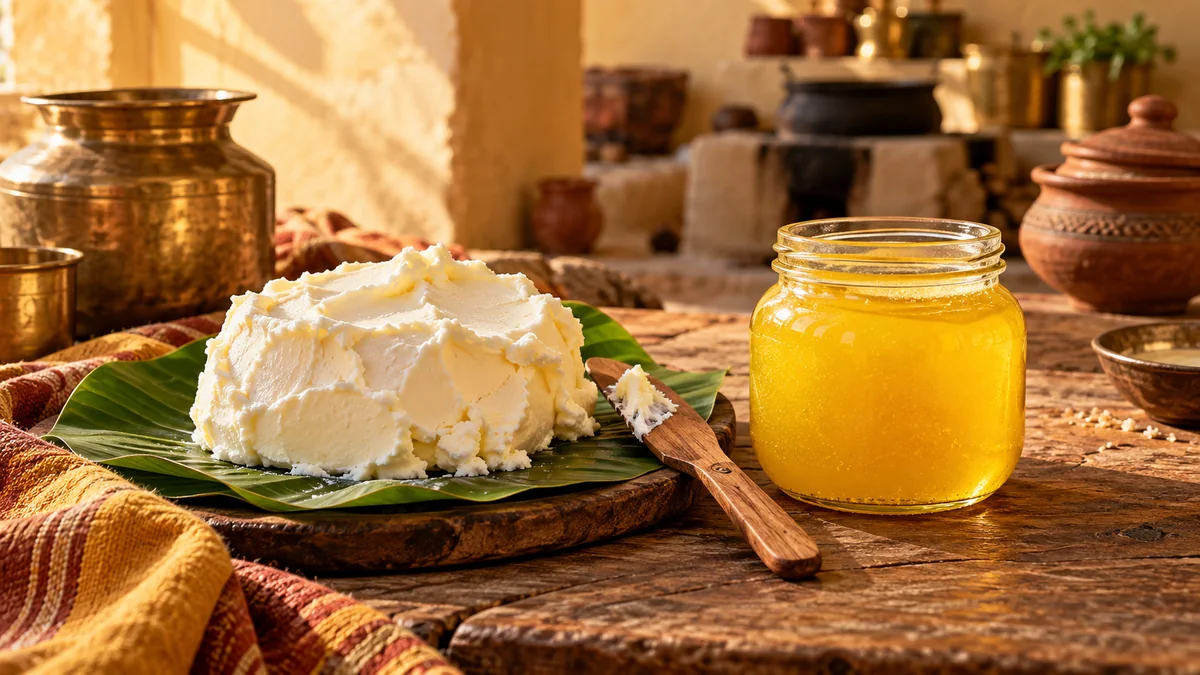
Butter is milk fat with water and milk solids still in it; ghee is butter cooked slowly until the water is gone and the solids are strained out. That makes ghee better for tadka, frying and keeping without a fridge, while butter is better for spreading and some baking.
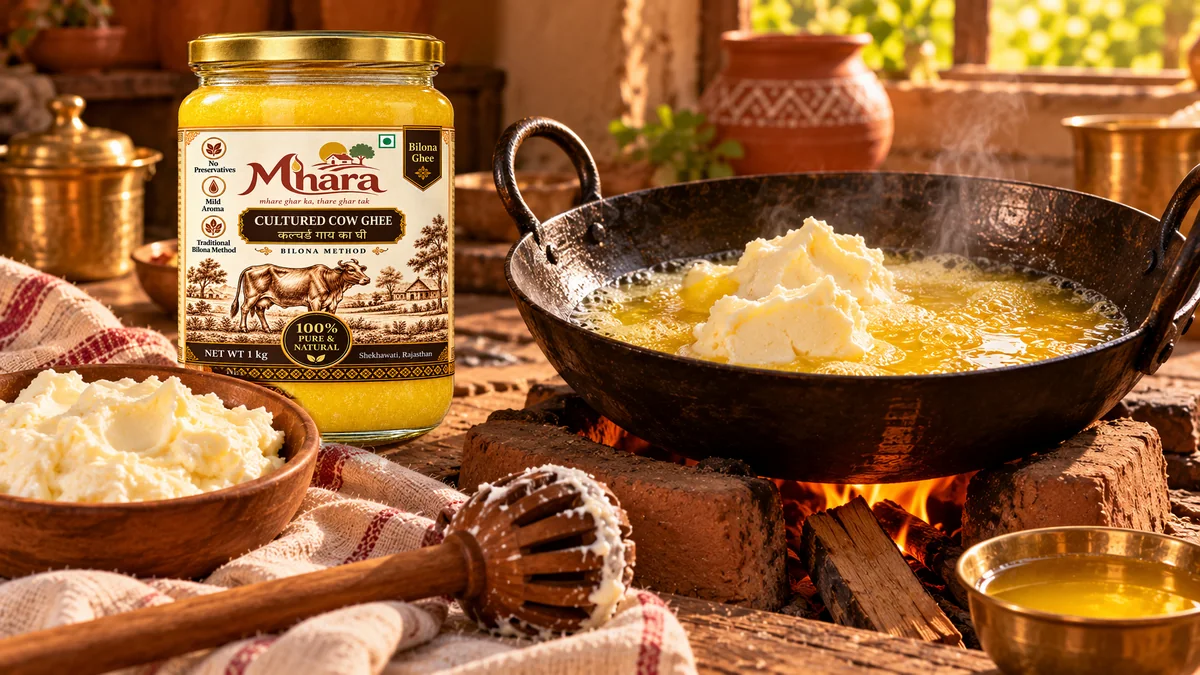
In our village, ghee vs butter is not really a contest, because one becomes the other. Every morning in the season, curd is churned into soft white makkhan, and later that makkhan goes into a kadhai and slowly turns into ghee. So the honest way to compare them is to look at what changes in that kadhai, and what that change means for your cooking. Butter is better for some jobs. Ghee is better for most Indian ones.
What butter is, and what ghee is
Butter is milk fat with water and milk solids still in it. A typical packet of butter is roughly 80% fat, and most of the rest is water, with a little protein and milk sugar. That water and those solids are why butter is soft, creamy and pale, and why it spreads so well.
Ghee is what you get when you cook butter slowly until all the water has boiled away and the milk solids have settled at the bottom and turned light brown. Then the clear fat is strained off. What is left is about 99% milk fat. The light brown bits that settle at the bottom are what give ghee much of its nutty, cooked aroma, which butter does not have.
So ghee is clarified butter, cooked a little further than the French version so that it picks up that toasted smell. Same animal, same milk, different end point.
White makkhan: the step before ghee
The butter most Indian families buy is yellow, salted and made from cream in a dairy. White makkhan from a village home is a different thing. It comes from churning curd with a wooden bilona until soft lumps of butter rise and float in the chhachh. Those lumps are lifted out by hand.
White makkhan is unsalted, softer and holds more buttermilk than packet butter. It is eaten fresh on bajra or makki roti, or with gur, and it does not keep for long. Most of it in our village goes straight into the kadhai to become ghee, because ghee keeps for months and makkhan keeps for days.
If you want to see that full process from milk to jar, our page on what is bilona ghee goes through it step by step. Whether the butter came from curd or from fresh cream also changes the taste of the ghee, which we explain in curd vs cream ghee.
Ghee vs butter on the stove
This is the biggest practical difference. In a hot pan, the milk solids in butter start to brown quickly and then burn. That is why butter goes from foaming to brown to black faster than you expect, and why the kitchen fills with a burnt smell.
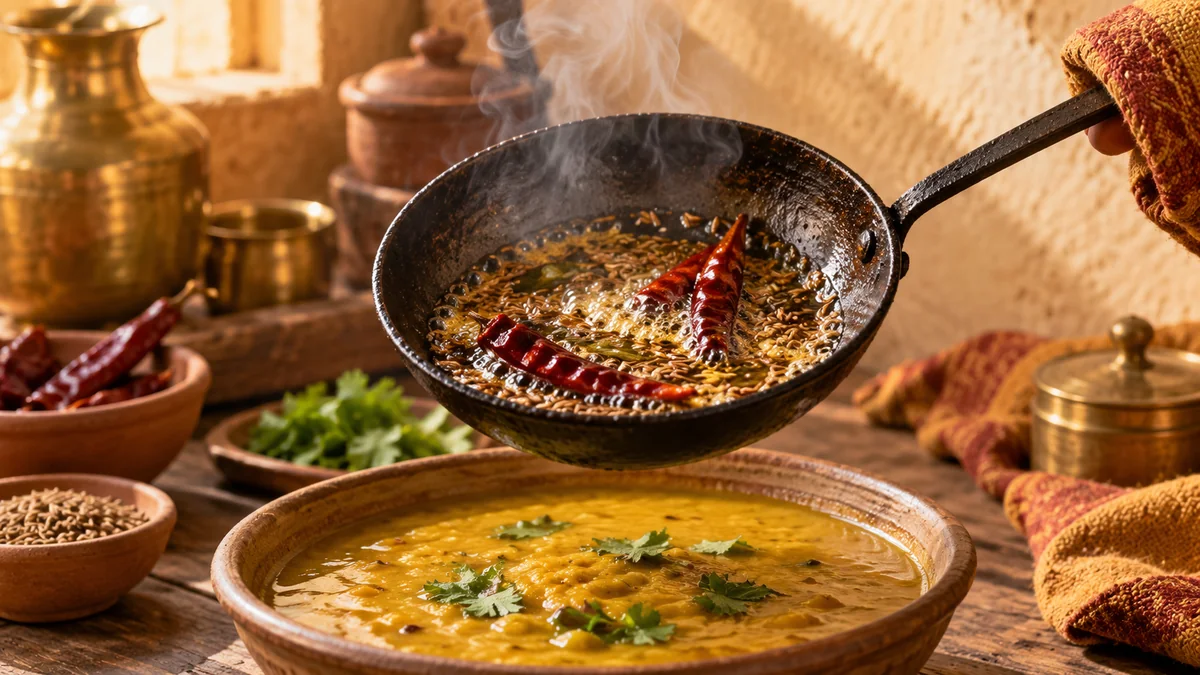
Ghee has had those solids removed, so it can take far more heat. Its smoke point is around 250 °C, well above what you need for tadka, parathas or deep frying. Butter is fine for gentle heat, such as cooking an omelette or softening onions on low flame, but not for a proper tadka or a kadhai of puris. We go into heat in detail on our page about ghee smoke point.
Shelf life and storage
Water is what makes food spoil, and butter has plenty of it. Packet butter needs the fridge and has a much shorter life once opened. Village white makkhan is gone in a few days unless it is turned into ghee.
Ghee has almost no water. A sealed jar keeps for about 12 months from packing, and an open jar stays good for months on a kitchen shelf if you only use a dry spoon. That is the whole reason village households cooked their makkhan into ghee in the first place: it was the way to keep the season's milk for the rest of the year. Our page on how to store ghee explains the dry-spoon rule.
Lactose and milk solids
Because the milk solids are cooked out and strained away, ghee has almost no lactose or milk protein left. Butter keeps a small amount of both.
Some people who find that milk does not sit well with them say ghee does not bother them the way milk or butter does. That is a personal experience, not a promise. If you have a diagnosed milk allergy or lactose intolerance, ask your doctor before assuming any dairy product is safe for you, ghee included.
Taste and texture
Butter tastes fresh, creamy and mild. Salted butter adds salt to whatever it touches. It is at its best cold or just melted.
Ghee tastes cooked, nutty and deeper. A spoon of good ghee on dal changes the smell of the whole bowl. Ghee also has a different feel in the mouth: it is all fat, so it coats the tongue and then melts away, without the watery creaminess of butter.
Texture changes with the weather too. Butter stays soft in the fridge and turns oily in heat. Ghee is liquid in summer and sets in winter, sometimes smooth and sometimes in grains. Our danedar ghee is cooled slowly on purpose so it sets in visible grains.
When butter is the better choice
- Spreading on bread or toast, where you want soft, creamy butter straight from the fridge.
- Some baking, like many cakes and biscuits, where the recipe relies on the water and milk solids in butter for rise, browning and texture. Swapping in ghee changes the result.
- Fresh white makkhan with bajra roti and gur, a winter meal that needs nothing else.
- Gentle cooking, when you want that soft, milky butter taste and the heat stays low.
When ghee is the better choice
- Tadka for dal, kadhi and sabzi, where the fat has to be hot enough to crackle the spices.
- Parathas, puris and anything fried, where butter would burn.
- Halwa, laddoo, churma and most mithai, where the cooked aroma of ghee is part of the taste.
- On hot roti, dal-chawal or khichdi, a spoon on top at the table.
- Anything you want to keep for a while without a fridge.
For a family that cooks Indian food every day, ghee does more of the work. Keep a little butter for toast and baking if you like, and use ghee for the stove.
For everyday cooking, our Desi Cow Danedar Ghee is made from the malai of desi cow milk, set to curd, churned into makkhan and slowly cooked, then cooled slowly so it sets grainy. It is the ghee we reach for at the tawa and the tadka pan.
Questions people ask
Is ghee the same as butter?
No. Ghee is made from butter, but the water and milk solids are cooked out and strained away. Butter is about 80% fat, while ghee is about 99% fat.
Which is better for cooking, ghee or butter?
For Indian cooking at high heat, such as tadka, parathas and frying, ghee is better because it does not burn easily. Butter is better for spreading and for some baking.
What is the difference between white makkhan and ghee?
White makkhan is the soft, unsalted butter churned from curd at home. When it is cooked slowly until the water evaporates and the solids are strained out, it becomes ghee.
Can I use ghee instead of butter in baking?
Sometimes, but the result changes. Many cakes and biscuits rely on the water and milk solids in butter for texture and browning, so ghee can make them denser or crumblier.
Does ghee have lactose like butter?
Ghee has almost no lactose left because the milk solids are removed. Butter has a small amount. If you have a diagnosed milk allergy or intolerance, ask your doctor before using either.
Why does ghee last longer than butter?
Ghee has almost no water, and water is what lets food spoil. Butter needs the fridge, while a clean, dry jar of ghee keeps for months on a kitchen shelf.