Ghee cooked on a chulha: what a wood fire changes, and what it does not
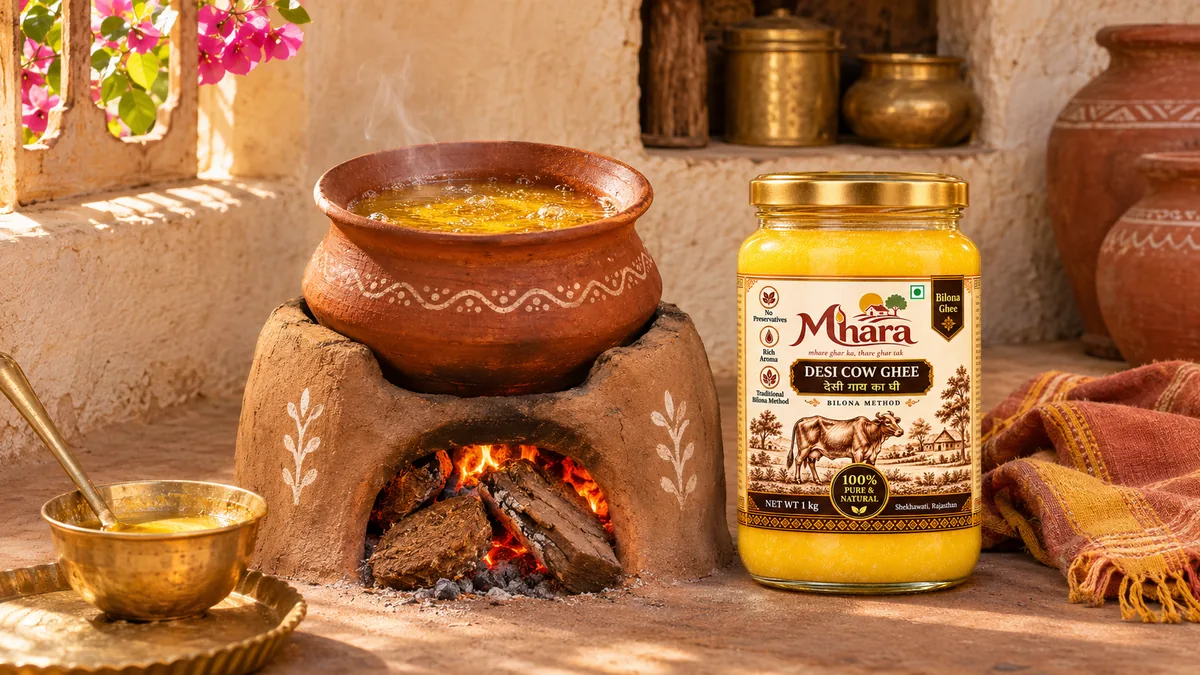
Ghee cooked on a chulha is made the slow way: makkhan in a clay handi over a low fire of wood and kanda, watched by one person until it turns clear. A wood fire changes the pace, the batch size and how much each batch differs from the last. It does not make ghee smoky. Ghee that smells of smoke has been burnt.
Wood fire is a phrase that sounds good on a label, and it is easy to imagine more into it than is there. This is a plain account of what a chulha does to ghee, from a village where it is still how the ghee is cooked.
What a chulha is
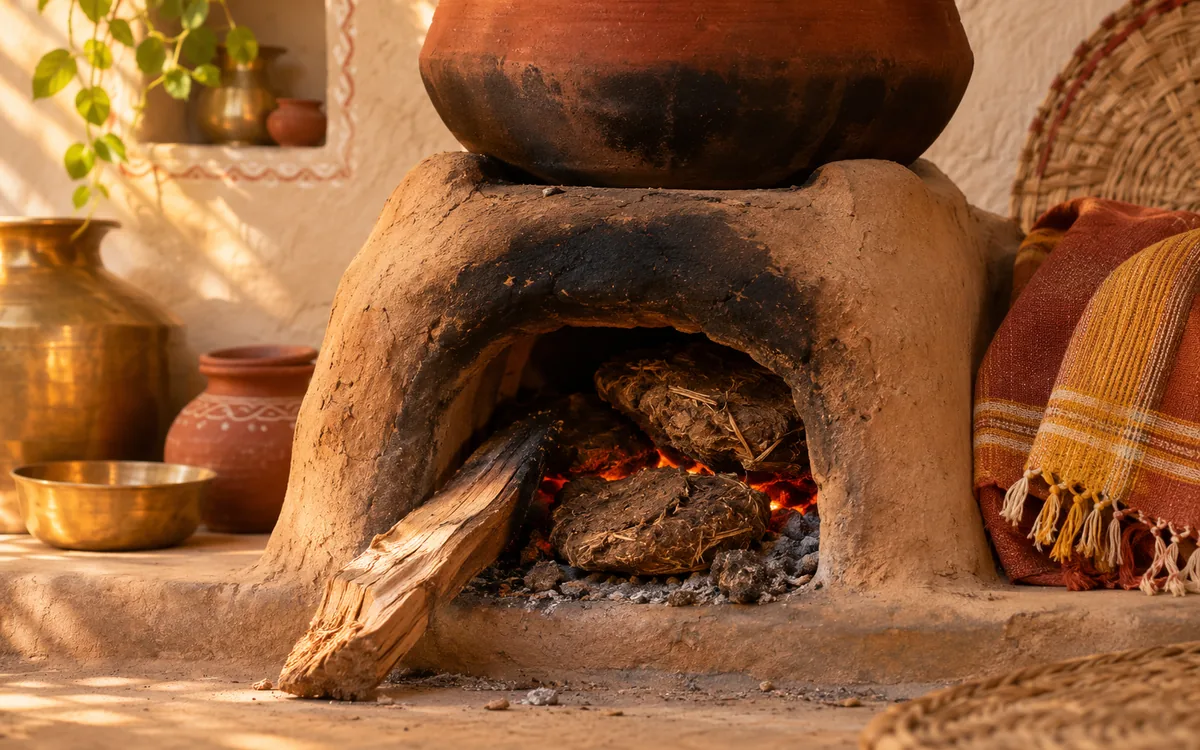
A chulha is a small stove built of clay, open at the front, with the pot sitting on top. In our village it burns two things:
- Wood, which catches quickly and gives a strong flame.
- Kanda, dried cow dung cakes, which burn slowly and give a low, steady heat for a long time.
For ghee, the makkhan goes into a clay handi and the handi goes on the chulha.
What a wood fire changes
The pace
A chulha has no knob. The heat is lowered by pulling a piece of wood back and letting the kanda carry on. The cook cannot rush it, so the makkhan cooks slowly, the water leaves gradually, and the milk solids brown gently at the bottom.
The attention
Someone has to sit with it. They listen for the crackling to quieten, watch the foam change and look at the colour of the solids. The moment to lift the handi off is judged by eye and ear, not by a timer.
The batch
One chulha holds one handi. Ghee cooked this way is made in small batches because there is no other way to do it.
The difference between batches
The heat of a wood and kanda fire is never perfectly even, so each batch stops at a slightly different point. One is a little more nutty, the next a little milder. We explain this in why homemade ghee smells a little different every batch.
What a wood fire does not change
- It does not make ghee smoky. Well-made ghee smells nutty and sweet. If a ghee smells of smoke or tastes bitter, the solids were burnt, and that can happen on any fire.
- It does not change what ghee is. Ghee is milk fat with the water and solids cooked out, whether the heat came from wood or gas.
- It does not replace the earlier steps. The milk, the curd and the churning shape the ghee before the fire is lit. Those steps are in what is bilona ghee.
Chulha or gas: can you tell from the jar?
No. A careful cook with a heavy pan and the lowest gas flame can make very good ghee, and many homes do. The steps are in how to make ghee at home. A gas flame is steady and easy to control. A wood fire asks for more time, more fuel and a person who knows it. That work is part of the cost, as we set out in bilona ghee price.
How ghee is cooked on the chulha in our village
- The fire is lit with wood, and kanda is added once it has caught.
- The morning's makkhan goes into a clay handi and is set on the chulha.
- The makkhan melts, foams and begins to crackle as the water leaves.
- The wood is drawn back so the kanda holds a low heat.
- When the crackling fades, the ghee is clear and the solids at the bottom are golden-brown, the handi is lifted off.
- The ghee is strained and left to cool in its own time.
You can read how the whole village day fits around this in gaon ka ghee.
Ghee from our chulha
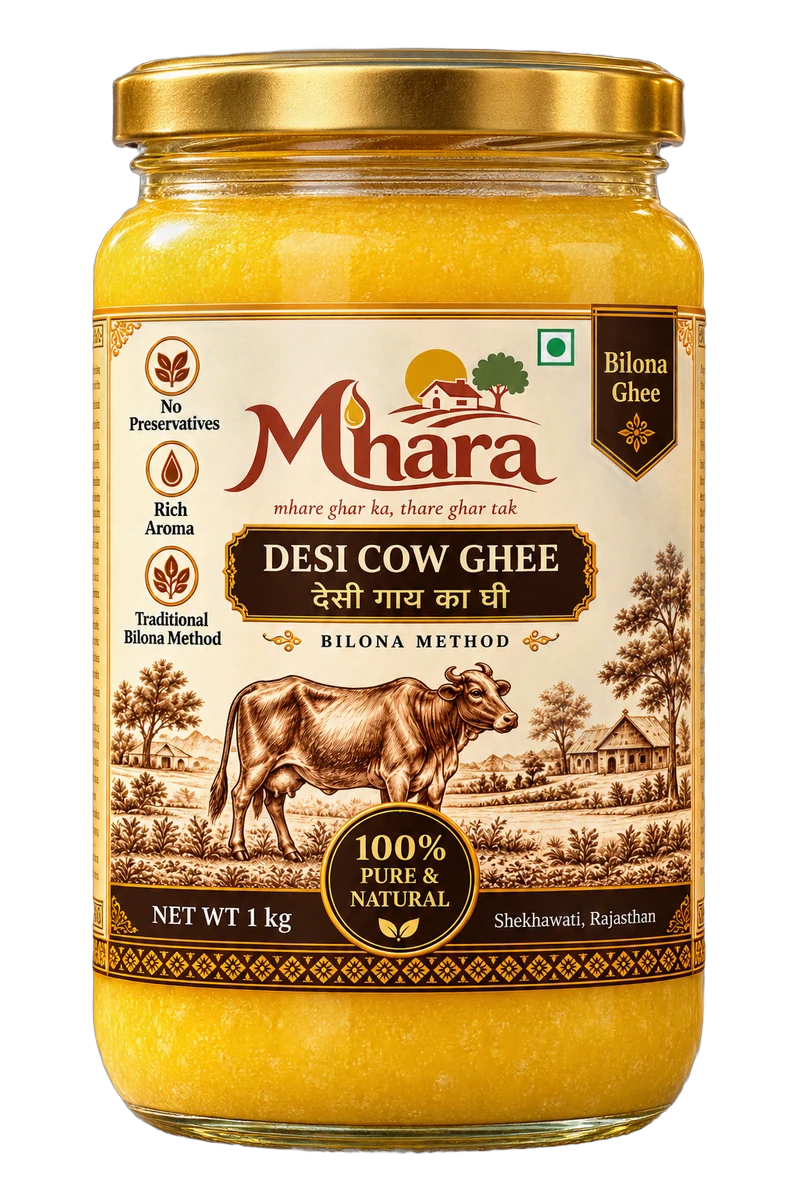
Both our ghees are cooked this way, in village homes near Pilani, in Shekhawati. If you are looking for village ghee online, that is what we send out: ghee from whole-milk curd, churned by hand and cooked on a wood and kanda fire. It is homemade desi ghee in the plain sense of the word, made in homes. The cow ghee is our Desi Cow Bilona Ghee.
Questions people ask
What is wood fire ghee?
It is ghee whose makkhan was cooked over a wood fire, usually on a clay chulha, and not on a gas or electric flame. In our village the fire is wood and kanda, dried cow dung cakes.
Does ghee cooked on a chulha taste smoky?
It should not. Well-made ghee smells nutty and sweet. A smoky or bitter taste means the milk solids were burnt, which can happen on any kind of fire.
Is ghee cooked on a wood fire better than ghee cooked on gas?
The fire itself adds nothing to the ghee. A wood fire forces slow cooking in small, closely watched batches, and that is what people value. A careful cook can also make very good ghee on a low gas flame.
Why is kanda used in the fire?
Kanda, dried cow dung cakes, burn slowly and give a low, steady heat for a long time. Wood starts the fire and kanda keeps it gentle while the makkhan cooks.
Why does chulha-cooked ghee differ from batch to batch?
The heat of a wood fire is never perfectly even, so each batch is taken off at a slightly different point. One batch can be a little more nutty and the next a little milder.