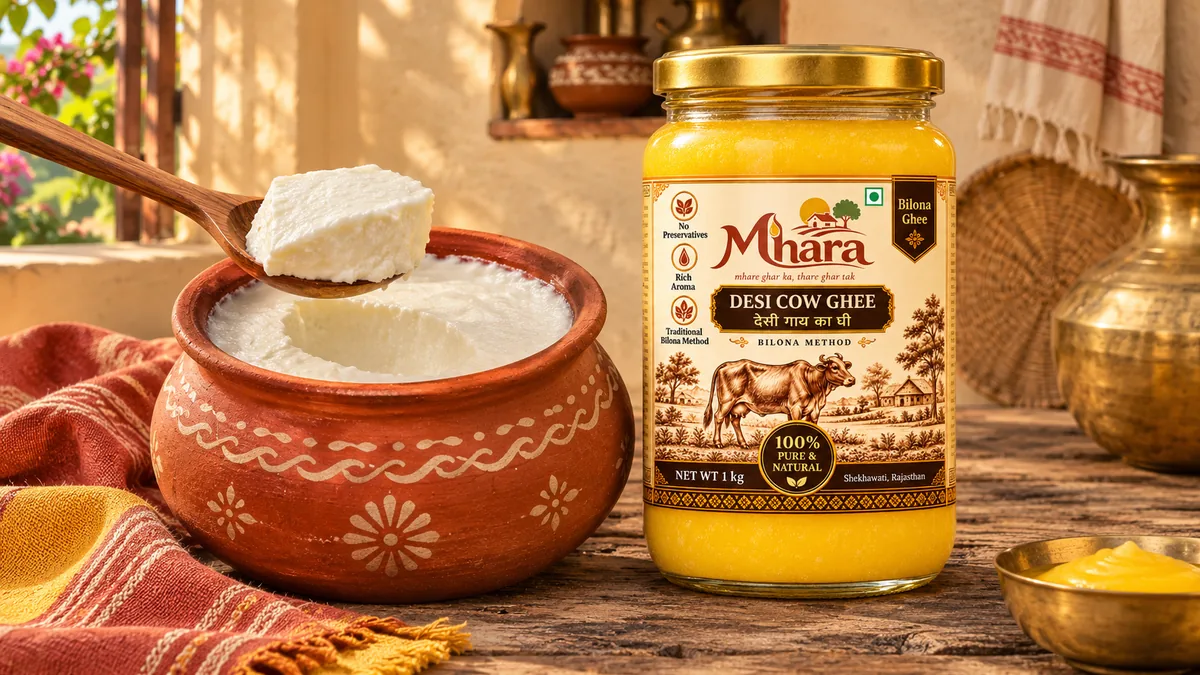

Why homemade ghee smells a little different every batch

Ghee smell changes from batch to batch because of four things: the curd the makkhan came from, what the cows ate that season, how far the milk solids browned in the pan, and how the jar has been kept. Fresh ghee smells nutty and sweet. Burnt ghee smells bitter and smoky. Rancid ghee smells sharp, sour or like old paint.
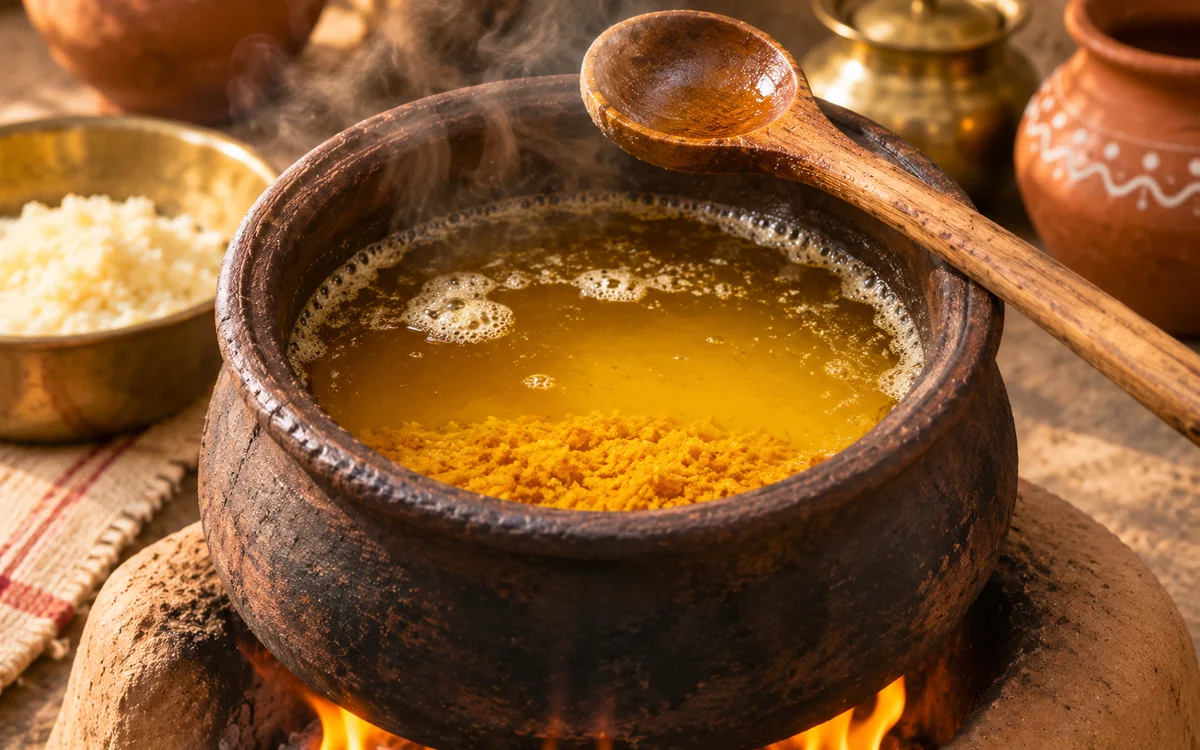
When ghee is being made in our village, you know it before you reach the door. First the kitchen smells of warm butter. Then, as the froth in the clay handi settles and the milk solids at the bottom turn golden, the smell turns deeper and nuttier, close to roasted wheat. The women of the house take the handi off the fire by that smell, not by a clock.
So it surprises some people when one jar of homemade ghee smells a little different from the last. That is normal. A small batch from one village kitchen is not a factory blend made to taste the same all year. Below is why the ghee smell shifts, which differences are harmless, and how to tell when a jar has gone off.
Where ghee smell comes from
Pure milk fat has very little smell of its own. Almost all the aroma in a good ghee comes from what happened before and during cooking:
- Browning of the milk solids. As the makkhan cooks, the water boils off and the milk protein and milk sugar left at the bottom begin to brown. This is the same kind of browning that gives toast or roasted peanuts their smell. It is the main source of the nutty, slightly caramel note we call sondhi.
- The curd. When milk is set to curd before churning, the curd bacteria make buttery, faintly tangy aroma compounds that carry into the makkhan and then the ghee.
- The milk itself. What the cow eats changes the fat in her milk a little, and with it the smell.
Each of these changes a little from week to week, so the ghee smell does too.
The curd: bilona ghee vs cream ghee
How the ghee was made is the biggest difference you will notice between two jars from different makers.
- Bilona ghee starts with whole milk boiled on the chulha, set overnight into curd in a clay matka and churned by hand at dawn. It usually has the deepest aroma, with a soft tang at the back from the curd.
- Cream ghee is made by cooking malai or cream directly, without setting it to curd. It smells milder, sweeter and more like milk.
Even within bilona ghee, the curd varies. Curd set on a warm night turns a little more sour than curd set on a cold one, and a more sour curd gives a slightly sharper ghee. We explain the two methods side by side in curd vs cream ghee.
The cow, the feed and the season
Village households near Pilani keep their desi cows at home, and the cows eat what the season gives. After the rains and through winter there is more green fodder. In the hot months it is mostly dry chaff and whatever green can be found. Green feed tends to give a deeper yellow ghee with a fuller smell, and dry feed a paler, milder one. The colour side of this is covered in why cow ghee is yellow.
Temperature plays a part too. Warm ghee releases more aroma than cold ghee. A jar opened on a May afternoon smells stronger than the same jar on a December morning, when it has set firm and grainy. Warm a spoonful and the smell comes back.
Cow and buffalo ghee also smell different. Buffalo ghee is milder and milkier. If you have one jar of each, the cow jar will always be the more fragrant one.
The pan: cooking time and the khurchan
This is where the cook decides the smell. As the makkhan cooks, it goes through clear stages:
- Loud, large bubbles. Water is boiling off. The smell is of warm butter.
- Smaller, quieter bubbles and a clearing liquid. The milk solids start to colour. The smell turns sweet and nutty.
- The froth dies down and the solids at the bottom are golden-brown. This is the point to take it off. The ghee is clear and smells fully of ghee.
- The solids turn dark brown or black. The ghee has gone too far. It smells bitter and smoky.
Take it off a minute early and the ghee is milder, sometimes with a trace of moisture left in it, which shortens its life. A minute late and it tastes faintly bitter. On a wood and kanda fire the heat is not perfectly even, so every batch lands at a slightly different point between stage 3 and stage 4. That alone explains much of the batch-to-batch difference. The browned residue, the khurchan, is too good to throw away, and our ghee residue uses post has seven ways to use it.
Fresh, burnt or rancid: how to tell by smell
A little variation is normal. These smells are not.
- Fresh: nutty, sweet, buttery, sometimes a faint curd tang. Clean on the tongue.
- Burnt: bitter, smoky, like over-roasted nuts. The ghee may look darker, more brown than gold. It is safe to eat but tastes harsh. Use it for frying or deep-frying, where the smell matters less, rather than on roti.
- Rancid from air and light: stale, sharp, like old paint, crayons or a cardboard box. The fat has oxidised. It usually happens in jars left open, kept by the stove or in sunlight for a long time.
- Rancid from water: sour, cheesy, sometimes like stale curd or sweat. Water got in, usually from a wet spoon, and the fat has started to break down.
- Mouldy: musty, with green, black or white fuzzy spots on the surface. Do not eat it. Throw it out.
If a jar smells stale or sour but shows no mould, taste a small amount. If it leaves a sharp, scratchy feeling at the back of the throat, the ghee has turned rancid and is best thrown away. Rancid ghee will not make the food better, and frying will not fix it.
Does a strong smell mean pure ghee?
No. A strong, pleasant smell is a good sign in a homemade jar, but on its own it proves nothing. Ghee flavours exist, and a cheap fat can be made to smell like ghee. A pale, milder ghee from dry-season milk can be completely pure. Smell is one clue among several, and our guide to how to check the purity of ghee explains what home tests can and cannot tell you.
What a good smell does tell you is that the batch was cooked with care and the jar has been kept well. That is worth something.
Keeping the ghee smell fresh in the jar
Ghee keeps its aroma longest when it is kept dry, closed and away from heat. A few habits from our kitchen:
- Use a dry, clean spoon every time. One wet spoon starts the sour smell.
- Keep the lid closed. Fat picks up smells, and a jar left open near onions and garlic will taste of them.
- Keep the main jar away from the stove and out of direct sunlight. Fill a small katori for daily use.
- Glass or steel is better than plastic for long keeping.
Our full guide to how to store ghee covers shelf life month by month. Our Desi Cow Bilona Ghee comes in 500 ml and 1 litre glass jars and 2 litre and 5 litre steel tins, each sealed within the week it was made. If your jar smells a little nuttier or a little milder than the last one, that is the village, the season and the fire. If it smells sour, cheesy or like paint, something has gone wrong, and it is worth finding out what.
Questions people ask
Why does my ghee smell like cheese?
A cheesy or sour smell usually means water got into the jar, most often from a wet spoon, and the fat has started to break down. Check for mould. If there is none, taste a little; if it is sharp or sour, the ghee has turned rancid and is best thrown away.
What should pure desi ghee smell like?
Good desi ghee smells nutty, sweet and buttery, and bilona ghee often has a faint curd tang. The smell is strongest when the ghee is warm. Smell alone cannot prove purity, though, because ghee flavours can be added to cheaper fats.
Why does ghee smell like popcorn or caramel?
That note comes from the milk solids browning as the makkhan cooks, the same kind of browning that gives toast and roasted nuts their smell. It means the ghee was cooked until the solids turned golden-brown, which is how a well-made ghee should smell.
Is burnt-smelling ghee safe to eat?
Ghee that was cooked a little too long smells bitter and smoky but is not spoiled. It is safe to eat, though the taste is harsh. Use it for frying, puris or tadka with strong spices, where the burnt note matters less.
How do I know if ghee has gone rancid?
Rancid ghee smells stale, sharp or like old paint or crayons, or sour and cheesy if water got in. It may leave a scratchy feeling at the back of the throat. Fuzzy spots mean mould. In any of these cases, throw the ghee away.
Why does homemade ghee smell stronger in summer?
Warm fat releases more aroma than cold fat. In summer the ghee is liquid and its smell rises easily, while in winter it sets firm and the smell stays locked in. Warm a spoonful in winter and the aroma comes back.