
What happens to the chaach after bilona churning?
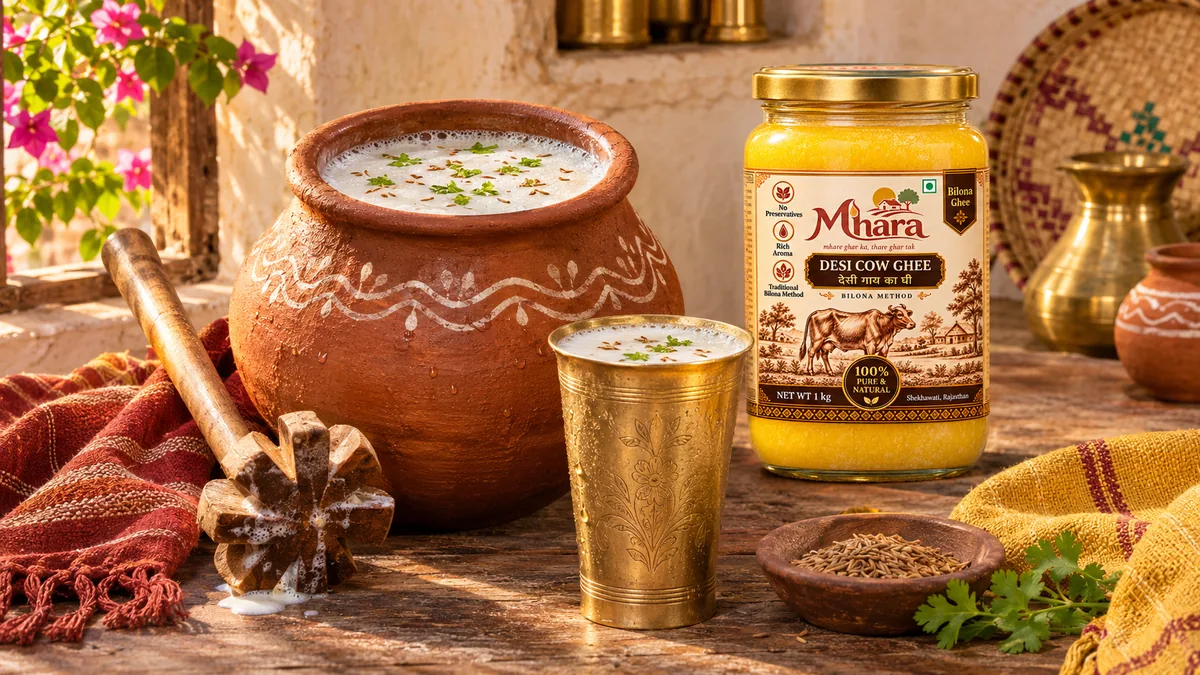
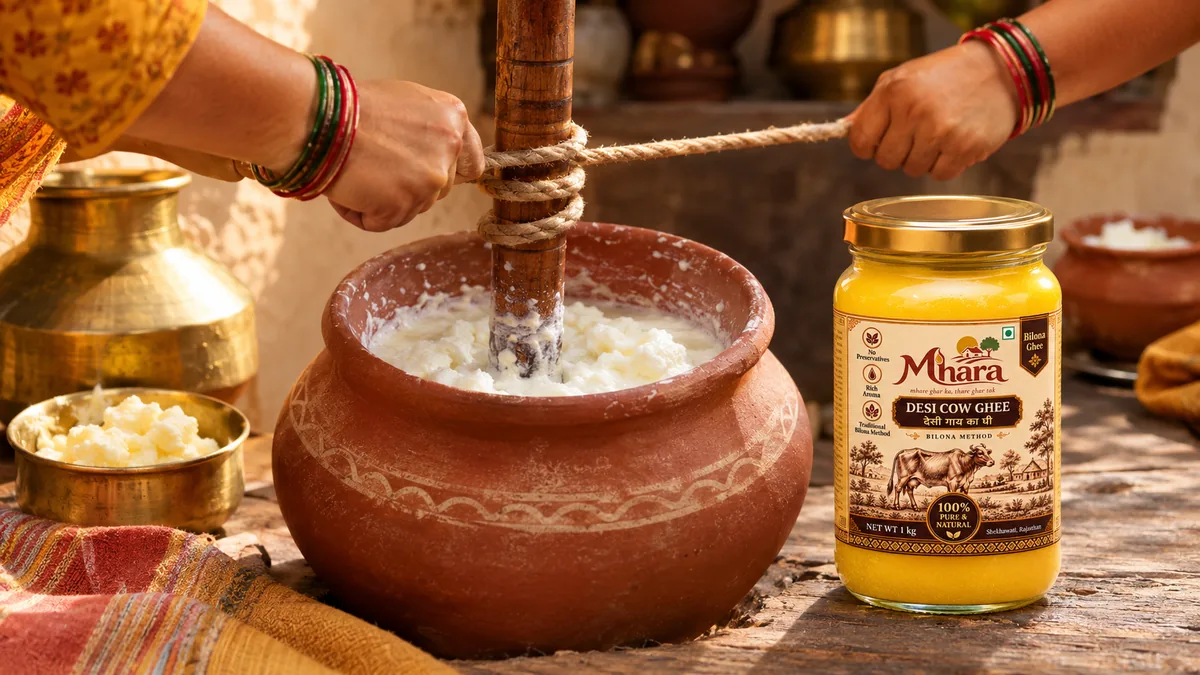
When curd is churned on a bilona, the fat comes out as makkhan and everything else is left behind as chaach. It is thin, sour and plentiful: most of the milk that goes into bilona ghee ends up as chaach. In a village home none of it is thrown away. It is drunk with lunch, cooked into kadhi and raabdi, and shared with neighbours.
Bilona ghee is usually described by what goes into the jar. But for every jar of ghee there are many pots of chaach, and in a village kitchen the chaach matters almost as much as the ghee. Here is what bilona chaach is, how it differs from the chaas sold in shops, and where it goes.
What is bilona chaach?
Chaach is the liquid left in the pot after curd has been churned and the makkhan lifted out. It holds the water of the milk and most of what is in milk other than the fat. Because the fat has gone into the makkhan, real chaach is thin. Because it comes from curd, it is sour.
The churning itself is described in what is a bilona.
How much chaach is left
A lot. About 25 to 30 litres of desi cow milk go into one kilo of bilona ghee, and only a small part of that milk is fat. Almost all the rest becomes chaach, and cool water is added during churning as well. The numbers are in how much ghee comes from 1 litre of milk.
A little fat always stays behind in the chaach. That is one reason bilona ghee needs so much milk, and it is also why bilona chaach tastes better than plain sour water.

Bilona chaach, shop chaas and lassi: the difference
- Bilona chaach: what is left after makkhan has been churned out of curd. Thin and sour.
- Chaas made at home or sold in packets: usually curd whisked with water and spices. Nothing has been taken out, so the fat of the curd is still in it.
- Lassi: curd blended thick, with little or no water, sweet or salted.
All three are called buttermilk in English at one time or another, which is why the word causes confusion.
What happens to the chaach in a village home
- It is drunk the same day. A glass of chaach with salt and roasted jeera goes with lunch, most of all with bajra roti. Our bajre ki roti post describes that plate.
- It becomes kadhi. Sour chaach and besan are the base of the thin Rajasthani kadhi. The method is in our Rajasthani kadhi recipe.
- It becomes raabdi. Bajra flour cooked slowly in chaach is an old Rajasthani dish, eaten warm in winter and cool in summer.
- It is given away. A home that churns every morning has more chaach than it can use. Neighbours come with a lota, and nobody is charged.
Why you do not see bilona chaach in shops
Chaach does not keep. It turns more sour by the hour, and it is mostly water, so it is heavy to carry and worth little. Ghee is the opposite: it is the part of the milk that keeps for months and travels well. That is why ghee is what leaves the village and chaach is what stays.
Can you get chaach when you make ghee at home?
Yes, if you churn. When you set collected malai into curd and churn it, the liquid left behind is chaach, and it can be used in exactly the same ways. The steps are in how to make ghee at home.
The chaach behind our ghee
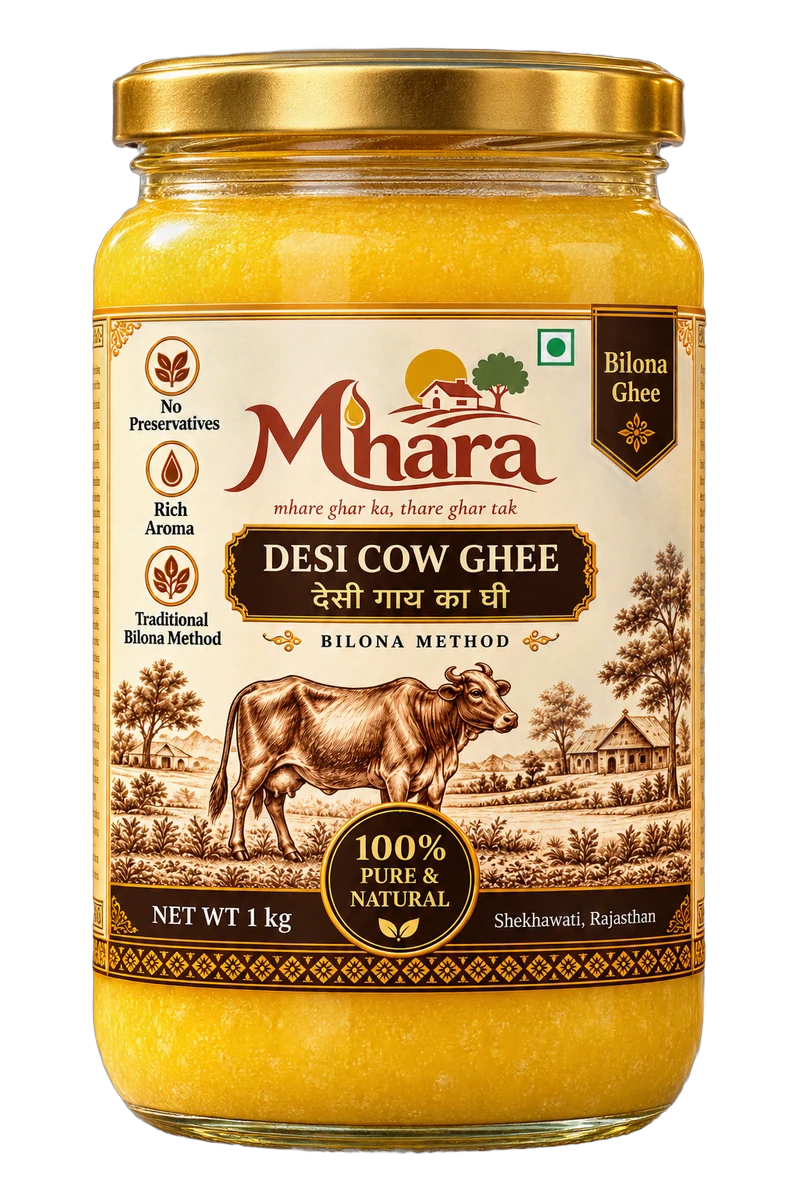
Our Desi Cow Bilona Ghee is made in village homes near Pilani, in Shekhawati, from whole desi cow milk set into curd and churned by hand. The makkhan comes to you as ghee. The chaach stays in those homes, where it is drunk and shared the same day. The whole morning, from milk to jar, is on our morning, and the method is in what is bilona ghee.
Questions people ask
What is chaach in bilona ghee making?
Chaach is the thin, sour liquid left in the pot after curd has been churned with a bilona and the makkhan has been lifted out.
What happens to the chaach after bilona churning?
In a village home it is drunk the same day with salt and roasted jeera, cooked into kadhi and raabdi, and given to neighbours. It is not thrown away.
Is bilona chaach the same as chaas or lassi?
No. Bilona chaach is what remains after makkhan is removed from curd. Chaas made at home or sold in packets is usually curd whisked with water, and lassi is curd blended thick.
Why is so much chaach left after making ghee?
Milk is mostly water and only a small part of it is fat. The fat becomes makkhan and then ghee. Nearly everything else in the curd is left as chaach.
Is there any fat in bilona chaach?
A little. Churning never brings out all the fat, so some stays in the chaach. This is one reason bilona ghee needs 25 to 30 litres of cow milk for a kilo.
Why is bilona chaach not sold?
It turns sour quickly and is mostly water, so it does not keep or travel. It is used the same day in the homes where the ghee is made.