
Hand-churned vs machine-churned ghee: what actually differs
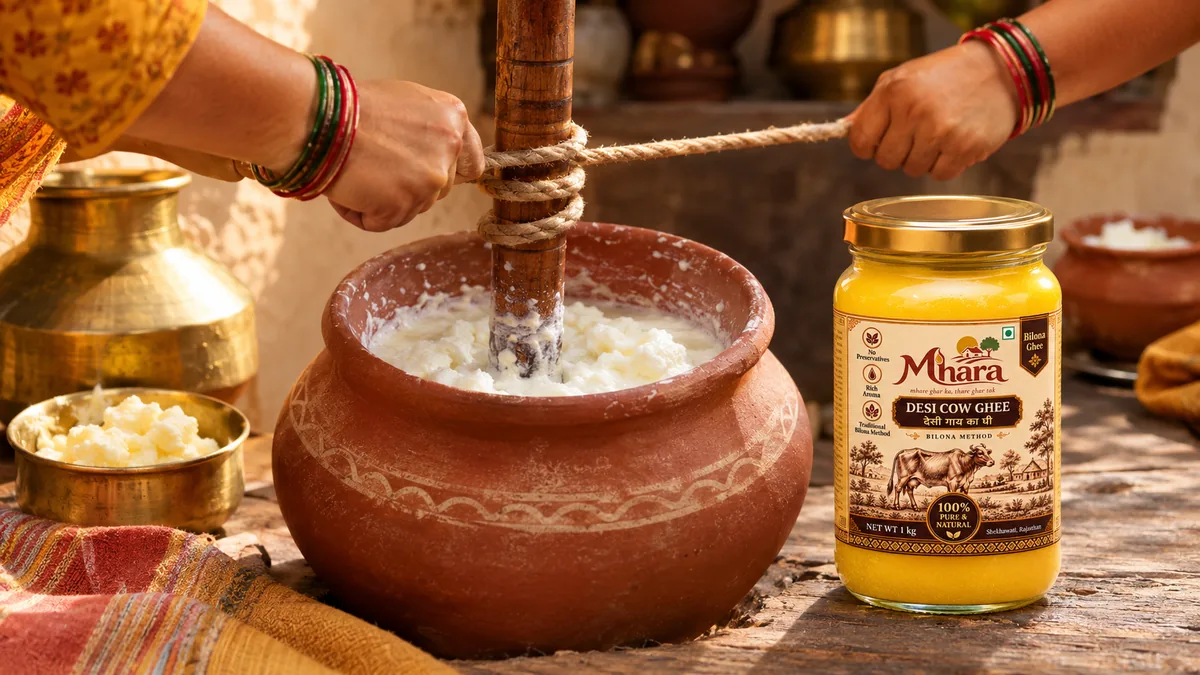
Hand-churned ghee is made from curd churned by a person pulling a rope on a wooden bilona. Machine-churned ghee uses a motor to turn the churner. Both are curd-churned, so both can honestly be called bilona. The real differences are batch size, speed and how closely someone watches the makkhan. You cannot tell them apart by looking at the jar.
Hand churned is one of those phrases that sells a jar of ghee. It is worth knowing what it does and does not mean, because the words bilona, hand churned and machine churned get used loosely, and they describe three different things.
Three ways ghee is churned
- By hand. Curd is churned in a pot with a wooden bilona, and a person pulls the rope. This is the old village way. The tool is described in what is a bilona.
- By motor. The same kind of churner, often the same wooden one, is turned by a small electric motor. It is still curd, and makkhan still rises.
- No curd churning at all. In a dairy plant, cream is taken out of fresh milk by a separator and cooked into ghee. This is regular ghee, not bilona ghee of either kind.
So hand-churned vs machine-churned ghee is a comparison inside bilona ghee. The bigger difference, between churning curd and separating cream, is covered in bilona ghee vs regular ghee.
Hand-churned vs machine-churned ghee: the real differences
Batch size
One person with a rope can churn one pot at a time. Hand churning is small-batch because it has to be. A motor can run a much larger vessel, or several of them.
Speed and warmth
A rope turns the bilona slowly, back and forth. A motor turns it faster and for longer without tiring. Fast churning can warm the curd, and makkhan gathers best when the curd is cool. That is why hand churning in our village is done early in the morning.
Who decides when to stop
The person at the rope watches the pot the whole time. They add cool water when the grains appear and stop when the makkhan looks right. With a motor, this depends on how carefully the maker watches.
Cost
Hand churning takes more hours of work for each kilo. That labour is part of the price, along with the milk, as we set out in bilona ghee price.

What does not differ
- The method. Both start from curd, and both give makkhan and chaach.
- The label. Both can be called bilona.
- What you can see. Colour, grain and how the ghee sets depend on the milk, the season and the cooking. They will not tell you who turned the churner.
Does hand-churned ghee taste different?
Many people who grew up with it say it does, and small, cool, closely watched batches are a fair reason why it might. But the milk and the cooking shape the taste of ghee far more than the churning does. Whole-milk curd from desi cows, cooked slowly, matters more than the rope. We look at those larger choices in curd vs cream ghee.
How to find out if a ghee is really hand churned
- Ask directly. "Is the curd churned by hand or by motor?" A maker who churns by hand will answer in one line.
- Ask about batch size. Hand churning cannot produce very large quantities from one place.
- Ask where it is made. A named village or farm is a better sign than a general phrase like traditional method.
- Look at the price. Hand-churned, whole-milk cow ghee cannot be among the cheapest on the shelf.
The other things worth asking before you buy are in best cow ghee in India.
How ours is churned
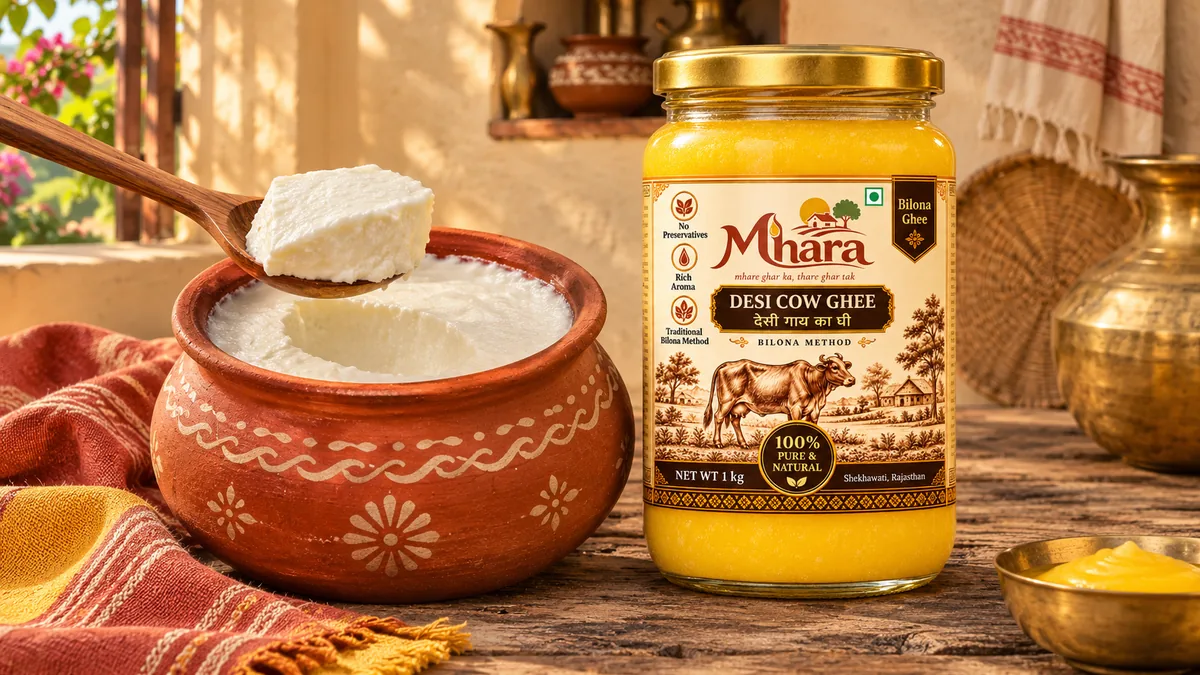
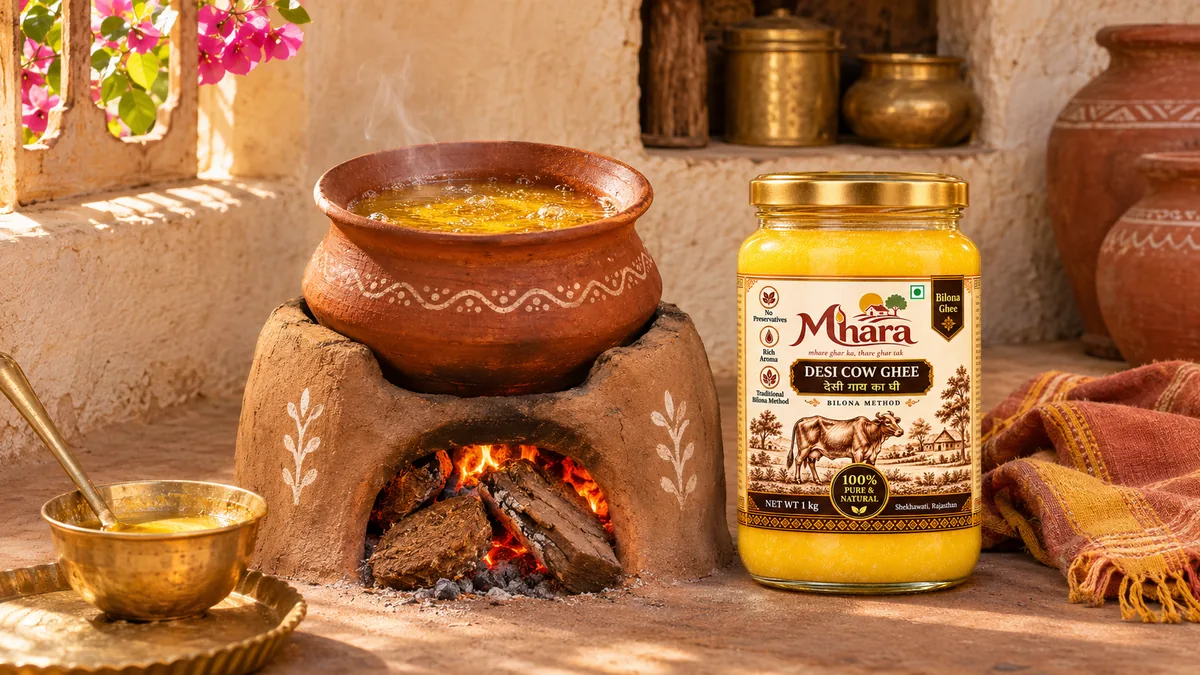
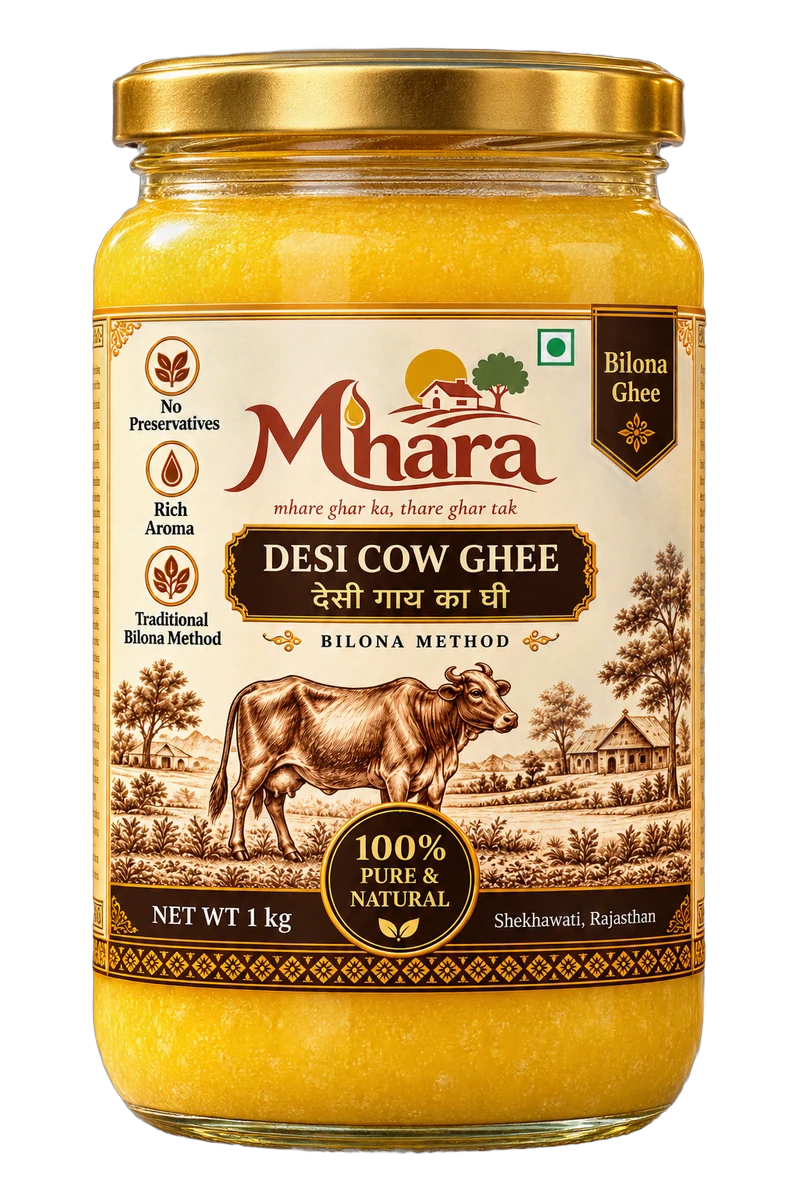
Our Desi Cow Bilona Ghee is hand churned. In village homes near Pilani, in Shekhawati, curd set from whole desi cow milk in a clay matka is churned with a wooden bilona and a rope, and the makkhan is cooked on a wood and kanda fire. The steps are in what is bilona ghee.
Questions people ask
What is hand-churned ghee?
Hand-churned ghee is ghee made from makkhan that a person churned out of curd, pulling a rope wound around a wooden bilona. It is bilona ghee made without a motor.
Is machine-churned ghee still bilona ghee?
If a motor turns the churner in curd, yes. The curd is still churned and makkhan still rises, so makers call it bilona. Ghee made from cream separated out of fresh milk is not bilona ghee.
What is the difference between hand-churned and machine-churned ghee?
The method is the same. The differences are batch size, churning speed, how cool the curd stays and how closely a person watches the makkhan. Hand churning also takes more labour, which adds to the price.
Can I tell hand-churned ghee by looking at it?
No. Colour, grain and texture depend on the milk, the season and the cooking. There is no home check for who turned the churner, so ask the seller directly.
Is hand-churned ghee better?
It is made in smaller batches with closer attention, which many people value. But the milk and the slow cooking shape the ghee more than the churning does.