Ghee in pregnancy: how much, and the 9th-month normal delivery belief
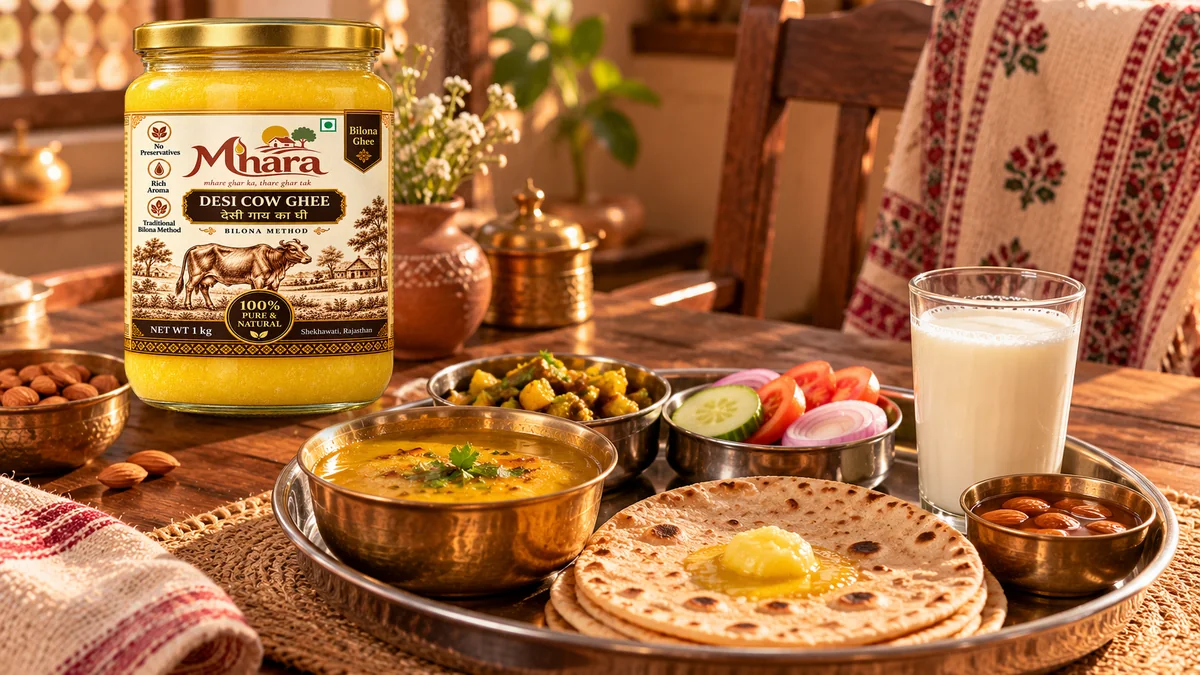
Ghee in pregnancy is fine for most healthy women in small amounts, often a teaspoon or two a day counted along with all other cooking fat, with your doctor having the final word. There is no good scientific evidence that extra ghee in the ninth month eases or brings on a normal delivery.
When a woman in our village is expecting, the first thing that changes in the kitchen is the ghee jar. It moves closer to her plate. An extra spoon goes into her dal, a little more goes on her roti, and by the ninth month somebody is sure to say that ghee in warm milk will make the delivery easy. Ghee in pregnancy is one of the oldest pieces of family advice in India, and almost all of it comes from love.
We make and sell ghee, and we would still rather you hear the honest version. In sensible amounts, ghee is a normal, good food for most pregnant women. It is not a medicine, and the belief that it brings an easy normal delivery has no good scientific backing. Below is what tradition says, what research shows, and when your doctor's word comes first.
Is ghee in pregnancy good for you?
For most healthy pregnant women, a little ghee in everyday food is fine. It is an ordinary kitchen fat that Indian women have eaten through pregnancy for generations. Nothing about pregnancy makes a teaspoon of pure ghee on a hot roti suddenly unsafe.
What ghee offers is plain and useful:
- Energy in a small amount. Fat is the most concentrated source of energy in food. When nausea makes big meals hard, a little ghee on khichdi or roti helps a small plate carry more.
- Fat-soluble vitamins. Milk fat naturally carries small amounts of vitamins A, D, E and K, and some fat in a meal helps the body take in fat-soluble nutrients from other foods too, like the carotene in carrots and green leafy sabzi.
- Taste. This sounds small, but it is not. When everything tastes of nothing in the first months, a few drops of ghee in moong dal can be the difference between eating and skipping a meal.
- Very little lactose. Clarifying removes almost all the milk sugar, so ghee rarely troubles women who feel heavy after milk.
What ghee cannot do is make up for a thin diet. Pregnancy needs protein, iron, folate, calcium, fruit, vegetables, water and rest. Ghee only makes those foods taste better and go down easier.
How much ghee in pregnancy is sensible?
There is no special pregnancy number for ghee. The ICMR-NIN Dietary Guidelines for Indians ask everyone, pregnant women included, to keep visible fats like oil, ghee and butter modest, and to limit saturated fat. Ghee is mostly saturated fat, so it sits inside that limit, not on top of it.
Many dietitians in India suggest something like 1 to 2 teaspoons of ghee a day for a healthy pregnant woman, counted together with the oil in her sabzi and dal. That is a range, not a prescription. Your weight gain, blood sugar, blood pressure and how active you are can all change it, so let your obstetrician or a dietitian set your amount.
Pregnancy does need more energy, mostly in the second and third trimesters, but the extra is smaller than most families think. It is closer to one extra small meal than to "eating for two". A katori of dal-rice with a little ghee, or a glass of milk, covers it far better than spoonfuls of ghee. We look at everyday amounts for adults in how much ghee per day.
Ghee in the 9th month for normal delivery: what we actually know
The belief goes like this: in the last month, eat more ghee, or drink it in warm milk, and it will "lubricate" the body, soften the muscles and help the baby come out easily.
We understand where it comes from. Ayurveda gives ghee an important place in care before and during pregnancy. In older times women worked hard till the last day and often did not get enough to eat, so an extra spoon of ghee meant strength. Plenty of women who followed it had normal deliveries, so it feels proven.
Here is the honest part. There is no good scientific evidence that eating ghee makes labour easier, starts labour, or raises the chance of a normal delivery. Ghee you eat is digested like any other fat. It does not coat the birth canal. Whether a delivery is normal depends on things like the baby's position and size, the mother's health and how labour progresses, and a spoon of ghee cannot change those.
Extra ghee late in pregnancy can also cause real trouble: heartburn and acidity, which are already common in the last months, loose motions, and extra weight gain. With gestational diabetes or high blood pressure, it is a bad idea without your doctor's approval.
So our advice is simple. Keep eating your normal small amount if your doctor is happy with it. Do not take large amounts of ghee, or any home remedy, to try to bring on or ease labour by yourself. Ask your obstetrician first, every time.
When to go lighter, and when to ask the doctor first
Please talk to your obstetrician or a dietitian before settling on any amount of ghee if you have:
- Gestational diabetes, or diabetes from before pregnancy
- High blood pressure or pre-eclampsia
- Weight gain your doctor says is faster than it should be
- High cholesterol, a heart condition, or gallbladder or liver trouble
- Strong acidity, nausea or loose motions after rich food
The doctor may then advise less ghee. That is not being against tradition. It is reading your reports.
Purity matters more than quantity
If you eat a little ghee every day for nine months, make sure it is real ghee. Ghee mixed with vanaspati or cheap fats can bring trans fats that nobody should eat, least of all during pregnancy. Buy from a source you trust, notice the smell and texture, and read our guide on how to check purity of ghee.
Handle it cleanly as well. Use a dry, clean spoon every time, keep the lid shut, and throw out ghee that smells sour or stale. Ghee keeps well, but water and wet spoons spoil it faster.
Ghee after delivery: panjiri, gond laddu and good sense
In most Indian homes the bigger ghee tradition comes after the baby arrives. In Shekhawati, a new mother gets gond ke laddu, ajwain and sonth (dry ginger) cooked in ghee with jaggery, and atta or besan roasted slowly in ghee with dry fruit. In Punjab it is panjiri. These foods were made to give a tired mother energy in small bites during the weeks of rest after birth.
They are good foods and also very rich ones. One laddu can carry a fair amount of ghee and sugar. A breastfeeding mother does need extra energy, but one laddu a day with proper meals is very different from three or four. After a caesarean, with diabetes in pregnancy, or if the doctor has said something about weight, ask before starting. We have also not seen good evidence that ghee by itself increases breast milk. Feeding often, eating well and drinking enough water matter more.
If you want to make them at home, our gond ke laddu recipe is the one made in our village kitchen, and the besan chakki recipe is another ghee-rich sweet the family enjoys once the mother is back on her feet.
A small spoon, and a doctor you trust
Ghee in pregnancy is nothing to fear, and nothing to push either. A teaspoon on hot roti, a few drops in dal, and your doctor's word on anything more: that is how we serve it in our own kitchen. If an elder insists on the ninth-month glass of ghee and milk, it is fine to thank them for caring, and then ask your doctor before you drink it.
This is general information from a ghee-making family, not medical advice.
Questions people ask
Is ghee good during pregnancy?
For most healthy pregnant women, a small amount of pure ghee in everyday food is fine. It adds energy, fat-soluble vitamins and taste. It is not a medicine, and women with diabetes, high blood pressure or fast weight gain should ask their doctor about the amount.
How much ghee should a pregnant woman eat daily?
A common practical range is about 1 to 2 teaspoons a day, counted together with the oil used in cooking. It is not a fixed rule. Your obstetrician or dietitian should set the amount based on your weight gain, blood sugar and blood pressure.
Does eating ghee in the 9th month help normal delivery?
There is no good scientific evidence that ghee eases labour, starts it or improves the chance of a normal delivery. Extra ghee late in pregnancy can cause acidity and weight gain. Never use ghee or any home remedy to bring on labour without your doctor.
Can I drink ghee in milk during pregnancy?
A few drops of ghee in warm milk is a traditional habit and usually harmless for a healthy woman if counted in the day's fat. Large amounts at bedtime can cause heartburn. If you have gestational diabetes or high blood pressure, ask your doctor first.
Is ghee safe with gestational diabetes?
Ghee itself has no sugar, but it is rich in calories and saturated fat, and it often comes with sweets like laddus and halwa. With gestational diabetes, your doctor or dietitian should decide how much fat and ghee fits your meal plan.
Is ghee good after delivery?
Ghee-rich foods like gond laddu and panjiri are a long tradition for new mothers and give energy in small bites. They are very rich, so keep portions small, and ask your doctor first after a caesarean or if you had diabetes in pregnancy.