
Ghee for tadka, roti and frying: the ghee smoke point and how much heat it takes
The ghee smoke point is around 250 °C, because the milk solids that burn first in butter have been cooked out and strained away. That makes ghee well suited to tadka, tawa cooking and deep frying, as long as you do not let it smoke.
Ghee takes heat well. The ghee smoke point is around 250 °C, which is higher than butter and higher than many unrefined oils, and that is why Indian kitchens have used it for tadka, tawa work and frying for generations. But a high smoke point does not mean you can ignore the flame. In our kitchen ghee goes in at different heats for different jobs, and sometimes it goes in at the very end, off the flame.
What is the ghee smoke point, and why is it so high
The smoke point is the temperature at which a fat starts to give off a steady, thin blue smoke. Past that point it begins to break down. The taste turns bitter, the smell turns harsh, and the fat starts to darken.
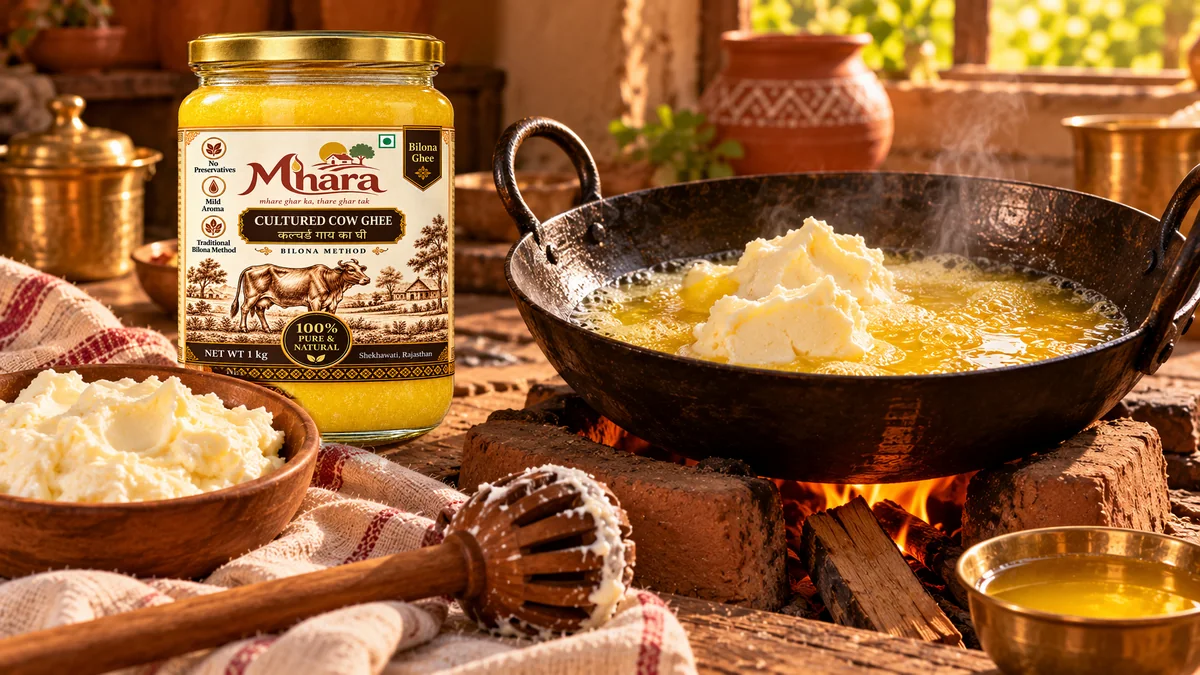
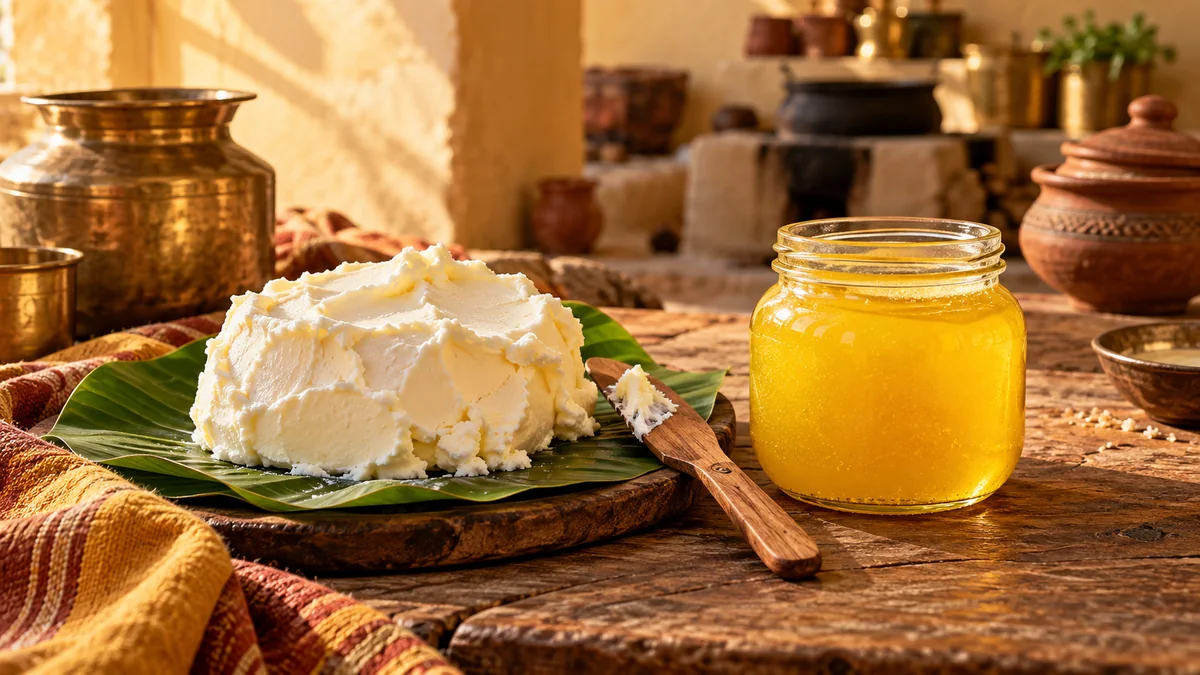
Ghee reaches that point at around 250 °C. The reason is simple. Butter is fat plus water plus milk solids, the proteins and milk sugar. Those milk solids are what burn first in a hot pan, which is why butter browns and blackens quickly. When we make ghee, we cook the makkhan slowly until the water is gone and the milk solids have settled and turned light brown, and then we strain them out. What is left is almost pure milk fat, with very little in it that can scorch early.
The figure is a guide, not a promise. Fresh, well-clarified ghee holds up best. Old ghee, or ghee that has been heated and cooled many times, starts to smoke sooner. So does ghee with fine bits of residue still in it.
Ghee for tadka: getting the timing right
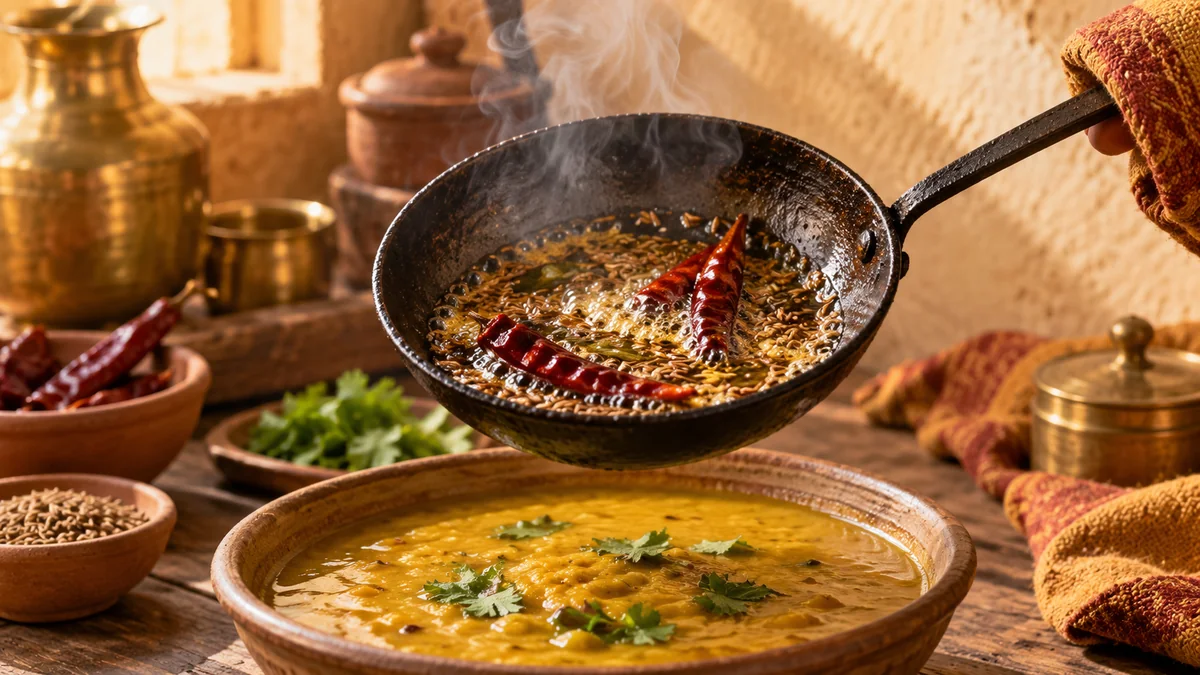
Tadka is where ghee does its best work. The fat carries the smell of the spices into the whole dish, and ghee adds its own aroma on top. The skill is in the timing.
- Heat a teaspoon or two of ghee in a small kadhai or tadka pan on medium flame.
- Drop in one jeera seed. When it sizzles at once and rises, the ghee is ready.
- Add jeera or rai first, then hing a moment later, then dry red chilli or curry leaves.
- When the jeera turns a shade darker and smells toasted, pour it over the dal right away.
If the ghee is smoking before the spices go in, it is too hot. The jeera will blacken in seconds and the dal will taste burnt. Take the pan off the flame for a few seconds, let it calm down, and then start. Hing in particular burns very fast, so it always goes in last and only for a moment.
Roti, paratha and the tawa
For a plain phulka, ghee goes on after cooking, while the roti is still hot. That is the most flavour for the least ghee.
Parathas are different. The ghee goes on the tawa while it cooks, on medium heat, so the layers crisp up without burning. A tawa that is smoking hot will scorch the outside while the inside stays raw. Turn the flame down a little before you spread ghee on the paratha, and let it fry gently. You will hear it sizzle softly, not crackle.
Ghee in the atta, as moyan, is a separate thing. That is about texture, not heat. For churma, baati and mathri the dough gets ghee rubbed in so it turns short and crumbly. We use that method in our churma recipe.
Can we deep fry in ghee
Yes. Deep frying usually happens around 170–190 °C, well below the ghee smoke point, so ghee handles it comfortably. Halwais have fried jalebi, malpua and kachori in ghee for a very long time, and the taste is different from oil frying: richer and more rounded.
A few practical points:
- Use a heavy kadhai so the heat stays steady when you add the food.
- Test with a pinch of batter. It should rise steadily with small bubbles. If it browns instantly, the ghee is too hot.
- Do not overcrowd. Too much at once drops the temperature and the food soaks up ghee.
- Keep the flame medium once the ghee is hot. Ghee does not need high flame to fry well.
Deep frying takes a lot of ghee, so most homes keep it for festivals and mithai. That is a sensible use of an expensive fat.
Can you reuse ghee after frying
You can, with care. After frying, let the ghee cool, then strain it through a fine steel strainer or clean cotton cloth into a dry steel or glass container. Use it again soon for a similar kind of frying, sweet with sweet and savoury with savoury, because it picks up flavours.
Throw it away when any of these happen:
- It has turned dark brown or black
- It smokes at a normal frying heat where it did not before
- It has become thick, sticky or foamy
- It smells burnt, sharp or rancid
Every time fat is heated hard, it breaks down a bit more, and the smoke point drops. Blackened ghee should not go back into food. Do not mix used ghee back into your fresh jar either. Keep it separate and finish it quickly.
When to add ghee at the end instead
Some of the best uses of ghee need no heat at all. The aroma of good ghee is strongest when it is warmed gently, not cooked hard. That is why so many dishes get their ghee at the end:
- A spoon on hot dal-chawal or khichdi at the table
- A thin layer on rotis as they come off the tawa
- A little stirred into halwa or sheera once it is off the flame, for shine and smell
- Drizzled over bajra roti or makki roti in winter, with gur on the side
If you are using a ghee you like for its smell, this is where you will notice it most. Cooking at high heat for a long time takes away much of the aroma, so it makes sense to save a little ghee for the finish.
Which ghee for which job
Any pure ghee handles kitchen heat well. The difference is mostly in flavour and price, so we use them like this at home:
- Everyday tadka, sabzi and paratha: our Desi Cow Danedar Ghee. It is made from the malai of desi cow milk, set to curd and churned, with a lighter, sweeter aroma. It suits daily cooking where you use a bit more.
- Spooned on top at the end: the bilona ghee from whole milk, where the deeper aroma shows.
- Mithai, laddoo and deep-fried sweets: buffalo ghee, which is richer and gives a fuller taste in sweets.
If you are wondering why we do not just use butter on the tawa, our page on ghee vs butter explains the difference in the pan. And for why vanaspati behaves so differently, see desi ghee vs vanaspati.
A note on storage between uses
The ghee you cook with every day sits near the stove, which is the worst place for it. Heat and steam shorten its life and lower its smoke point over time. Keep a small katori near the cooking for the day, and the main jar in a cupboard away from the flame. Our page on how to store ghee covers the rest.
Questions people ask
What is the smoke point of ghee?
Pure ghee has a smoke point of around 250 °C. Fresh, well-strained ghee holds up best; old or repeatedly heated ghee starts smoking sooner.
Can we deep fry in ghee?
Yes. Deep frying happens at roughly 170–190 °C, well below the smoke point of ghee. Keep the flame medium, use a heavy kadhai and do not overcrowd the pan.
Is ghee good for tadka?
Ghee is one of the best fats for tadka because it handles the heat and adds its own aroma. Heat it until a jeera seed sizzles, add the spices, and pour it over before anything turns black.
Can I reuse ghee after frying?
Yes, if you strain it and use it soon for similar frying. Throw it away once it turns dark, smokes easily, turns thick or smells burnt or rancid.
Why does my ghee smoke so quickly in the pan?
The pan may simply be too hot, or the ghee may be old, reheated many times or still have fine residue in it. Lower the flame and use fresh, well-strained ghee.
Is ghee better than butter for cooking on high heat?
For high heat, yes. Butter still has water and milk solids that brown and burn quickly, while ghee has had those removed, so it can take much more heat before smoking.