
Best cow ghee in India: how to choose one, type by type
There is no single best cow ghee in India, because cow ghee is sold in four quite different types: dairy ghee made from cream, breed-labelled bilona ghee, village household bilona ghee, and the ghee you make at home. The best one for you is the jar whose label says cow, names its method and its source, and is priced in line with the milk it needs.
Ask ten families which is the best cow ghee in India and you will hear ten different names, usually the one their mother bought. We sell cow ghee ourselves, so we are not going to pretend to be a neutral judge and hand our own jar the first prize. What we can do is tell you how cow ghee is actually made and sold in this country, and what to check on any jar, ours included.
Best cow ghee in India: the short answer
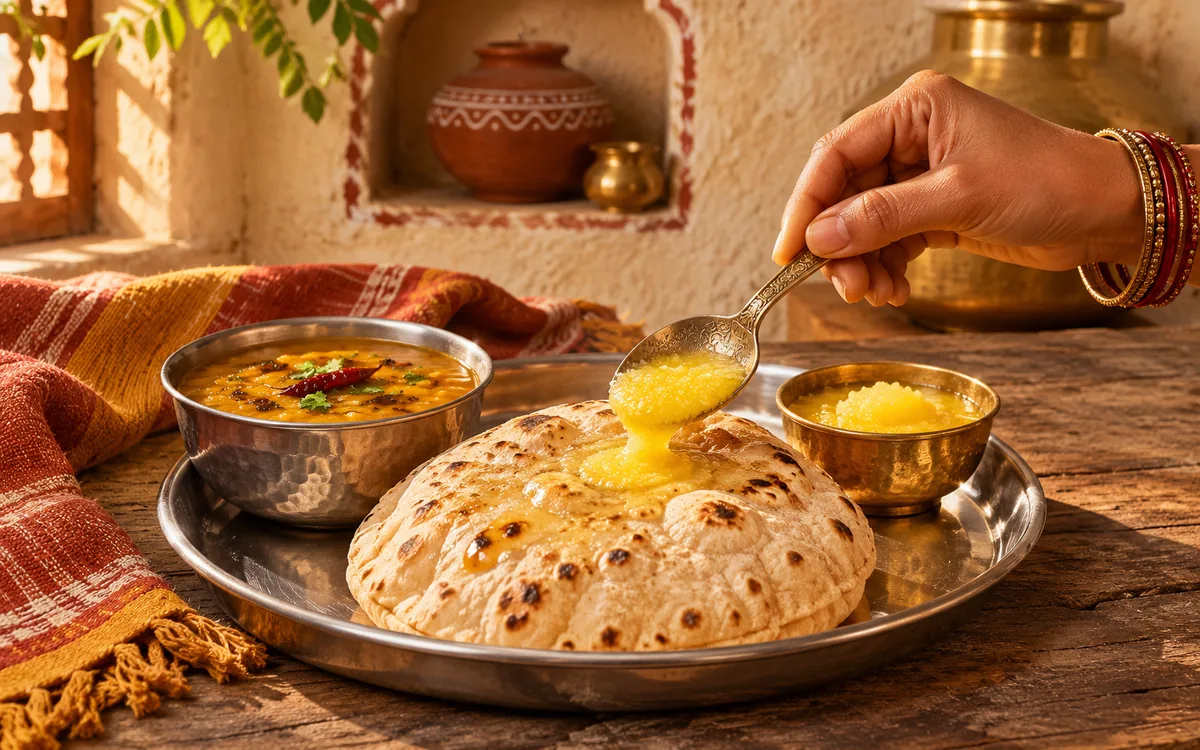
- For the spoon on hot roti, dal and khichdi: a cow ghee made from whole-milk curd by the bilona method, from a source the seller names.
- For everyday frying and tadka in large amounts: a plain dairy cow ghee from a well-known cooperative is a sensible, affordable choice.
- For sweets: many cooks prefer buffalo ghee, which we cover in best ghee for sweets.
The four kinds of cow ghee sold in India
1. Dairy cow ghee
This is the ghee on most shop shelves. Milk from many farms is pooled, the cream is separated by machine, and the cream or butter is cooked into ghee in large batches. It is real ghee, it is consistent from pack to pack, and it costs the least because nothing in the milk is wasted. The aroma is mild.
2. Breed-labelled bilona ghee
These jars name a desi breed such as Gir or Sahiwal and usually carry the word A2. The good ones are made from curd and churned in small batches, and they cost several times what dairy ghee costs. The label alone proves little, so the checks further down matter here. We explain the A2 part in A1 vs A2 ghee.
3. Village household bilona ghee
This is ghee made in homes that keep their own cows: whole milk set into curd, churned with a wooden bilona, the makkhan cooked slowly. It is what most people mean by "ghar ka ghee". It varies a little from batch to batch, because the milk and the weather do. Our own jar belongs here, and this is how our village makes it.
4. The ghee you make at home
If you buy good cow milk and have the patience, the malai you collect over two weeks will give you ghee you made with your own hands. It is a different method from whole-milk bilona, and we have written it out in how to make ghee at home.
Five checks before you call any cow ghee the best
- Does the label say cow? "Desi ghee" and "pure ghee" do not name the animal. A jar sold as cow ghee should say cow ghee.
- Is the method stated? Whole-milk curd, malai curd and cream are three different roads, and they give different aroma and cost. A seller who uses the word bilona should also say curd. The difference is in curd vs cream ghee.
- Is the source named? A village, a district or a farm you could look up is worth more than the words "farm fresh".
- What is it packed in, and when? Glass or steel, a packing date you can read, and a pack size you will finish in a few months.
- Does the price fit the milk? Whole-milk bilona cow ghee takes about 25 to 30 litres of milk for one kilo. A jar that claims this method at close to dairy-ghee prices deserves a question. We do the sums in why bilona ghee is expensive.
Is the most expensive cow ghee the best?
Not automatically. Price should follow the milk and the work. Dairy ghee is cheap because cream is separated efficiently and the rest of the milk is sold as something else. Whole-milk bilona ghee is dear because the whole milk goes into the curd and most of it comes back as chhachh. Beyond that point, a higher price can simply mean a bigger advertising budget or a fancier jar. Compare price per litre, not per jar, and compare like with like: bilona with bilona, dairy with dairy.
Which cow ghee suits which kitchen
- A family that fries and cooks in ghee every day: keep an affordable dairy cow ghee for the kadhai and a smaller jar of bilona ghee for the table.
- A home that uses a spoon or two a day: one jar of whole-milk bilona cow ghee is enough, because here you taste the ghee itself.
- Someone buying for parents or as a gift: choose the jar that names its village and its method. That is what the older generation will ask about.
- A cook who has the time: make your own from malai, and buy bilona ghee for the days you want that deeper aroma.
Where our cow ghee fits
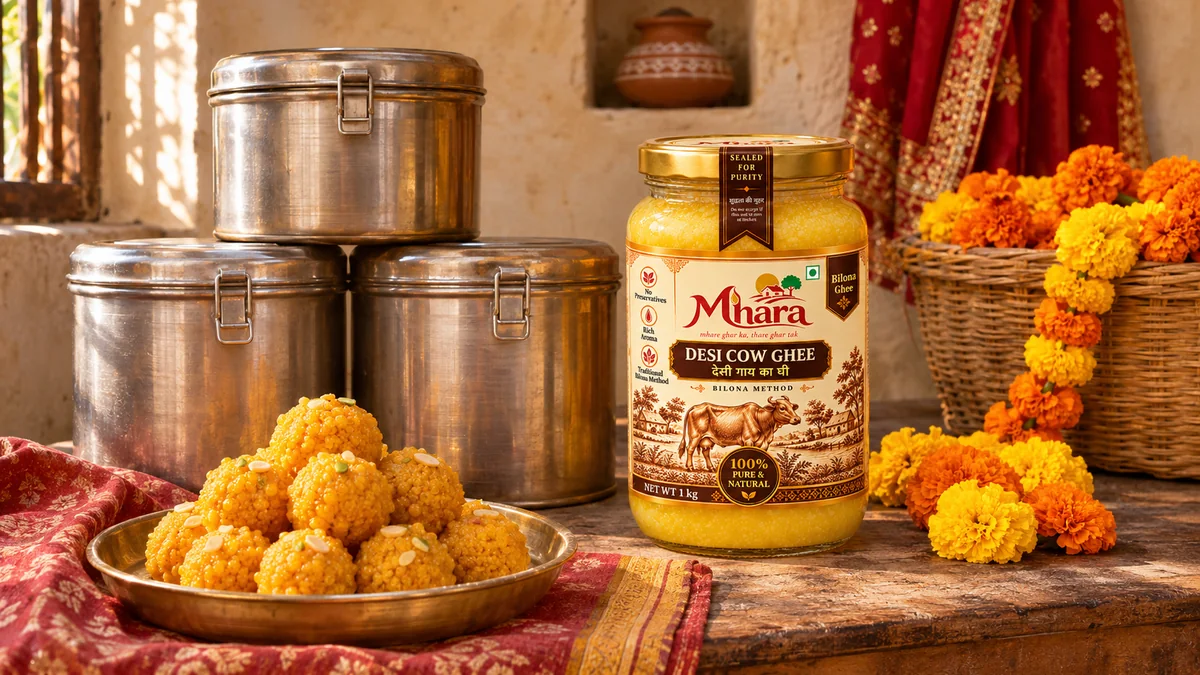
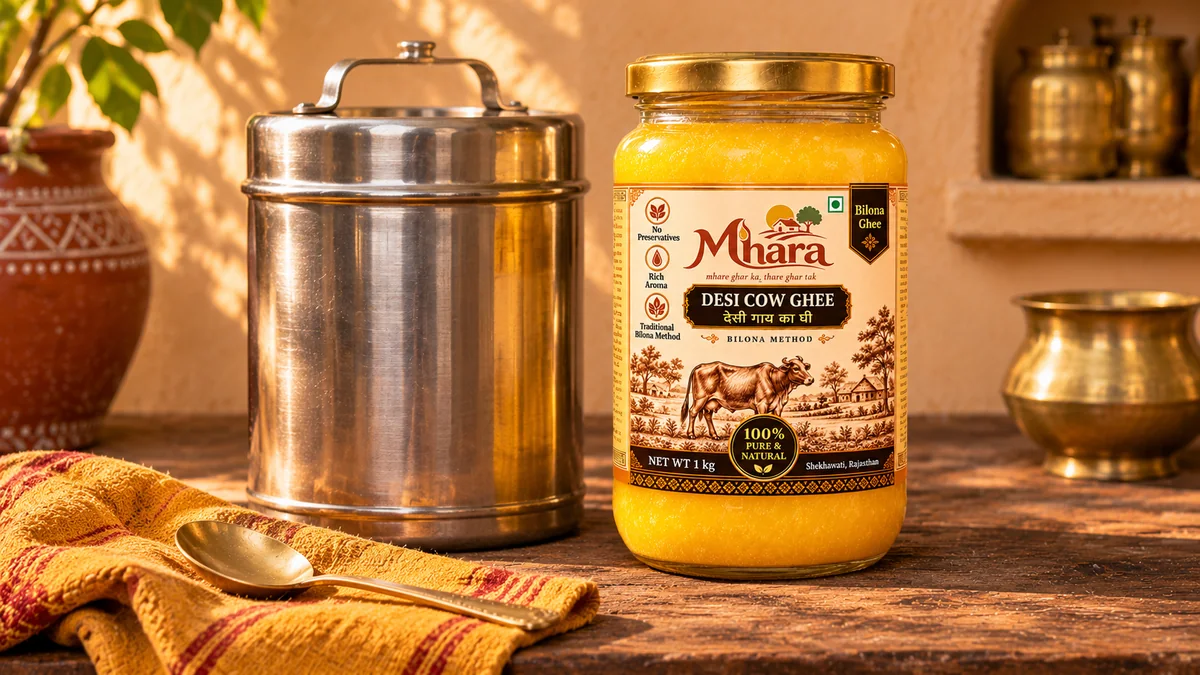
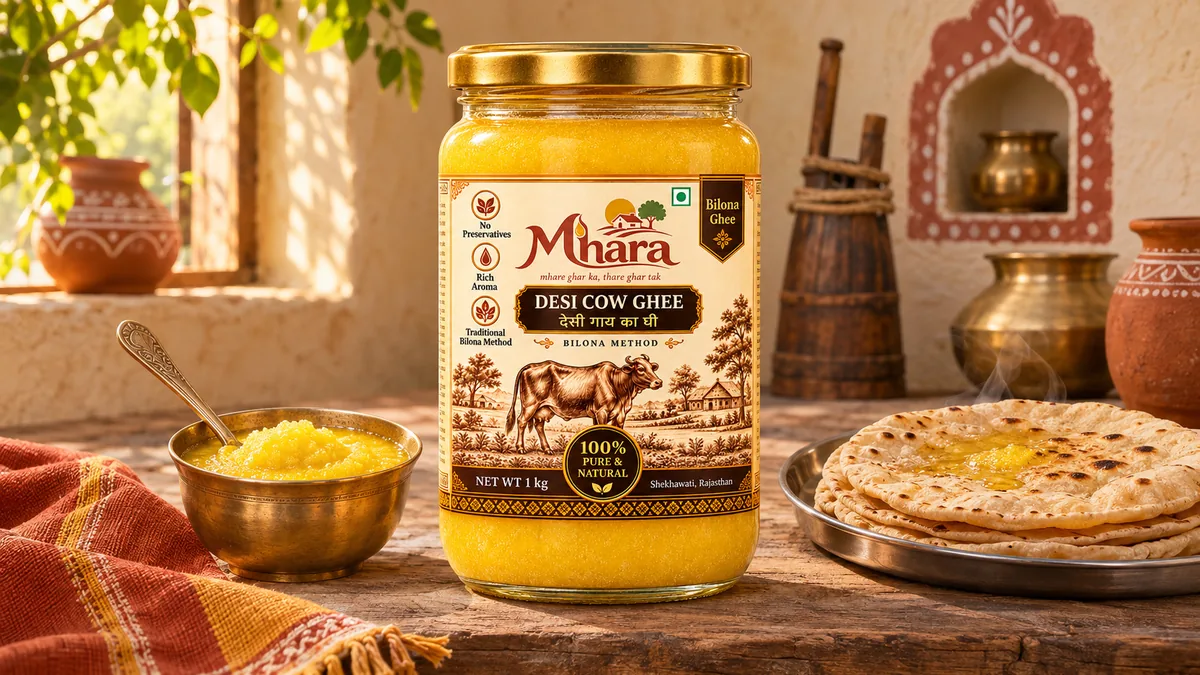
We make one cow ghee. Our Desi Cow Bilona Ghee is made in village homes near Pilani, in Shekhawati, from the whole milk of household desi cows. The milk is set into curd in a clay matka, churned by hand with a wooden bilona, and the makkhan is cooked slowly in a clay handi over a wood and kanda fire. Nothing is added.
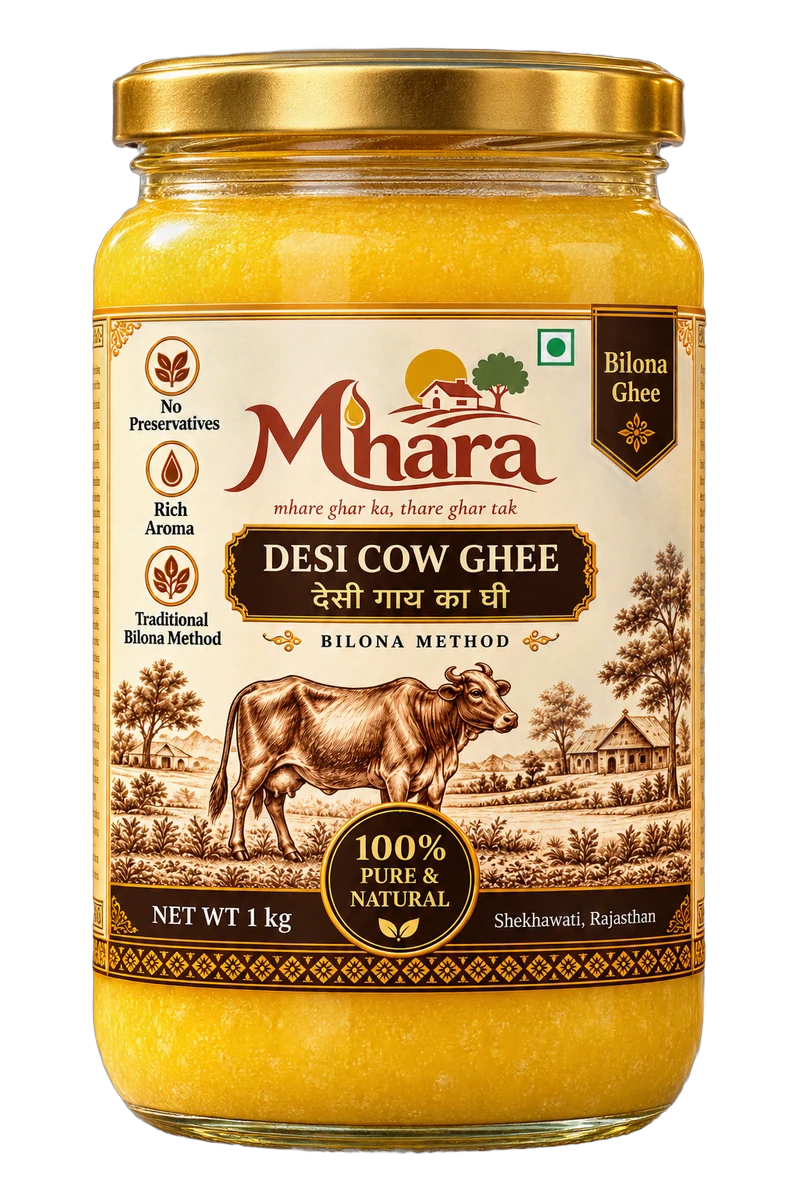
It comes in 500 ml (₹1,099) and 1 litre (₹1,999) glass jars, and in 2 litre and 5 litre steel tins. We will not tell you it is the best cow ghee in India. Hold it against the five checks above, the same way you would any other jar, and decide for yourself.
Questions people ask
Which is the best cow ghee in India?
There is no single best cow ghee for every home. For eating on roti and dal, look for cow ghee made from whole-milk curd by the bilona method, from a source the seller names. For daily frying, a plain dairy cow ghee is a sensible choice.
Is bilona cow ghee better than regular cow ghee?
It has a deeper aroma and a grainier set, because it is made from whole-milk curd in small batches. Regular dairy ghee is made from cream and is milder and cheaper. Both are real ghee, and which one is better depends on how you use it.
Is yellow colour proof of pure cow ghee?
No. Cow ghee is naturally yellow because of the pigment in cow milk, but the shade changes with the season and the fodder, and colour can also be added. Read the label and the ingredient list instead of trusting the colour.
Why is some cow ghee so cheap?
Dairy cow ghee is made from machine-separated cream in large batches, and the rest of the milk is sold as other products, so it costs less to make. A very low price on a jar that claims whole-milk bilona is worth questioning.
Is A2 cow ghee the best cow ghee?
Not necessarily. A2 refers to a milk protein, and ghee is almost entirely fat, so the word tells you little about the ghee itself. How the ghee is made and where the milk comes from matter more.
How much does good bilona cow ghee cost?
It depends on the milk price and the method. Whole-milk bilona cow ghee needs about 25 to 30 litres of milk for a kilo, so it costs several times what dairy ghee costs. Compare price per litre, and compare bilona with bilona.