Ghee on empty stomach: what it does, and is the habit worth it?
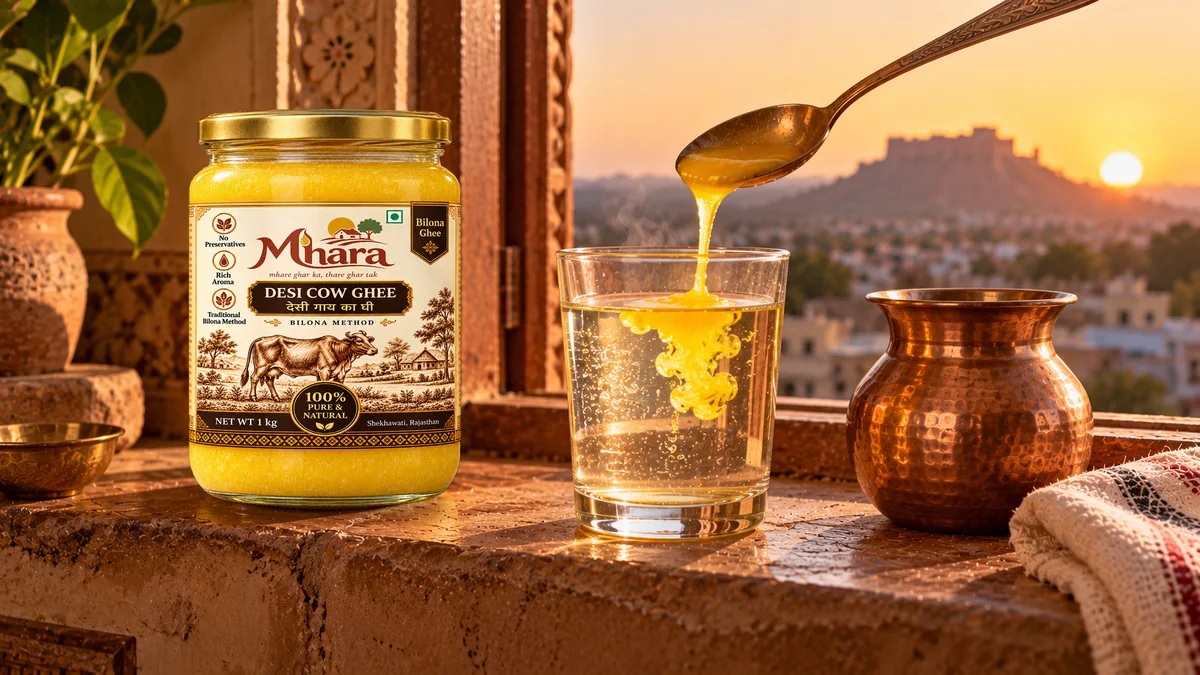
Ghee on empty stomach usually means half to one teaspoon in warm water first thing in the morning, an Ayurvedic habit many people use for dry stools and mild constipation. There is very little direct research on it. It may ease things for some people, but it is not a cure, and it still adds about 45 kcal.
In many Shekhawati homes, the first sound of a winter morning is warm water being poured from a copper lota. Elders in the village stir half a spoon of ghee into it and drink it standing at the window before their morning walk. They swear by it. Most of them also walk a few kilometres before breakfast, so it is hard to say which habit deserves the credit.
Now the same habit is all over social media as ghee on empty stomach, with promises that range from glowing skin to flat bellies. Here is what tradition says, what research can and cannot tell us, and who should not try it.
What does ghee on empty stomach mean?
It usually means one of these, taken before any food or tea:
- Ghee and warm water: half to one teaspoon of ghee stirred into a glass of warm water, sipped slowly.
- Ghee alone: half to one teaspoon of ghee on its own, followed by warm water.
Some families add a pinch of haldi or a little jaggery. The amount that people talk about is small, a teaspoon at most, and that matters for everything below.
What Ayurveda says about ghee in the morning
We keep tradition and research apart, because they answer different questions. In Ayurveda, ghee is valued as a sneha, an oily, lubricating substance, and taking ghee internally is part of what the texts call snehana. It is described as easing dryness in the body, soothing the gut and helping the bowels move, which is why ghee in the morning is a common household answer to hard, dry stools. Many vaids also say the right amount depends on a person's digestion and constitution, and that too much ghee can make digestion heavy.
This is a long, respected tradition, and many people in our village follow it. It is not the same as clinical proof.
What research actually shows
Honestly, very little. We could not find good studies that test ghee first thing in the morning against a control group in people. So anything stronger than "it may help some people" is guesswork. A few well-known facts do make the tradition plausible:
- Eating anything, and fat in particular, signals the gallbladder to release bile and nudges the gut into moving. This is the body's normal reflex after food.
- A glass of warm water on waking, and a fixed morning routine, help many people pass stools regularly, ghee or no ghee.
- Fat can soften stools a little for some people.
So the warm water, the routine and the small amount of fat may all play a part. Nobody can tell you how much is the ghee. What research does not support is ghee on empty stomach as a detox, a fat-burner, a skin treatment or a cure for anything.
Is ghee with warm water good for constipation?
For mild, occasional constipation with dry, hard stools, it is a gentle thing that some people find helpful, and it is unlikely to harm a healthy adult at one teaspoon. People who eat very little fat in their diet may notice it more. People who already eat plenty of ghee and oil may notice nothing at all.
But ghee for constipation is not where most of the help comes from. More fibre (whole dal, sabzi, fruit, bajra and other whole grains), enough water through the day and daily walking do far more. And constipation that lasts for weeks, is painful, or comes with blood, weight loss or a change in your usual pattern needs a doctor, not a home remedy.
Who should avoid ghee on an empty stomach
Please skip this habit, or ask your doctor first, if any of these apply:
- Gallstones or gallbladder problems. Fat makes the gallbladder contract, and in some people that can bring on pain.
- Acid reflux, gas or nausea in the morning. Fat on an empty stomach makes these worse for some people.
- High LDL cholesterol or heart disease. Ghee is mostly saturated fat. Your doctor should decide how much, if any.
- Trying to cut calories. A teaspoon is about 45 kcal. Over a month, that is around 1,350 kcal, so count it.
- Diabetes, liver or kidney conditions, pregnancy, or children. Get advice that fits the person.
Side effects of ghee on empty stomach
At half to one teaspoon, most healthy adults notice nothing worse than a slightly greasy taste. The side effects people report usually come from larger amounts, or from people who were never suited to it:
- nausea or a heavy feeling in the stomach
- acidity or burning, especially in people prone to reflux
- loose stools, if the amount is more than the body is used to
- slow weight gain, when the spoon is added on top of a normal diet
More ghee is not a stronger remedy. If one teaspoon does nothing for you, two will not do twice as much.
Does ghee on empty stomach help weight loss?
No food burns fat, and the morning spoon is no exception. If it replaces a sugary chai with biscuits, you may come out ahead. If it is extra, it is just 45 more kcal. We go through the numbers in ghee for weight loss.
Gentler ways to get the same good
If the idea behind the habit appeals to you, a little ghee to keep things moving and a calm start to the day, there are other ways to do it:
- Put your teaspoon of ghee on food instead: on a hot roti, in dal, on khichdi. It still does its work, with less chance of nausea.
- Start the day with a plain glass of warm water and a short walk.
- Eat fibre at every meal and drink water through the day.
- If you like ghee in the evening, the old habit of a spoon in warm milk is covered in ghee in milk at night.
Whichever way you take it, count the morning spoon with the rest of your fat for the day. Our guide how much ghee per day explains how, and desi ghee benefits sorts what ghee does from what is only claimed.
So is it worth it? If you are healthy, get mild, dry constipation now and then, and enjoy the quiet ritual, half a teaspoon in warm water is a harmless thing to try. If you are doing it to lose weight, clear your skin or "detox", save the ghee for your dal.
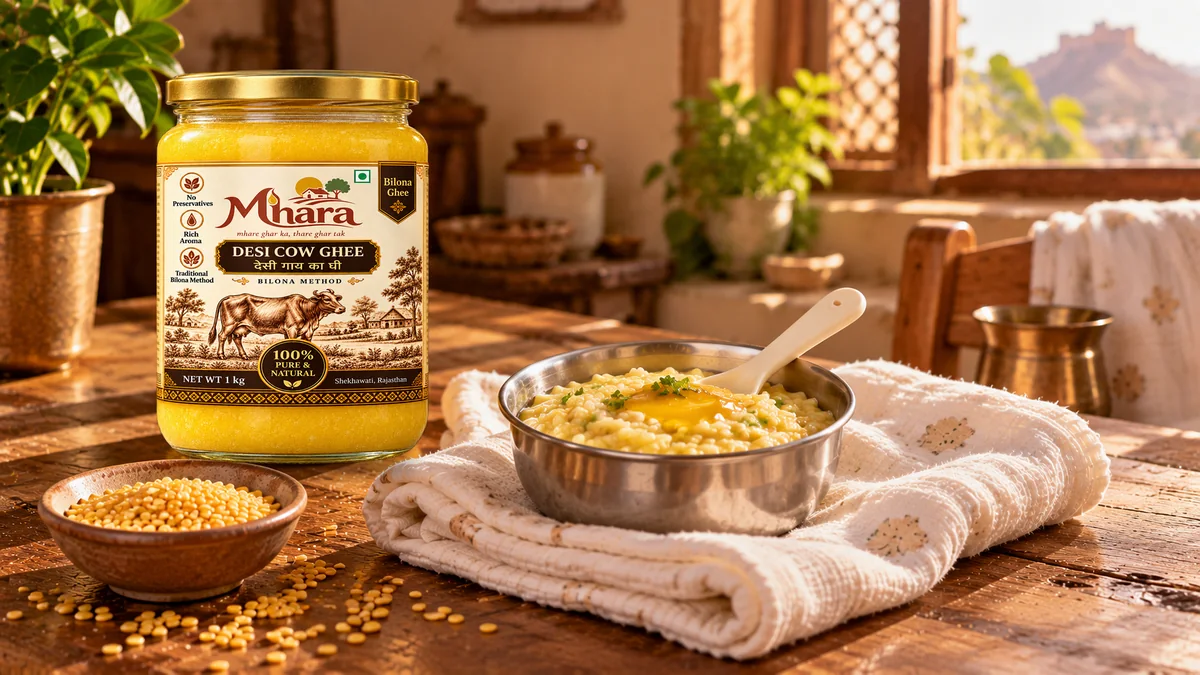
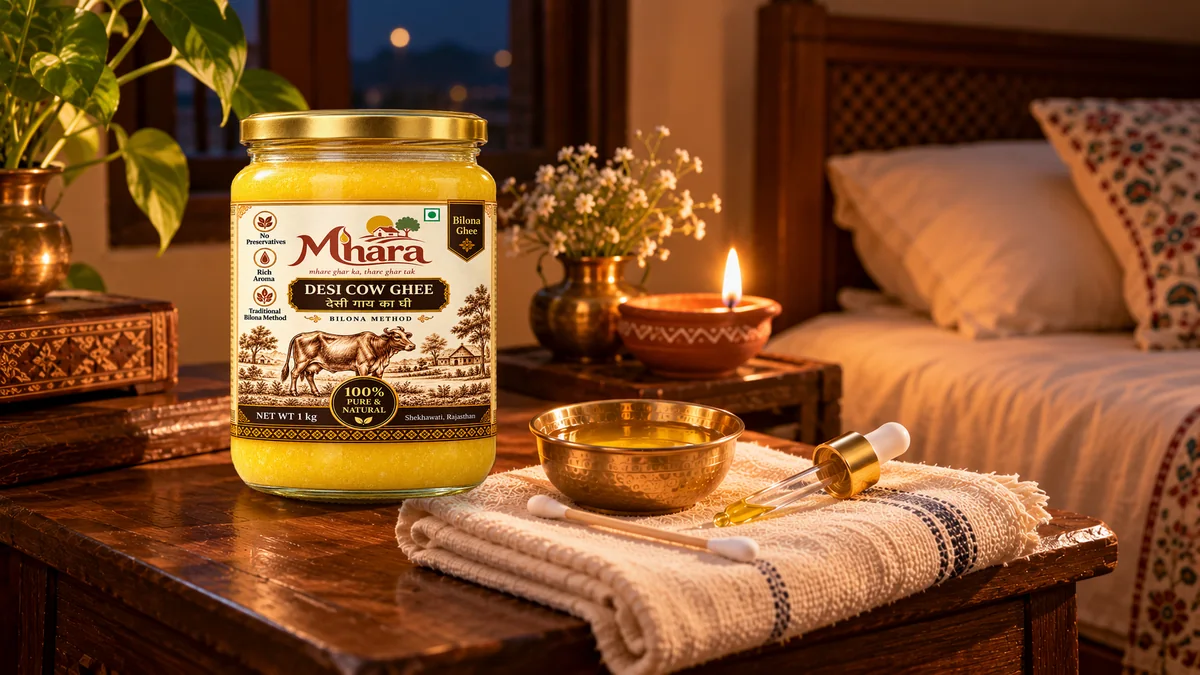
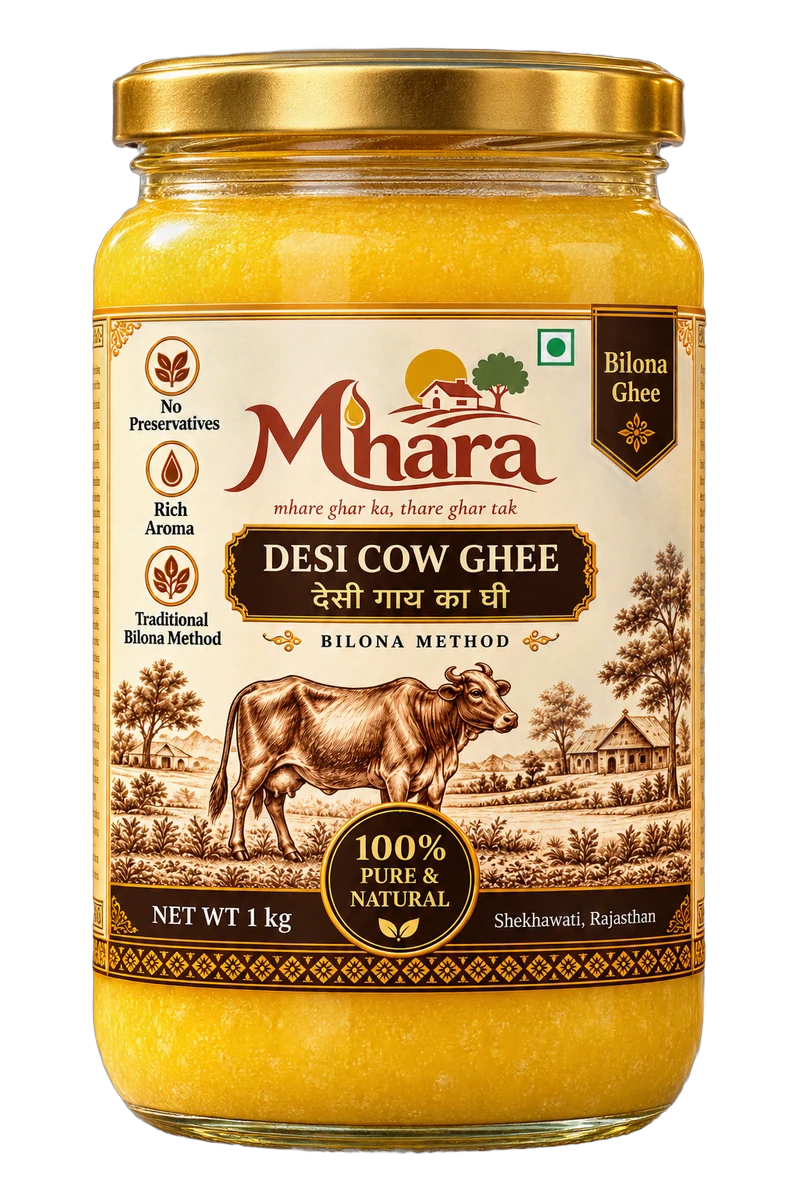
If you do keep the morning habit, choose a ghee you enjoy tasting plain, because there is nothing to hide it. Our Desi Cow Bilona Ghee is churned by hand from curd of whole desi cow milk and cooked slowly. Its clean, nutty smell makes a plain spoonful in warm water easy to like.
This is general information from a ghee-making family, not medical advice.
Questions people ask
Is it good to eat ghee on an empty stomach?
For a healthy adult, half to one teaspoon of ghee in warm water in the morning is unlikely to harm and may ease mild constipation for some. There is little direct research on it, and it is not a cure. People with gallbladder trouble, reflux or high LDL should ask a doctor first.
Does ghee with warm water help constipation?
Some people with mild, dry constipation find it helps, and Ayurveda has long used ghee this way. Good studies are lacking. Fibre, enough water and daily walking usually help more. Constipation that lasts weeks or comes with pain or blood needs a doctor.
How much ghee should I take on an empty stomach?
If you try it, half to one teaspoon is the usual amount, stirred into warm water and sipped slowly. More is not a stronger remedy and adds calories. Count it within your daily fat, and stop if it causes nausea, acidity or loose stools.
What are the side effects of ghee on an empty stomach?
Some people get nausea, a heavy stomach, acidity or loose stools, especially with larger amounts. Those with gallstones may get pain, because fat makes the gallbladder contract. Taken daily on top of a normal diet, it can also add to slow weight gain.
Does ghee on an empty stomach reduce weight?
No. There is no good evidence that the morning spoon of ghee burns fat. A teaspoon adds about 45 kcal, so it helps only if it replaces something less useful, like sugary tea and biscuits. Otherwise it simply adds calories.
Who should not take ghee on an empty stomach?
People with gallstones or gallbladder problems, acid reflux, high LDL cholesterol or heart disease should avoid it or ask their doctor first. So should anyone with diabetes, liver or kidney conditions, pregnant women, and parents thinking of giving it to children.