
Ghee for skin in winter: lips, heels, dry patches, and when not to
Ghee for skin works best as a simple winter moisturiser: a thin layer seals water in on dry lips, cracked heels, hands and elbows. It will not clear pimples, wrinkles or tan, and it can feel heavy on oily or acne-prone faces, so do a patch test first.
In December the air in Shekhawati turns dry and sharp. By the second week of winter, heels crack in almost every house in the village, children's lips split at the corners, and the backs of everyone's hands look like dry bajra stalks. The fix in Shekhawati homes has always been the same: a small katori of ghee kept near the chulha, warmed between the palms and rubbed in before bed. Using ghee for skin is one of the oldest village habits there is, and in winter it really does help. It also gets credit for things it cannot do, so this page covers both.
Why ghee helps dry winter skin
Dry skin is mostly skin that loses water faster than it can hold it. Cold air, hot baths, soap and wind strip away the thin oily layer that normally slows that loss. Ghee is almost pure fat. Spread thinly, it sits on the surface like a light seal, so less water escapes. Skin doctors call things that work this way emollients and occlusives. Petroleum jelly and many winter creams work on the same idea.
So ghee is not feeding your skin or doing anything magical. It is doing the plain, useful job of keeping moisture in, and that is exactly what cracked heels and chapped lips need.
Ghee for skin: how we use it at home
Three small rules make all the difference:
- Use very little. A pea-sized amount covers both hands. More only makes everything greasy.
- Put it on damp skin. After a wash or a bath, pat dry and apply while the skin is still a little damp, so there is water to seal in.
- Do it at night. Ghee has a smell and leaves a shine. At night it gets hours to work and your clothes stay clean.
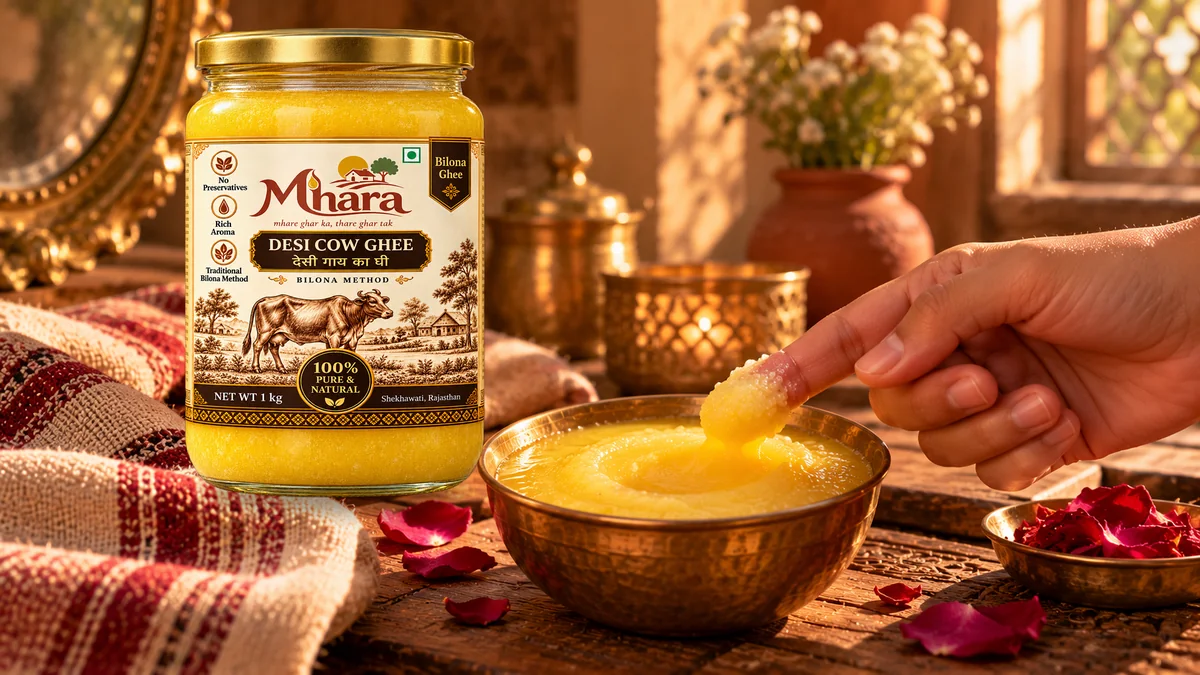
In cold weather the ghee in the jar goes hard. Take a little out with a clean, dry spoon, put it on your palm and rub your palms together for a few seconds. Body heat melts it quickly. If you wonder why the jar sets solid at all, read why ghee solidifies in winter.
Is ghee good for dry lips?
This is where ghee is at its best. Before bed, rub a tiny bit on your lips, corners included. In the morning they feel soft. During the day a lip balm is more practical, but at night ghee is hard to beat, and it does no harm if a little ends up in your mouth. That is why so many mothers use it on children's lips. For a baby, ask your paediatrician first.
Try not to lick your lips through the day. That habit dries them out more than the cold does.
Ghee for cracked heels, hands and elbows
Village heels crack because people walk on dry ground and wear open chappals all winter. City heels crack too. This is the routine we follow:
- Soak your feet in warm water for ten minutes.
- Rub the hard skin gently with a pumice stone. Stop well before it hurts.
- Pat dry, then work half a teaspoon of ghee into each heel, pressing it into the cracks.
- Pull on old cotton socks and go to sleep.
Do this every night for a week and most mild cracks soften. The same pea-sized dab works on dry knuckles, the skin around the nails, and rough elbows and knees.
Deep cracks that bleed, hurt when you walk, or look red and swollen are a different matter, especially if you have diabetes. Please show those to a doctor instead of treating them at home.
Which ghee should you put on your skin?
Use plain, pure ghee with nothing added: no salt, no flavour, no colour. Fresh ghee with a clean, sweet smell is best. Ghee that smells sour or sharp has started to go rancid and belongs neither on your skin nor in your food. Our guide on how to check purity of ghee helps you judge a jar.
Most families use cow ghee on the skin. It stays softer at room temperature and spreads more easily than buffalo ghee, which sets harder and whiter. The ghee you cook with is perfectly fine. There is no need for a special skin ghee.
Shata dhauta ghrita, the old washed ghee
You may see the name shata dhauta ghrita on Ayurvedic creams. It means "ghee washed a hundred times". Ghee is rubbed with cold water in a metal vessel, the water is poured off, and this is repeated again and again until the ghee turns into a light, white, whipped cream that spreads easily and feels less greasy. Ayurveda has used it on dry and irritated skin for a long time.
It is a lovely tradition, and the texture really is nicer than plain ghee. Modern research on it is limited, though, and it is not a medicine for skin disease. If you buy a ready-made one, patch-test it like anything else.
Ghee on face overnight: is it a good idea?
It depends on your skin. If your face feels dry and tight in winter, a very thin layer at night on the dry patches, such as the cheeks or around the nose, may help in the same way it helps your hands. Wash your face in the morning with plain water or a mild face wash.
If your skin is oily, or you get pimples easily, be careful. Ghee is heavy, and on a face that already makes plenty of oil it can block pores and bring on more breakouts for some people. There is no good research on ghee and acne either way, so your own skin has to tell you.
Before you try ghee on your face overnight, do a patch test. Put a little on the inside of your arm or behind your ear, leave it for a day, and look for redness, itching or small bumps. If anything shows up, skip it.
What ghee will not do for your skin
A lot of posts promise far more than this. In plain words, there is no reliable evidence that ghee:
- removes pimples, acne marks or dark spots
- clears tan or makes skin fairer
- removes wrinkles or slows ageing
- cures eczema, psoriasis or any other skin disease
Ghee does carry some vitamin A and E, as milk fat does, but rubbing it on is not the same as a tested skin treatment. The glow people notice is mostly the soft shine of well-moisturised skin. That is a good thing. Just don't expect more from it.
When not to put ghee on skin
- Burns. The old habit of putting ghee on a burn keeps heat in the skin. Cool the burn under running tap water for 20 minutes instead, and see a doctor if it is large, blistered, or on the face or hands.
- Cuts, open wounds and infected skin. Anything oozing, filled with pus, hot to touch or spreading needs a doctor, not ghee.
- Rashes and skin conditions. With eczema, a fungal infection or an allergy, ask a dermatologist before putting anything new on it.
- Active pimples. Leave those areas alone.
That is the honest size of it. It is still a winter habit worth keeping. For lips, heels, hands and dry patches, ghee for skin is cheap, gentle and already sitting in your kitchen. Use a little, use it at night, and use it on skin that is simply dry, not broken or sick. If you also oil your hair with ghee in winter, we have written about that in ghee for hair, and what eating ghee can and can't do is in desi ghee benefits.
This is general information from a ghee-making family, not medical advice.
Questions people ask
Is ghee good for skin?
Ghee is good for dry skin in one plain way: a thin layer slows water loss and keeps skin soft. It works well on lips, heels, hands and elbows in winter. It is not a treatment for acne, wrinkles, tan or skin disease.
Can I apply ghee on my face overnight?
If your face is dry, a very thin layer on the dry patches at night may help. If your skin is oily or acne-prone, ghee can block pores for some people. Do a patch test on your arm first and wash your face in the morning.
Is ghee good for dry, chapped lips?
Yes, it is one of the best uses. Rub a tiny amount on your lips before bed, including the corners. It keeps them soft overnight and does no harm if a little is swallowed. For babies, ask your paediatrician first.
How do I use ghee for cracked heels?
Soak your feet in warm water for ten minutes, rub gently with a pumice stone, pat dry and massage half a teaspoon of ghee into each heel. Wear cotton socks overnight. See a doctor for deep, bleeding or swollen cracks, especially with diabetes.
Does ghee remove pimples, dark spots or tan?
There is no reliable evidence that it does. Ghee moisturises, which can make skin look healthier, but it does not clear acne, lighten spots or remove tan. On oily skin it may even make pimples worse.
Can I put ghee on a burn?
No. Ghee keeps heat in the skin. Cool a burn under running tap water for about 20 minutes and cover it loosely with a clean cloth. See a doctor if the burn is large, blistered, or on the face or hands.