
Ghee diya for Diwali: which ghee, how much, and how to light it
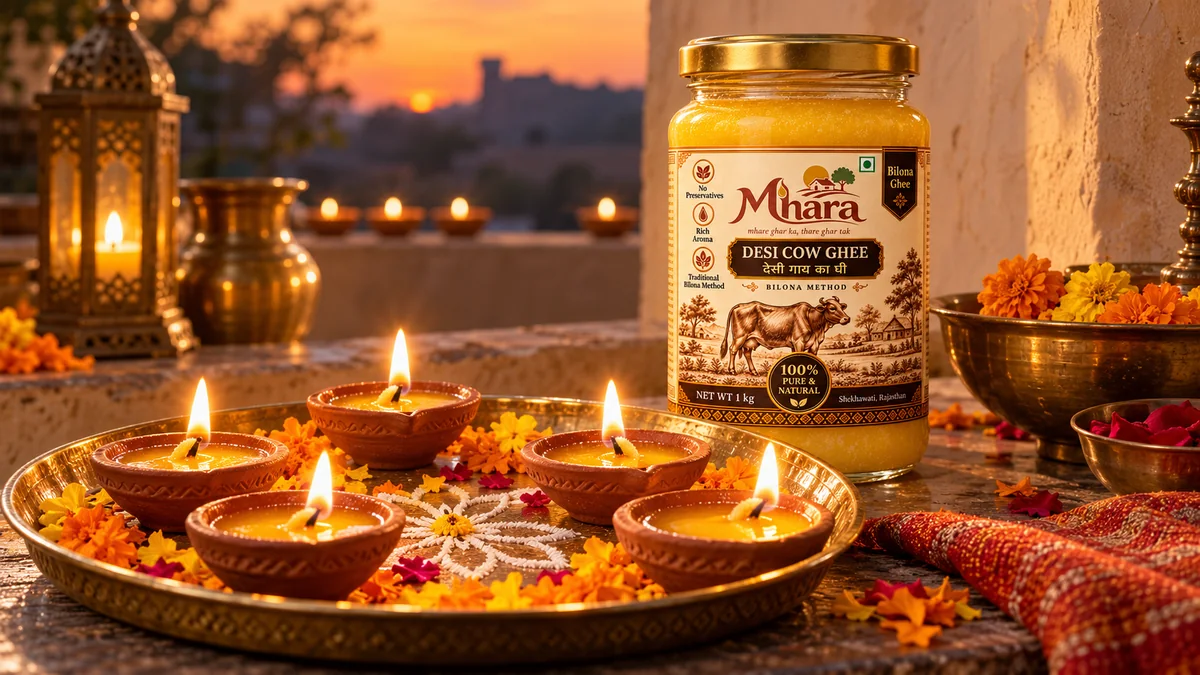
A ghee diya is a clay lamp filled with desi ghee and a cotton wick, lit for Lakshmi puja on Dhanteras and Diwali. Many families use cow ghee for the puja lamps. One teaspoon (about 5 ml) burns for roughly one to two hours, depending on the wick.
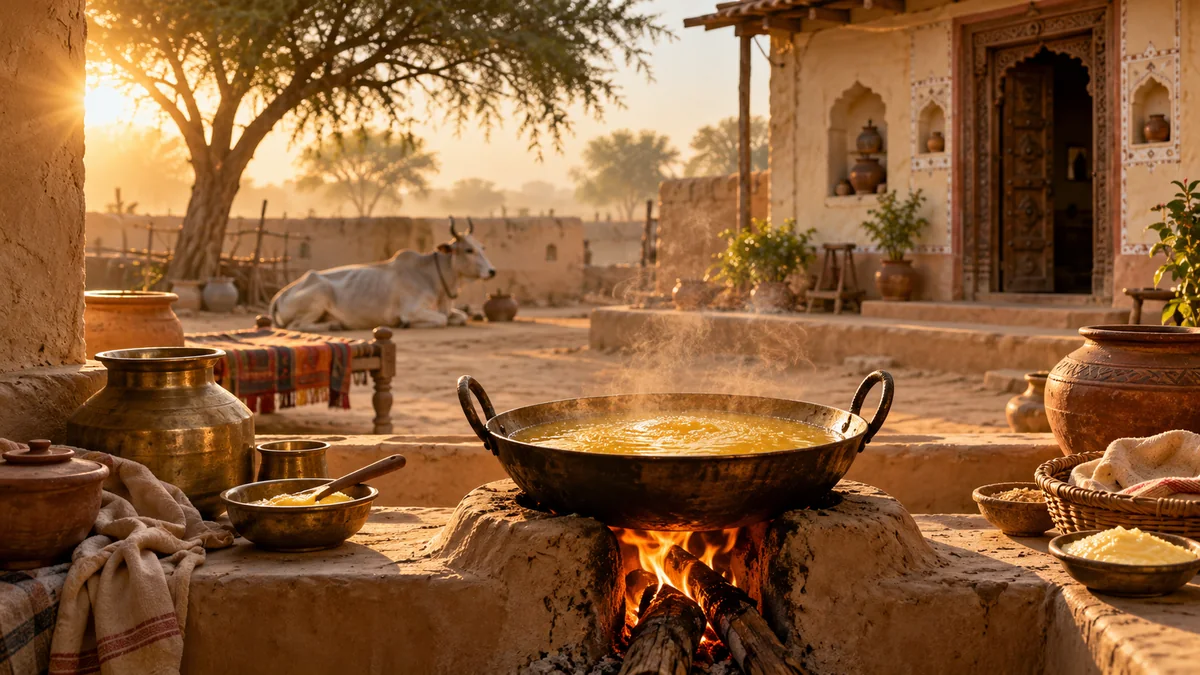
On Dhanteras evening in our village, the kitchen can wait. In many homes the women sit on the verandah floor with a steel katori of melted ghee, a heap of cotton and a stack of clay diyas that have been soaking in a bucket since noon. Wick after wick gets rolled between the palms, and by the time the sun drops behind the khejri tree, a row of diyas is waiting on the brass thali for Lakshmi puja.
If you are lighting one at home this year, this page covers the practical side: which ghee to use, how much to pour, which wick to roll, how long it burns and how to keep it safe. Diwali falls on Sunday 8 November in 2026, with Dhanteras on Friday 6 November, so there is still time to get the cotton and the ghee ready.
Why do families light a ghee diya on Diwali?
In most Hindu homes, ghee is the offering. It goes into the havan, onto the prasad and into the lamp in front of the gods. A ghee diya is lit for Lakshmi and Ganesh on Diwali night, for Dhanvantari on Dhanteras in many families, and in the puja corner every evening in more traditional houses. The idea is simple. You offer the best thing your kitchen has, and in a cattle-keeping village that has always been ghee.
There is a quieter reason too. A ghee flame is soft, steady and golden, and it smells of warm milk fat rather than raw oil. Sit near one for a few minutes and you understand why grandmothers want it in the puja room.
When people ask about ghee diya benefits, they often repeat that ghee smoke purifies the air or kills germs. We have not seen good evidence for that, and we will not tell you so. Every flame makes some smoke and soot. Light it for devotion and for the beauty of it, and keep a window open.
Ghee diya or oil diya: which should you light?
Both belong to Diwali. Most homes do a mix, and so do we.
- Ghee diya: kept for the puja itself, the one or five lamps in front of Lakshmi and Ganesh. Clean golden flame, mild smell, a little more costly per diya.
- Mustard oil diya: the usual choice for the dozens of diyas on the roof, the doorstep and the boundary wall. Cheaper, burns well, a bit smokier.
- Til oil diya: preferred in some families and temples, especially for Shani puja on Saturdays.
So you do not need kilos of ghee for Diwali. A jar for the puja diyas and a bottle of mustard oil for the rest is how most families in Shekhawati manage it.
Which ghee is best for a diya: cow or buffalo?
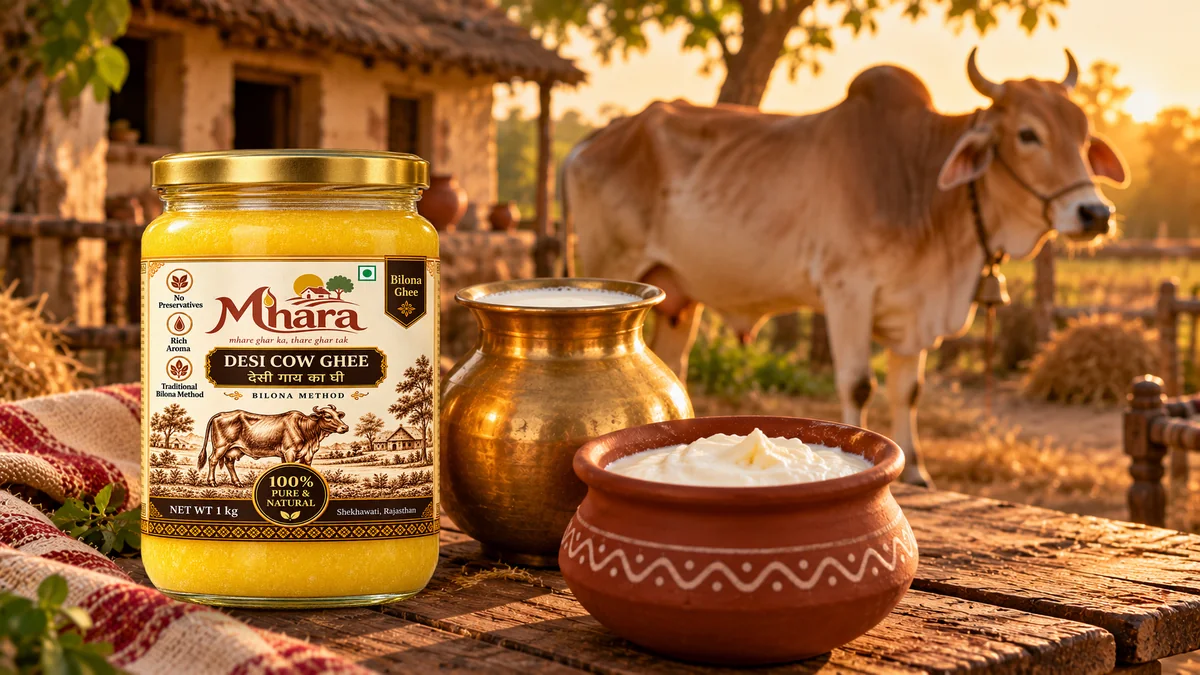
For puja, many families specifically use cow ghee. That is tradition, and the cow has a special place in it. A cow ghee diya burns with a golden-yellow flame and gives off that familiar nutty smell, which is a big part of how a puja room feels on Diwali night.
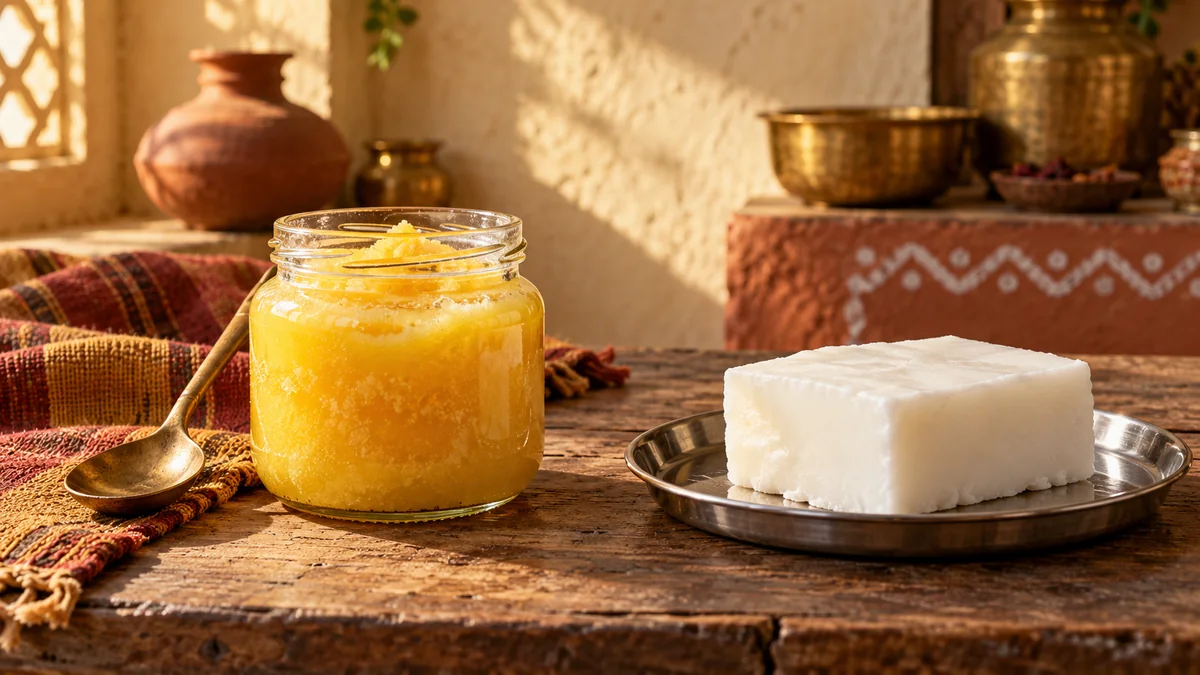
Buffalo ghee also burns well in a diya. It is whiter and firmer at room temperature, so on a cold November evening it may sit in the diya as a soft solid until the flame warms it. If your family has always used buffalo ghee, use it. We compare the two properly in cow ghee vs buffalo ghee.
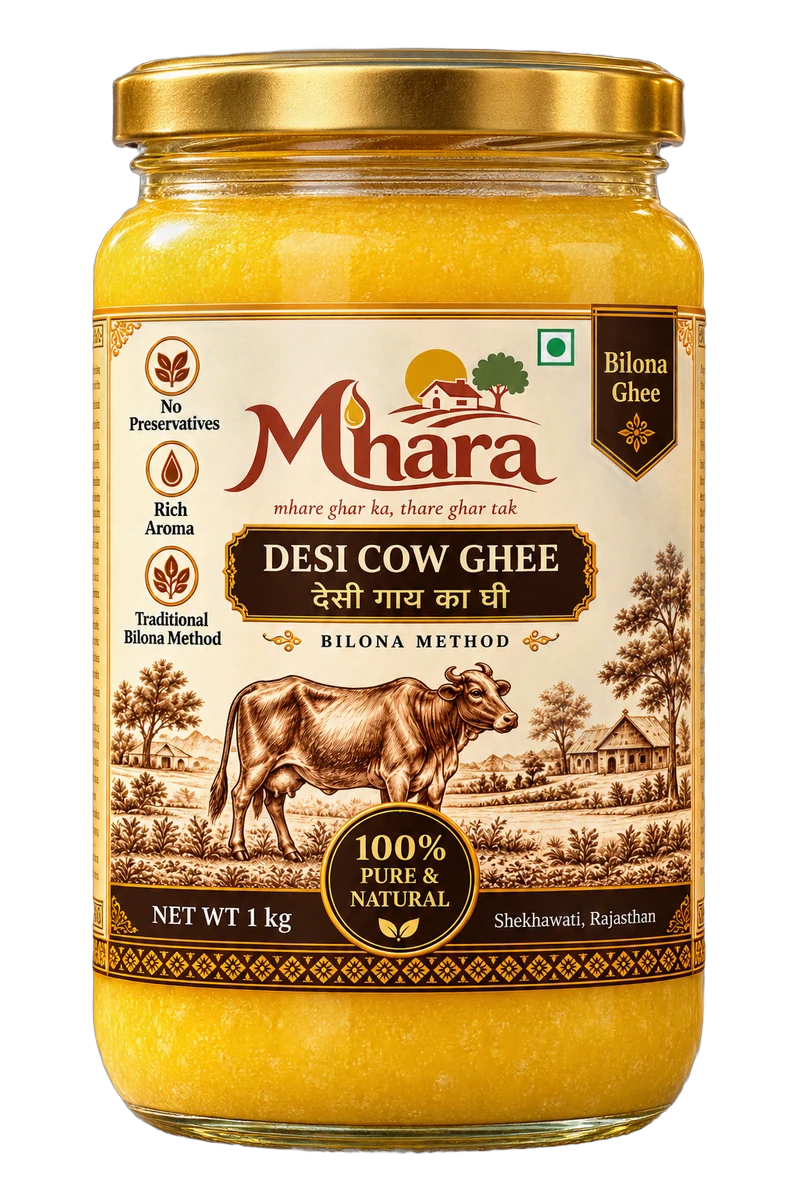
What matters more than the animal is that it is real ghee. Vanaspati or a blended fat smells different and is not what tradition asks for. Bilona ghee, made by churning curd into makkhan and slowly cooking it down, is what most village homes keep for the ghee lamp for puja. If you want to know how that is made, read what is bilona ghee.
How much ghee in one diya, and how long does a ghee diya burn?
A regular clay diya, the size sold in every Diwali market, holds about one to two teaspoons, roughly 5 to 10 ml. With a normal cotton wick, one teaspoon of ghee burns for roughly one to two hours. That is a rough figure from our own verandah, not a lab number. A thick wick, a draught from the door or a very shallow diya will finish it sooner.
A tall flame pulls up more ghee than it can burn cleanly, and that is when it smokes. Ghee is quite stable in a hot kadhai, as we explain in ghee smoke point, but a wick is a different thing, so keep it short.
A rough plan for the festival:
- Five diyas for Lakshmi puja, topped up once through the evening: about 50 to 100 ml of ghee.
- An akhand jyot kept through the night, in a bigger brass lamp: another 50 to 100 ml.
- Dhanteras, Choti Diwali and Bhai Dooj diyas: a few teaspoons each evening.
For most homes, half a kilo is more than enough for all the puja lamps from Dhanteras to Bhai Dooj, and what is left goes into the kitchen.
How to light a ghee diya so it burns steady
- Soak new clay diyas. Keep them in water for two to three hours, then dry them in the sun or on a cloth. A dry new diya drinks the ghee through its walls and leaves a greasy ring on the floor.
- Roll the wick. Use clean cotton. A phool batti, the small round wick with a flat base, stands upright and gives a short, calm flame. A lambi batti, the long twisted one, lies along the lip and gives a bigger flame that uses ghee faster.
- Soak the wick in ghee. Dip it fully in warm ghee before placing it. A dry wick burns the cotton instead of the ghee and turns black in minutes.
- Fill with melted ghee. If the jar has set in the cold, stand it in a bowl of hot water for a few minutes. Fill the diya about three-quarters, not to the brim.
- Light from the side. Keep only a few millimetres of wick above the ghee. If the flame grows tall and sooty, press the wick down with a clean matchstick.
Keeping diyas safe around children, curtains and pets
Every Diwali someone's dupatta or curtain meets a flame. A few habits help.
- Put diyas on a brass or steel thali, never straight on a wooden shelf or near cloth.
- Keep them out of reach of small children and pets, and away from doorways where clothes brush past.
- Do not leave a diya burning in a closed room while everyone sleeps. If your family keeps an akhand jyot, use a deep lamp or a glass chimney on a stone or metal surface, and let someone check it.
- If a diya tips and the ghee catches, never pour water on burning fat. Cover it with a steel plate or a lid.
What to do with leftover puja ghee
Ghee that has sat in a burning diya should not go back into the jar or into food. It picks up soot and bits of cotton. Many families simply use it for the next evening's diya or for the tulsi diya.
The ghee you kept aside in a clean, covered katori is fine for the kitchen. Use a dry spoon and keep the main jar closed. Our guide on how to store ghee has more.
Ghee as a Diwali gift, diyas included
A box of mithai is gone in two days. A jar of good ghee goes into the puja lamp, the dal and the halwa for weeks, which is why more families now send ghee to parents and relatives. Our Diwali gift boxes hold two 200 ml jars in a kraft box with a wax seal and a handwritten card, with free delivery. Add a few clay diyas and a packet of cotton battis and it becomes a small puja kit. If you are making sweets too, here are the Diwali sweets we make with desi ghee every year.
Questions people ask
Which ghee is best for a diya, cow or buffalo?
Many families use cow ghee for puja because tradition favours it and it burns with a golden flame and a nutty smell. Buffalo ghee burns well too, it is just firmer in the cold. The most important thing is that it is real ghee, not vanaspati.
How long does a ghee diya burn?
As a rough guide, one teaspoon of ghee (about 5 ml) with a normal cotton wick burns for one to two hours. A thick wick, a draught or a shallow diya will make it burn faster, so top it up during a long puja.
How much ghee do I need for Diwali puja diyas?
A small clay diya holds one to two teaspoons. Five puja diyas topped up once need about 50 to 100 ml for the evening. For most homes, half a kilo covers all the puja lamps from Dhanteras to Bhai Dooj with some left over.
Is a ghee diya better than an oil diya?
Neither is wrong. Ghee is traditionally kept for the main puja lamps because it is the offering and burns with a clean, golden flame. Mustard or til oil is the common choice for the many diyas around the house and on the roof.
Does a ghee diya purify the air?
We have not seen good evidence that ghee smoke purifies air or kills germs. Every flame gives off some smoke and soot. Light a ghee diya for devotion and beauty, keep the wick short so it does not smoke, and keep a window open.
Should I soak clay diyas before lighting them?
Yes, soak new clay diyas in water for two to three hours and let them dry. A dry new diya soaks ghee into its walls, wastes it and leaves a greasy mark on the floor. Soak the cotton wick in warm ghee too.