
Wedding season 2026: how much ghee does a shaadi kitchen need?
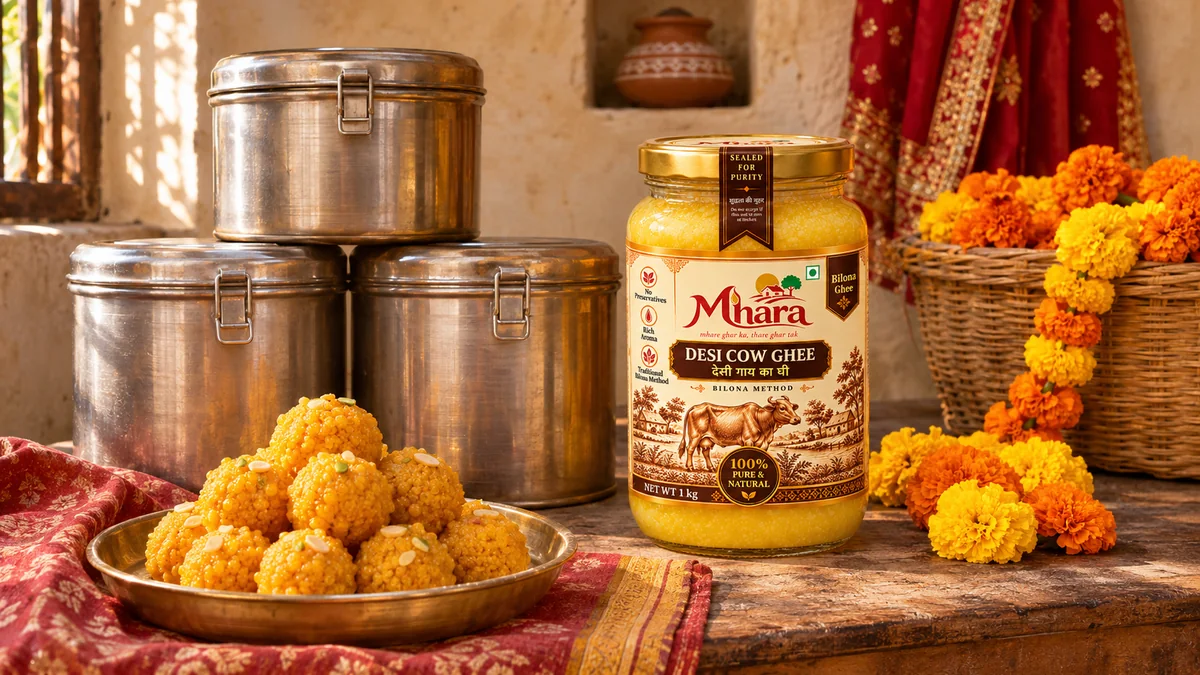
Planning ghee for wedding cooking? As a rough guide, a simple meal for 100 guests with puri, one halwa and one fried mithai uses around 10 to 15 litres of ghee, including the starting ghee in the frying kadhai. Add 10 to 20 percent spare, multiply by meals, and confirm with your halwai.
In our village you know the shaadi season has begun when the bamboo poles for the tent come down off the tractor trolley. The halwai's men dig a long trench bhatti in the open ground behind the house, and by evening a row of steel ghee tins stands against the wall of the store room with someone's uncle sitting beside it on a charpai, counting. Every family that has hosted a wedding has the same story: the ghee ran short on the second day, or three tins came back untouched.
This guide is about getting that number roughly right. It covers how much ghee to plan for, how to work with a halwai, which ghee suits which dish, and why it pays to order early.
When wedding season 2026 begins
In most North Indian Hindu homes, weddings are not held during the four months of chaturmas. The season opens after Dev Uthani Ekadashi in Kartik, when Vishnu is said to wake, and the first muhurats fall in the days and weeks after it. We wrote about that day in Dev Uthani Ekadashi 2026. Exact wedding dates come from your family pandit and panchang, so check with them before you fix anything.
What matters for the kitchen is that many families in the same area choose the same few dates. Halwais, tent houses and ghee all get booked at once.
Ghee for wedding cooking: a rough guide per 100 guests
Please read these as rough planning numbers, not a rule. They come from what we have seen at home functions and village weddings in Shekhawati. Portions, menus and cooks differ a lot, and a halwai who has cooked for your family before will always know better. For one meal for 100 guests:
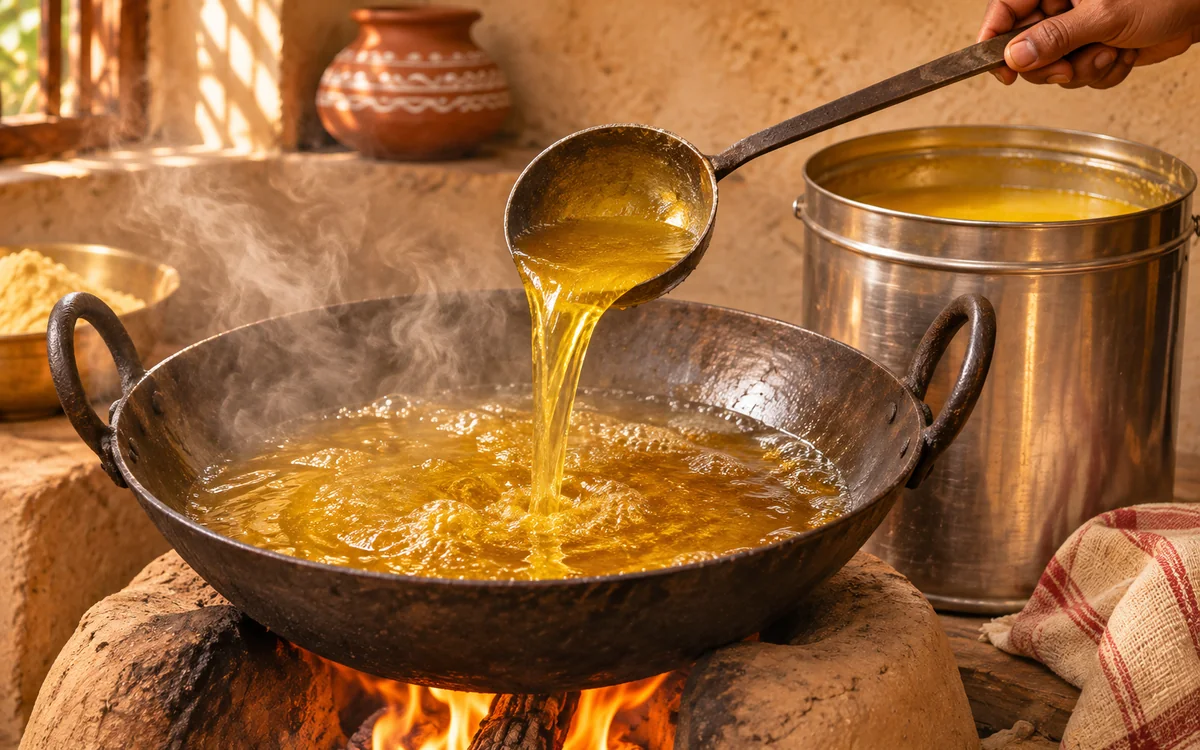
- Puri or kachori: the frying kadhai alone needs roughly 4 to 5 litres to start, and the puris soak up roughly 2 to 3 litres more over the meal. Much of the starting ghee is left at the end and can be used again for frying.
- One halwa (moong dal, sooji or gajar): roughly 2 to 4 litres. Moong dal halwa is the hungriest for ghee.
- One fried mithai such as boondi laddoo or jalebi: roughly 3 to 5 litres, again much of it frying ghee.
- Dal tadka, sabzi and rice: roughly 1 to 2 litres.
- Dal baati churma: if it is on the menu, plan a lot more. Baati are dipped in ghee and churma is bound with it, and this dish alone can need as much as everything above.
So a simple wedding meal with one fried bread, one halwa and one mithai lands somewhere around 10 to 15 litres per 100 guests, very roughly. Add a spare 10 to 20 percent so you are not sending someone to the market at night. Multiply by the number of meals you are serving, because the mehendi lunch, the baraat dinner and the next morning's breakfast all count.
One more thing to check: some halwais write their list in kilos, and we sell ghee by the litre. A litre of ghee weighs a little less than a kilo. Our guide on how much 1 litre of ghee weighs explains the conversion.
Halwai or home kitchen: who buys the ghee?
There are two common ways to do it in our area.
- The halwai supplies everything. His rate includes raw material, ghee included. It is easy, but ask plainly which ghee he will use, desi ghee or something else, and whether you can see the tins.
- The family supplies the raw material. The halwai charges for labour and gives you a saman list. This is still very common in Rajasthan, because the family controls the quality of what goes into the food.
If you supply the ghee, ask the halwai for his list a few weeks before the wedding, not a few days. Ask him to split it by dish, so you can see where the ghee is going. Keep the tins in one locked room, give them out one at a time, and write down each tin that leaves. Unopened tins at the end can go back on your shelf for the winter.
Cow or buffalo ghee: which dish gets which
Most wedding kitchens use both, and the old split still works well.
- Cow ghee for dal tadka, khichdi, rice, the havan at the mandap and the diya during the pheras. Its aroma is stronger, and many families keep cow ghee for anything holy. We cover the havan side in which ghee for puja and havan.
- Buffalo ghee for halwa, laddoo, churma, barfi and most mithai, where you want a rich, soft texture and a white colour. Halwais often prefer it for this reason, as we explain in the best ghee for Indian sweets.
- Either for puri and kachori frying. Both handle frying heat well.
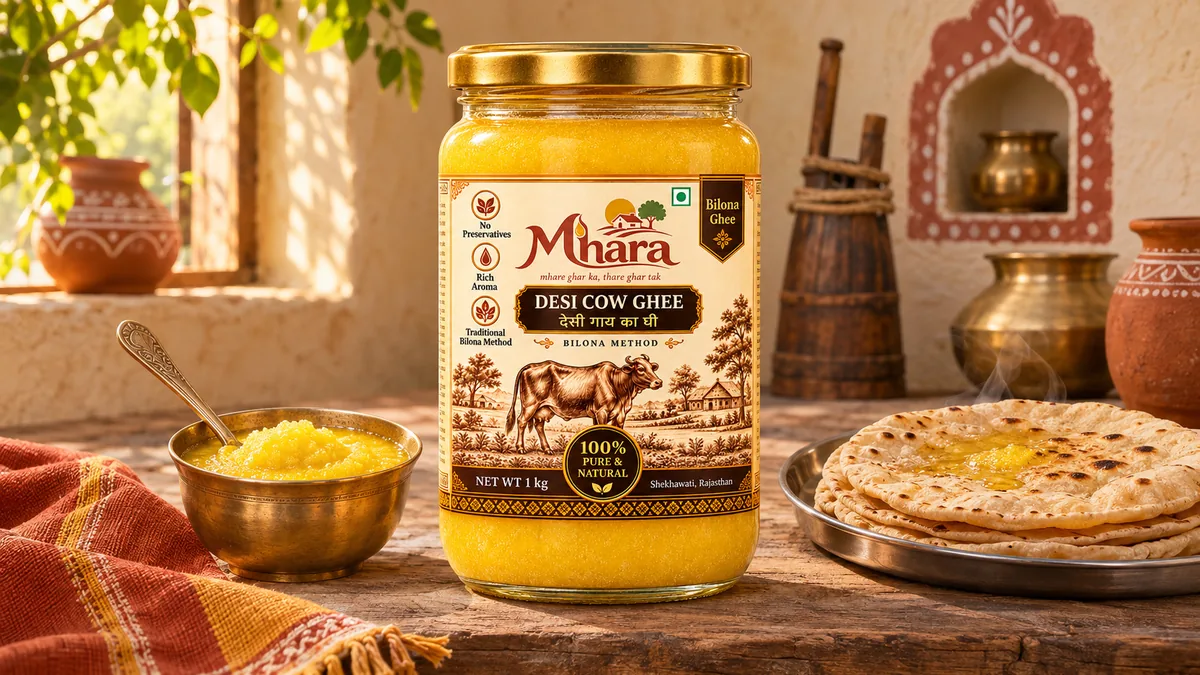
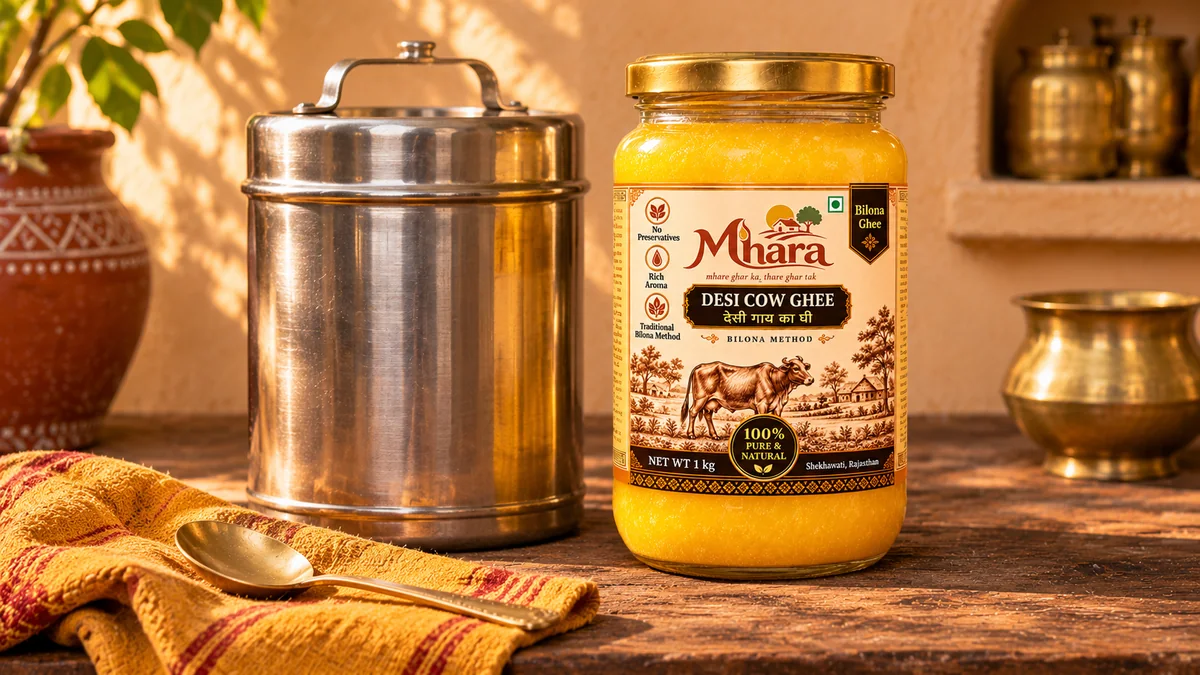
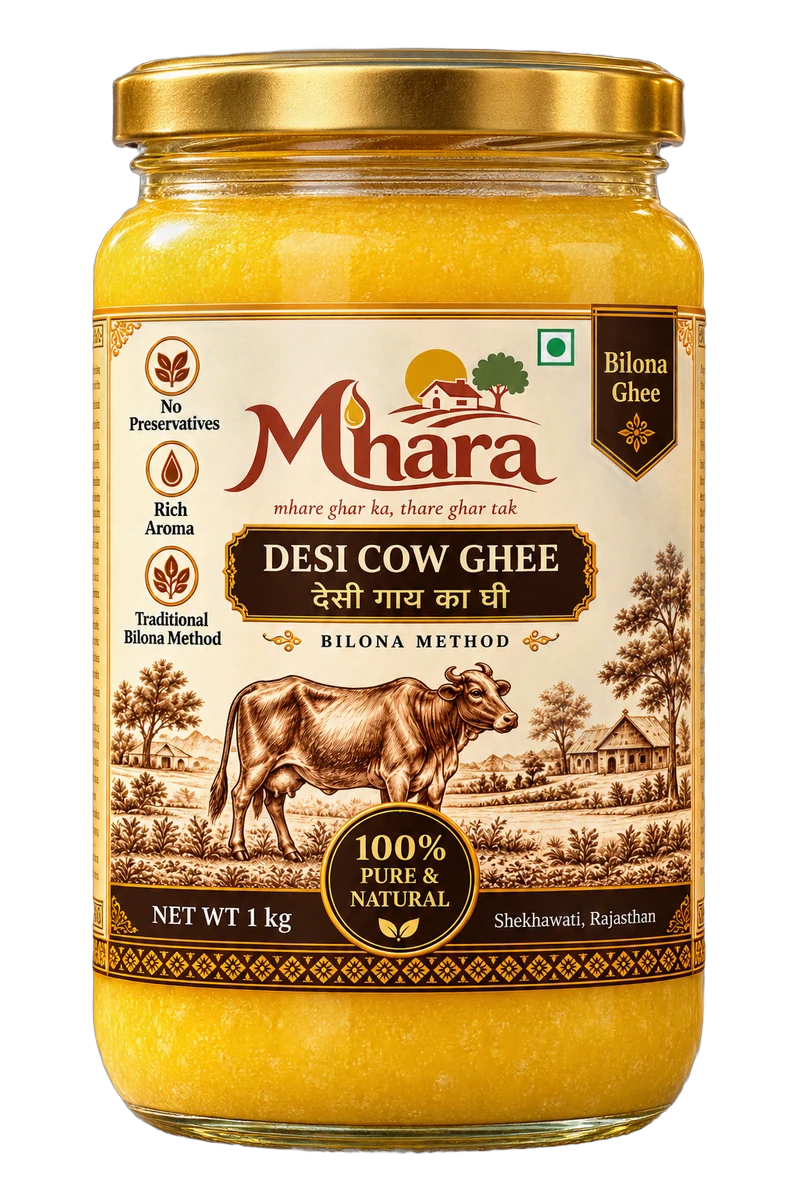
Our desi cow bilona ghee is made from whole-milk curd churned with a wooden bilona and cooked on a wood and kanda fire, so it has the deep nutty smell people want in dal and puja. Our desi buffalo ghee is white and thick, the one for the mithai.
Why 5 litre steel tins suit a shaadi kitchen
For 20 or 40 litres, glass jars make no sense. They take space, they can break in a crowded store room, and the halwai's helpers will not thank you for opening twenty lids. A 5 litre steel tin is the usual size for weddings. It stacks, it does not break, and you open one tin at a time so the rest stay sealed.
We sell both our ghees in 5 litre steel tins: cow bilona ghee at ₹9,499 and buffalo ghee at ₹8,999. Before you order, work out the price per litre and compare it with smaller packs yourself. Our post on buying a 5 litre ghee tin covers storage once a tin is open.
Order early, because village ghee is made in small batches
This is the part people forget. Our ghee is made in village kitchens near Pilani in small weekly batches. About 25 to 30 litres of desi cow milk go into one kilo of cow bilona ghee, and the milk does not increase because the wedding calendar is full. In the weeks after Dev Uthani, every family in the area wants ghee at the same time.
So tell us your date and quantity as early as you can, ideally when you book the halwai. Plan for the ghee to arrive at least a few days before the first function, so you can count the tins and open one to check it. If you need it split between two addresses, say so when you order.
Storing ghee in a busy wedding house
- Keep the tins in the shade, away from the bhatti and off a damp floor. A wooden plank under them is enough.
- Use a dry steel ladle for each tin. Water and wet hands are what spoil ghee, not time.
- Strain frying ghee through a cloth at the end of each day and keep it in a separate tin for frying only.
- After the wedding, close opened tins tightly and use them first. Use the opened tins within a few months.
Buying ghee for wedding cooking is mostly about counting early and counting honestly. Ask the halwai for his list, add a margin, split cow and buffalo by dish, and order before the season rush. The rest of the shaadi will have enough surprises without the ghee being one of them.
Questions people ask
How much ghee is needed for a wedding of 500 guests?
Very roughly, 50 to 75 litres per meal if the menu has puri, one halwa and one fried mithai, based on 10 to 15 litres per 100 guests. Dal baati churma needs much more. Treat this as a rough start and get the real list from your halwai.
Which ghee is used for wedding sweets?
Many halwais prefer buffalo ghee for laddoo, halwa, churma and barfi because it gives a rich, soft texture and a white colour. Cow ghee works too and has a stronger aroma. Many families use cow ghee for dal and puja, and buffalo ghee for mithai.
Should the family or the halwai buy the ghee?
Both are common. If the halwai supplies it, ask which ghee he uses and ask to see the tins. If the family supplies it, you control the quality, but you must get his list early, store the tins safely and count each tin that goes out.
How early should I order ghee for a wedding?
As early as you can, ideally when you book the halwai. Village ghee is made in small batches and the weeks after Dev Uthani Ekadashi are busy. Plan for the ghee to arrive a few days before the first function so you can count and check it.
Can leftover frying ghee from a wedding be reused?
Yes, for more frying, if it was not burnt and does not smell sharp. Strain it through a cloth once it cools, keep it in a separate container and use it within a few weeks. Do not pour it back into fresh ghee or use it for puja.
Is a 5 litre tin better than jars for a wedding?
For large quantities, yes. A 5 litre steel tin stacks, does not break in a crowded store room, and lets you open one tin at a time while the rest stay sealed. Jars suit home use after the wedding.