Is ghee bad for cholesterol? A ghee-making family's honest answer
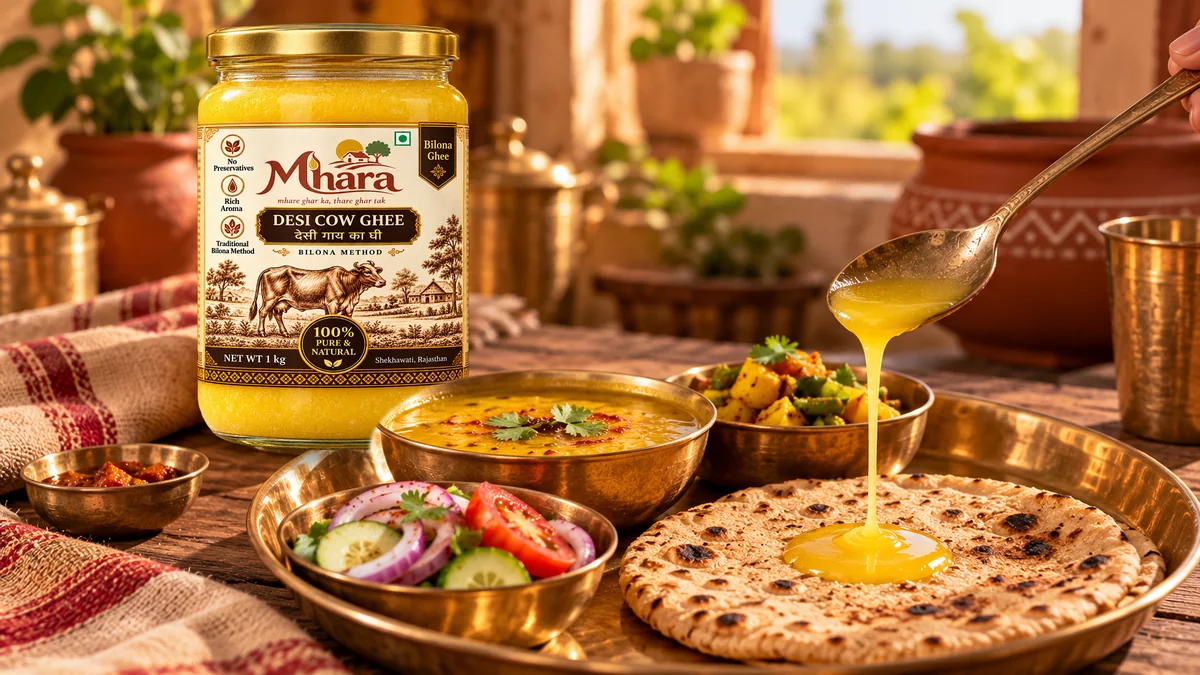
Is ghee bad for cholesterol? In large amounts it can be, because ghee is roughly 60 to 65% saturated fat, which raises LDL cholesterol in many people. A teaspoon or two a day in a balanced diet is a different matter for most healthy adults, and anyone with heart disease or high LDL should follow their doctor.
It is a scene many families in Shekhawati will know. Someone comes back from a check-up in the city with the lipid report folded in a kurta pocket. The doctor has circled the LDL number and said two words: "ghee band". That evening the whole house argues over dinner. An elder says she has eaten ghee for seventy years. Someone younger plays a video that says ghee lowers cholesterol. The person with the report quietly eats the roti dry.
So, is ghee bad for cholesterol? We make ghee, and we still think a doctor who circles that number is right to do it. Here is what we have learned, without the sales pitch and without the scare.
Is ghee bad for cholesterol? The short answer
It depends on how much, who is eating it, and what else is on the plate.
- Ghee is mostly saturated fat, and eating a lot of saturated fat raises LDL cholesterol in many people. LDL is the cholesterol linked to clogged arteries.
- A small amount, a teaspoon or two a day, inside a diet that is not already heavy with fried snacks and mithai, is how most traditional kitchens use it. For most healthy adults that is a reasonable place to be.
- If you already have high LDL or heart disease, your doctor's advice comes first. Not a reel, not a ghee seller, not us.
What in ghee affects cholesterol
Ghee is about 99% milk fat. Three things in it matter here.
- Saturated fat. Roughly 60 to 65% of the fat in ghee is saturated. This is the main reason health bodies ask us to limit it. In many people, more saturated fat in the diet means higher LDL in the blood.
- Dietary cholesterol. Ghee does contain cholesterol, as every animal fat does. For many people, the cholesterol in food moves blood cholesterol less than saturated fat does, but people respond differently, and some respond strongly.
- Natural trans fat. Milk fat has a small amount of trans fat that forms naturally in the cow's or buffalo's stomach. It is much less than what partially hydrogenated fats can carry, but it is not zero.
Ghee also has some monounsaturated fat and fat-soluble vitamins. None of that cancels out the saturated fat. It just means ghee is a food, not a poison.
What WHO and ICMR-NIN advise on saturated fat
The WHO advises that saturated fat should make up less than 10% of a person's daily energy, and that it is better replaced with unsaturated fats from plant oils, nuts and seeds. The ICMR-NIN Dietary Guidelines for Indians say much the same in a home-kitchen way: keep total visible fat (the oil, ghee and butter you add) modest, limit saturated fat from ghee and butter, avoid vanaspati, and use a mix of oils.
A rough sum helps. Two teaspoons of ghee, about 10 g, carry around 6 g of saturated fat. For an adult eating about 2,000 kcal, the WHO limit works out to roughly 22 g a day. So two spoons of ghee leave room, but full-cream milk, paneer, biscuits, namkeen and mithai all eat into the same space. Most of the problem in our homes is not the spoon on the roti. It is everything else.
What research on ghee and heart health actually shows
Honestly, not as much as either side claims. Studies that look at ghee in Indian populations are limited, many are small or based on what people remember eating, and the results are mixed. Some link high ghee intake to worse heart health. Others find no clear link at moderate intakes.
Part of the trouble is that ghee rarely travels alone. A village farmer who eats ghee and walks all day is not the same as a city family eating ghee-soaked parathas, sweets every evening and sitting for ten hours. Research struggles to separate the ghee from the life around it. What we can say with confidence is that the amount and the whole diet matter more than any single food.
Be careful with the opposite claim too. Posts saying that ghee lowers cholesterol or cleans the arteries are not backed by good evidence.
Is ghee good for heart patients?
This is a question for your cardiologist, not for a blog. Some heart patients are told to avoid ghee completely for a while, others are allowed a little. It depends on your LDL, your medicines, your weight, diabetes, blood pressure and family history.
Please do not swap your doctor's advice for a home remedy. And never stop or cut down a cholesterol medicine because someone told you desi ghee cholesterol is the "good" kind. If you are over 30, or have a family history of early heart disease, ask your doctor when you should get a lipid profile done. Knowing your numbers is the only way to know how much ghee your heart can take.
Ghee vs refined oil and vanaspati
People often ask if they should switch from ghee to refined oil. Here is the plain picture:
- Vanaspati is vegetable oil hardened by partial hydrogenation, which can create trans fats. Those are worse for the heart than the saturated fat in ghee. If anything in your kitchen should go, it goes first. See desi ghee vs vanaspati.
- Plant oils such as mustard and groundnut oil are mostly unsaturated fat. For everyday cooking, they are kinder to LDL than ghee, which is why the guidelines suggest a mix of oils.
- Ghee then works best as a flavour fat: a little on roti, in a tadka, on khichdi. Not for deep-frying every day.
Ghee for heart health: what we tell our own family
This is not medical advice, just how our house runs.
- Healthy adults: 1 to 2 teaspoons a day, counted inside the day's total fat. Our guide how much ghee per day explains the counting.
- Use ghee where you taste it. On a hot roti, in dal tadka, a spoon on khichdi.
- Cook the sabzi in mustard or groundnut oil, and don't add ghee and oil to the same dish.
- Fried snacks and mithai are occasions, not daily food.
- Walk every day. Our elders' ghee came with hours of physical work.
- Anyone with high LDL, heart disease or diabetes follows their own doctor, and the rest of us cook around them.
For the wider picture of what ghee does and does not do, read desi ghee benefits. If weight is also part of the worry, we cover that in ghee for weight loss.
If you eat less, eat good ghee
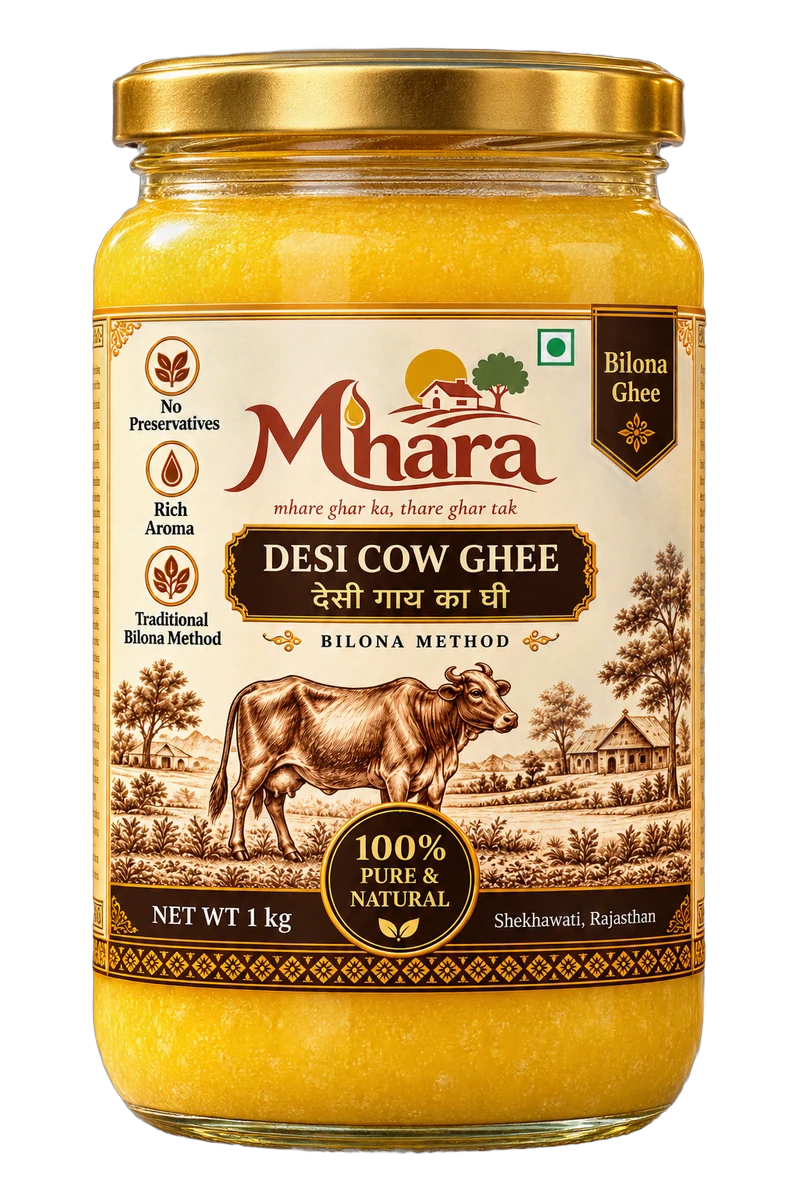
If you came here asking "is ghee bad for cholesterol", our answer is this: too much of it is, for many people, and a little is a matter of balance. When ghee is down to a spoon or two a day, it makes sense for that spoon to taste of something. Our Desi Cow Bilona Ghee is made from whole desi cow milk set to curd, churned by hand and cooked slowly, and its aroma is strong enough that a few drops on dal do the work of a big spoon. Less ghee, more taste. That is the deal we would want for our own family.
This is general information from a ghee-making family, not medical advice.
Questions people ask
Does ghee increase cholesterol?
It can. Ghee is roughly 60 to 65% saturated fat, and a diet high in saturated fat raises LDL cholesterol in many people. A teaspoon or two a day within a balanced diet is a much smaller concern for most healthy adults than large amounts eaten freely.
Is ghee good for the heart?
Ghee is not a heart medicine, and claims that it cleans arteries are not backed by good evidence. In small amounts it can be part of a heart-friendly diet for healthy people. Anyone with heart disease should ask their cardiologist how much, if any, to eat.
Can heart patients eat ghee?
Some heart patients are told to avoid ghee for a while, others are allowed a little. It depends on LDL levels, medicines, weight, diabetes and blood pressure. This is a decision for your cardiologist, so ask before adding or increasing ghee.
Is ghee better than refined oil for cholesterol?
For LDL, plant oils like mustard and groundnut, which are mostly unsaturated, are generally kinder than ghee. Vanaspati is worse than both because of trans fats. The ICMR-NIN guidelines suggest using a mix of oils and keeping ghee and butter limited.
How much ghee can I eat if my cholesterol is high?
That is for your doctor to decide, based on your lipid profile and overall health. Many doctors advise cutting saturated fat, including ghee, when LDL is high. Do not go by general figures online, and never change your medicines on your own.
Does desi cow ghee have good cholesterol?
Cholesterol in food is not 'good' or 'bad'. HDL and LDL describe how cholesterol travels in your blood. Desi cow ghee, like all ghee, contains dietary cholesterol and mostly saturated fat, which can raise LDL in many people when eaten in large amounts.