What is gond? The edible gum in winter laddoos, explained
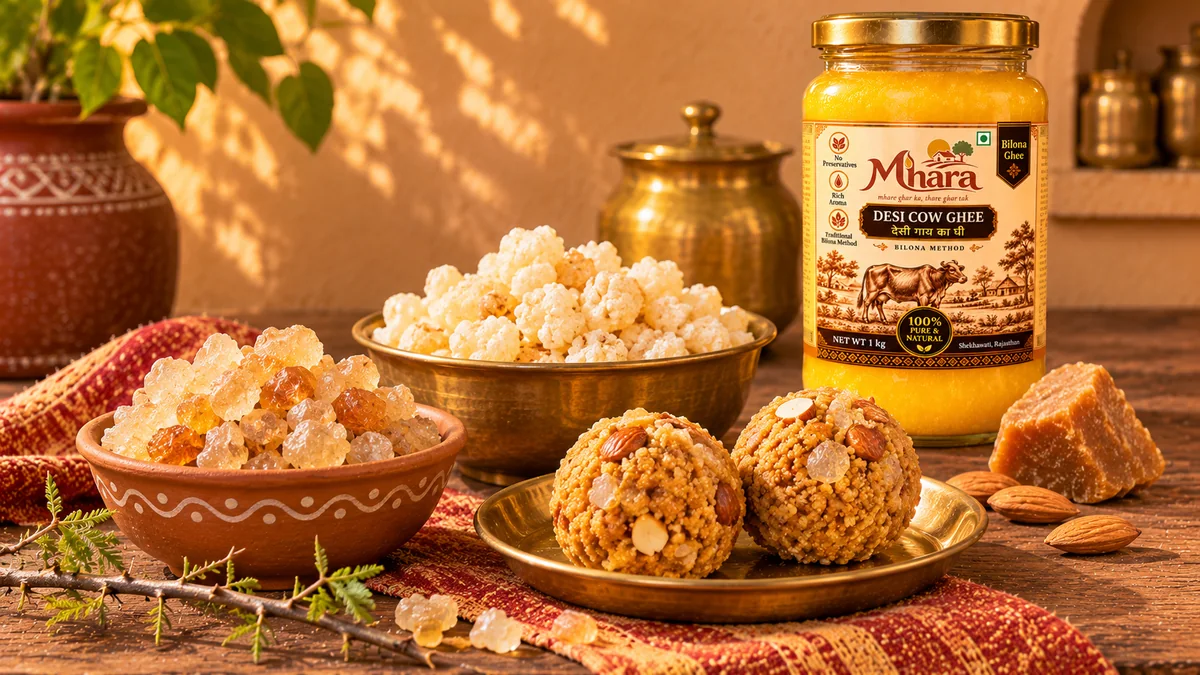
What is gond? It is edible gum, the dried sap of trees such as the acacia (babool), sold as hard, glassy yellow to amber pieces. Fried in hot ghee it puffs up white and crunchy, and that crunch is what it brings to winter laddoo and panjiri. It is not gond katira.
On the edge of our fields near Pilani, the babool trees stand thorny and grey through the dry months. Look closely at the trunk after a hot spell and you will find small amber beads stuck to the bark, hard as glass, where the tree has wept a little sap. Children sometimes pick them off to chew. Those beads are gond, and a Shekhawati winter without gond laddoo is hard to imagine.
If you have seen gond on a recipe list and wondered what it actually is, here is the plain answer, how it differs from gond katira, how to buy it, and why it always has to be fried first.
What is gond, exactly?
Gond is edible gum. It is the dried sap of certain trees, mainly the acacia, which we know as babool. When the bark cracks or is cut, a thick sap oozes out and dries in the sun into hard, glassy pieces called tears. These are collected by hand, cleaned and sold.
So the short answer to what is gond: a natural tree gum, hard and brittle when raw, that puffs up and turns crunchy when fried in hot ghee. It has almost no taste of its own. What it brings to a laddoo is texture, a light crunch that melts as you chew.
In English it is called edible gum or acacia gum. The food industry uses a related acacia gum, known as gum arabic, as a thickener. In Maharashtra the laddoo made with it are called dink ladoo. In our homes it is simply gond.
Gond vs gond katira: not the same thing
This is the mix-up we hear about most. The names sound alike and both are sold at the same pansari shop, but they are different gums from different plants, used in opposite seasons.
- Gond (acacia gum): yellowish to amber, glassy pieces. Fried in ghee, it puffs up white and crunchy. Used in winter laddoo, panjiri and gond pak.
- Gond katira (tragacanth gum): white or off-white, thin, flaky and twisted, like dried shavings. It does not puff in ghee. Soaked overnight in water, it swells into a soft, clear jelly that goes into summer drinks such as sharbat and falooda.
Tradition treats them as opposites too. Gond is called warming and belongs to winter. Gond katira is called cooling and belongs to May and June. If a winter laddoo recipe says gond, gond katira will not work, and the other way round.
How gond is sold, and how to check quality
Gond is sold loose at kirana and pansari shops, mostly from October to February, and in packets the rest of the year. Pieces range from the size of a grain of rice to a large marble. Here is what we look for when buying:
- Colour: pale yellow to light amber, fairly clear. Very dark brown pieces are usually older or less clean. Colour alone is not a perfect guide, but clear and bright is a good sign.
- Cleanliness: no bits of bark, sand, thorns or dust at the bottom of the bag. Some cleaning at home is normal. A lot is not.
- Dryness: pieces should be hard and should snap or shatter when you press them with a spoon. If they bend, feel sticky or clump together, they have taken in moisture.
- Smell: almost none. A musty or sour smell means it has been stored badly.
- Size: small, even pieces fry evenly. If you buy big tears, break them to chickpea size at home by tapping them in a cloth with a rolling pin.
Buy only what you will use in one season. Store it in a dry, airtight glass jar away from the stove. Kept dry, gond keeps for many months, but damp gond goes sticky and is hard to fry well.
Why gond must be fried till it puffs
Raw gond is like a chip of hard glass. If you put it straight into a laddoo, it stays chewy, sticks to your teeth and feels heavy. That is why every recipe starts by frying it.
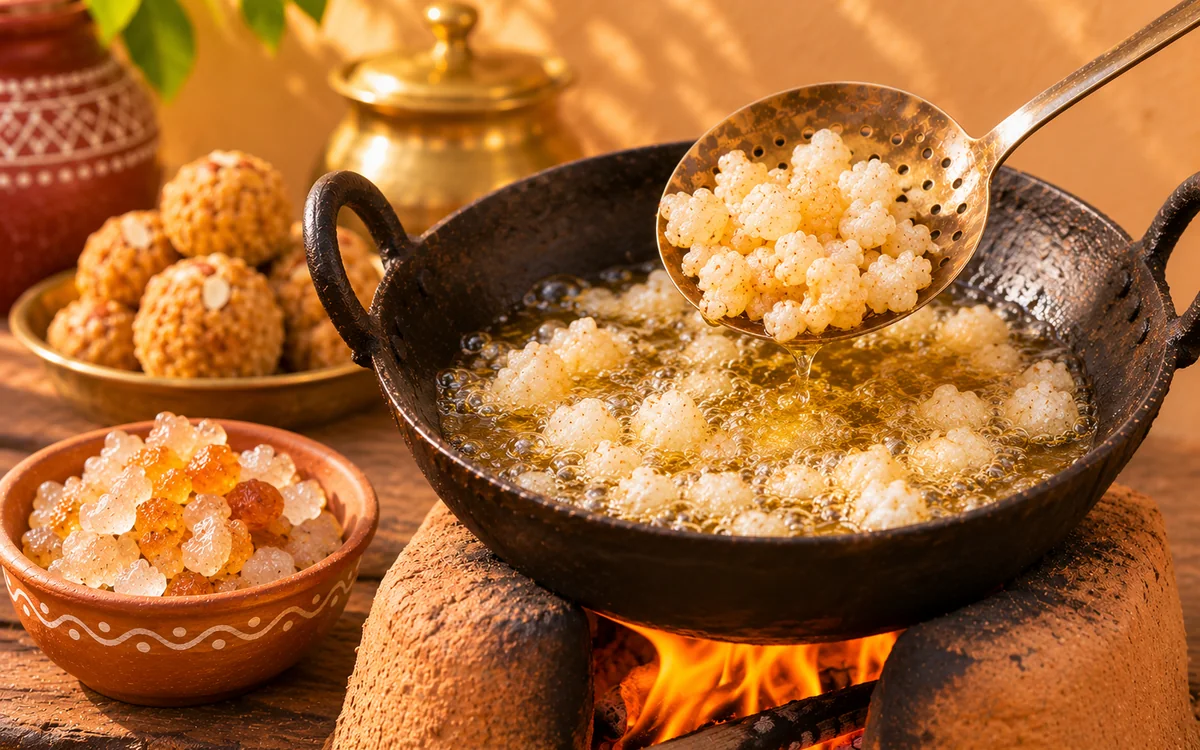
When gond meets hot ghee, the tiny bit of moisture trapped inside turns to steam and pushes the gum outwards. Each piece swells to two or three times its size, turns white and opaque, and becomes light and crisp, like a tiny piece of popcorn. Once cool, it is crushed and mixed with roasted atta, nuts and sweetener.
- Ghee temperature: medium hot. A test piece should rise and puff within a few seconds. If it sinks and sits, the ghee is too cool. If it browns at once, it is too hot.
- Small batches: a tablespoon or two at a time, so the ghee stays hot.
- The bite test: it should crunch, then melt. Chewy means not puffed through. Fry it again.
Our step-by-step gond ke laddu recipe covers frying gond in more detail, along with roasting the atta and binding. Use a ghee with a good aroma here, such as our desi cow bilona ghee, because gond soaks up the ghee it is fried in.
How gond is used in winter kitchens
In Shekhawati, gond mostly appears between Diwali and Holi:
- Gond laddoo: with atta, ghee, nuts and sugar, jaggery or dates. The best known use by far.
- Panjiri: a loose, crumbly mix of roasted atta, ghee and dry fruit, often with fried gond in it. We compare the two in panjiri or gond laddoo.
- After delivery: many families make gond laddoo, often with sonth, for new mothers. It is one of the oldest traditions around this ingredient.
- Gond pak: a set, barfi-like sweet of gond, ghee and sugar, made in some homes.
Other winter laddoos made in our area, with and without gond, are in sardi ke laddu.
What tradition says, and what is known
Tradition calls gond warming and strengthening. It is given in winter, to new mothers, and to elders who feel the cold. Many families hold that it is good for joints and back after childbirth.
What is known with more certainty is simpler. Acacia gum is mostly soluble fibre, which is why the food industry uses it as a thickener. Beyond that, there is little good research on gond laddoo or gond itself having any special effect in people. A gond laddoo is an energy-dense winter food, mostly because of the ghee, atta, nuts and sweetener around the gond.
If you are pregnant, have just delivered, have diabetes or are on any special diet, ask your doctor how much of a rich laddoo suits you. Our note on ghee in pregnancy covers the ghee side. This is general information, not medical advice.
If you would rather not fry gond yourself
Frying gond is not hard, but it is the step that goes wrong most often. In our home, maa makes gond laddoo to order in her own kitchen, with the gond puffed in our bilona ghee and the atta roasted slowly. They come in a plastic box with a best-before of 45 to 60 days. You can also see the jaggery and dates versions on our laddoo page.
Whether you buy or make them, now you know what is gond: a simple tree gum that needs hot ghee and a little patience to become the crunch in a winter laddoo.
Questions people ask
What is gond made from?
Gond is the dried sap of certain trees, mainly the acacia or babool. The sap oozes from cracks or cuts in the bark, hardens in the sun into glassy pieces, and is collected by hand, cleaned and sold at kirana and pansari shops.
What is gond called in English?
It is called edible gum or acacia gum. A related acacia gum is used in the food industry under the name gum arabic. In Maharashtra the laddoo made with it are called dink ladoo, and in most of north India it is simply called gond.
Why does gond have to be fried before use?
Raw gond is hard and glassy and stays chewy and sticky if added straight to a laddoo. Frying it in medium-hot ghee turns its trapped moisture to steam, so each piece puffs to two or three times its size and becomes light and crunchy.
How can I tell if gond is good quality?
Look for pale yellow to light amber, fairly clear pieces with no bark, sand or dust. They should be dry and hard enough to snap under a spoon. Sticky, bendy or musty-smelling gond has taken in moisture and will not fry well.
Can gond be eaten in summer?
Tradition treats gond as a winter food because it is called warming, so most homes make gond laddoo between Diwali and Holi. For summer, families turn to gond katira, a different gum soaked in water for cooling drinks. There is no rule beyond tradition and taste.
How should I store raw gond at home?
Keep it in a dry, airtight glass jar away from the stove and steam. Dry gond keeps for many months. If it turns sticky or clumps, it has absorbed moisture. Spread it on a plate in a warm, dry spot for a day before frying.