
Why villages eat more ghee in winter: the old reasons, honestly
Ghee in winter is an old village habit because cold mornings, hard farm work and bigger appetites call for dense energy, and ghee gives about 45 kcal a teaspoon. Tradition says it keeps the body warm. Science says the energy is real but ghee is not a heater. For most healthy adults, two to three teaspoons a day is plenty.
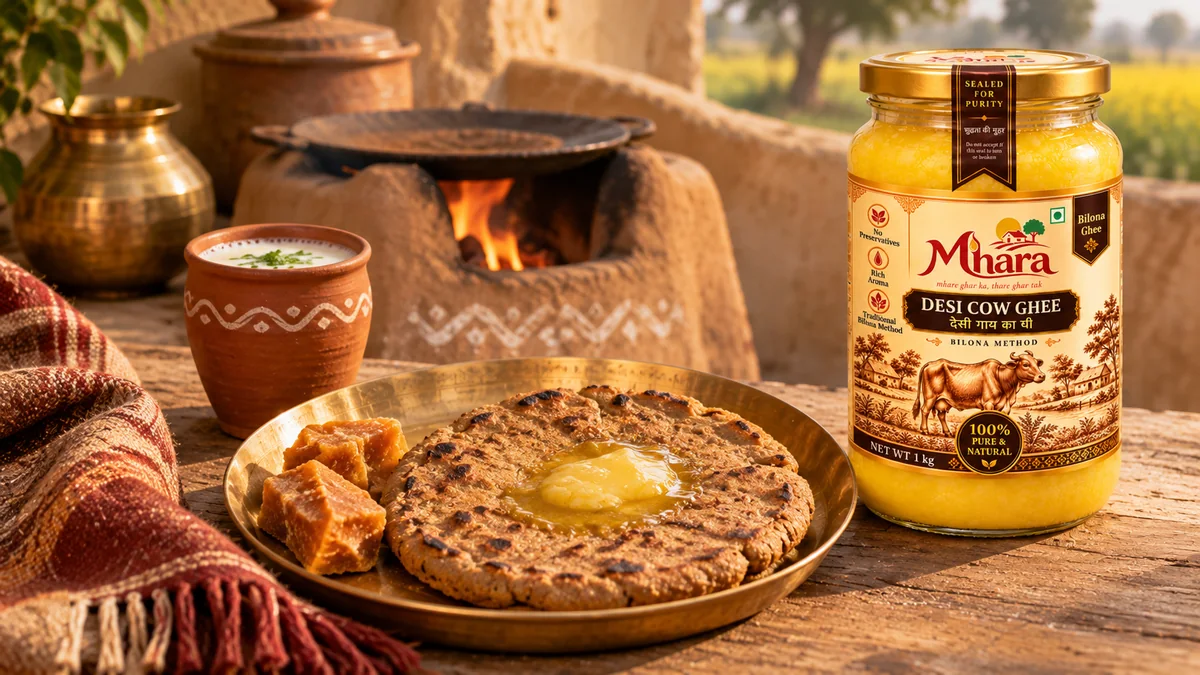
On a December morning in Shekhawati, the men leave for the fields before the fog has lifted, wrapped in shawls, to water the wheat and mustard. Before they go, there is bajra roti from the chulha with a spoon of ghee pressed into it and a piece of gud on the side. The elders have a saying for it: eat ghee in the cold, and the cold will not get into your bones. Ask anyone in our village why, and you will hear the same answer: it keeps you warm.
That belief is old and widely held. Some of it stands up well, some of it is more about the life around the ghee than the ghee itself. Here are the old reasons, what research says plainly, and how much is sensible.
Why villages eat more ghee in winter: the old reasons
- Warmth. Ghee is said to keep the body warm. It is eaten with other foods that carry the same reputation: bajra, gud, til, sonth and dry fruit.
- Hard work. Winter in a farming village means the rabi crop, irrigation at odd hours, cattle to tend in the cold, and long days of physical work. People who work like that need a lot of food.
- Bigger appetite. In Ayurveda, the digestive fire (agni) is described as strongest in the cold months, and the seasonal routine (ritucharya) recommends heavier, richer foods then. Most people do feel hungrier in winter.
- Dry skin. Cracked heels, lips and hands are common in the dry winter air. Ghee goes on the skin as well as into the food.
- More of it in the house. In much of North India, cows and buffaloes give more milk in the cooler months, so there is simply more makkhan to churn and more ghee in the kitchen.
One detail surprises people. Ayurvedic texts generally describe ghee itself as cooling in nature, not heating. Its warm reputation in winter comes as much from what it is eaten with, and from the work it fuels, as from the ghee.
What science says about ghee in winter
Put plainly: ghee is almost pure fat, about 9 kcal per gram. A teaspoon is roughly 45 kcal. It is dense energy, which is exactly why it suits cold, hard-working days. Here is how the old reasons hold up:
- Calories and cold: the body does spend more energy to stay warm in the cold, and hard physical work burns a great deal. A farmer in a winter field really does need more food. Someone in a heated office or sitting by a heater mostly does not.
- "Heating" the body: all food raises body heat a little as it is digested, and fat does this the least of the main nutrients. So the feeling of warmth after a rich meal is real, but ghee is not a heater. A shawl, a hot meal and movement do more.
- Vitamins: ghee carries fat-soluble vitamins, especially vitamin A. A little fat also helps the body absorb the carotenoids in winter foods like carrots, sarson and methi. A spoon of ghee on saag is good sense.
- Skin: there is no good evidence that eating more ghee fixes dry winter skin. Applied on the skin, it is a plain, gentle balm; we cover that in ghee for skin in winter.
- Colds and flu: there is no good evidence that ghee protects you from winter illness. Claims like that are tradition or marketing, not research.
So the village habit makes sense for village life. It does not mean everyone should eat more ghee in winter by default.
How much ghee in winter is sensible?
For most healthy adults, the commonly suggested amount is about two to three teaspoons of ghee a day, across all cooking, as part of a balanced diet. That does not change much in winter unless your work does. We explain the numbers in how much ghee per day.
The trouble in winter is how quickly it adds up. A gond laddoo carries close to two teaspoons. A bowl of gajar ka halwa can carry more. A ghee-soaked bajra roti, ghee in the dal, a winter sweet after dinner, and a normal day becomes three or four times that. Count it the way you would count sugar.
Who should be careful
Please ask your doctor what amount suits you, rather than following the village rule, if any of these apply:
- High LDL cholesterol or heart disease. Ghee is mostly saturated fat. Our honest look at this is in is ghee bad for cholesterol.
- Diabetes. The fat is less of a worry than what comes with it in winter: gud, sugar and laddoos.
- Weight gain. Winter often means less walking and more sitting. If activity falls and ghee rises, weight follows.
- Gallbladder, liver or digestive conditions. Rich, heavy meals can bring on pain or discomfort in some people.
- Elders who move less in the cold. The old habit was built for people who worked the fields. A grandparent sitting in the sun all day needs less, not more.
How we eat ghee in winter in our village
None of this means giving up the winter table. It means eating it the way it was meant to be eaten, in the right portions:
- a teaspoon on hot bajra or makki roti, with gud and a glass of chaach or milk
- a small spoon in dal or khichdi, added at the end
- a spoon over sarson ka saag or methi, which helps those vitamins along
- one winter laddoo a day, not three
- halwa as a treat on a cold Sunday, not a daily dessert
Our list of winter foods every Shekhawati kitchen makes with ghee has the dishes, from bajra khichdi to gond laddoo.
Which ghee in winter: cow or buffalo?
Either works. Cow ghee is lighter in taste and has the stronger aroma, and many homes keep it for daily roti and dal, especially for elders and children. Buffalo ghee is richer and thicker, and is the traditional choice for laddoos, halwa and churma. Both carry about the same calories per spoon.
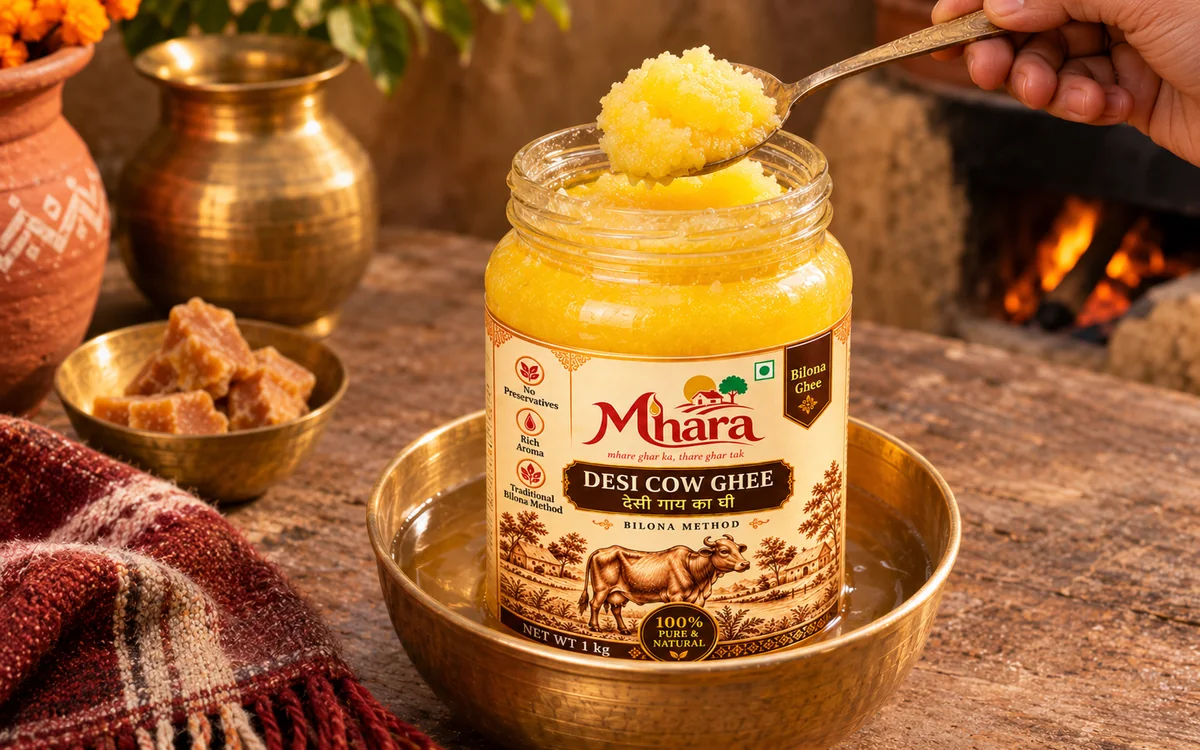
One practical note: in winter, both will set. Cow ghee sets soft and often grainy; buffalo ghee sets firm. That is normal and a sign of real ghee, not a problem. Stand the jar in warm water for a few minutes to soften it, and use a dry spoon.
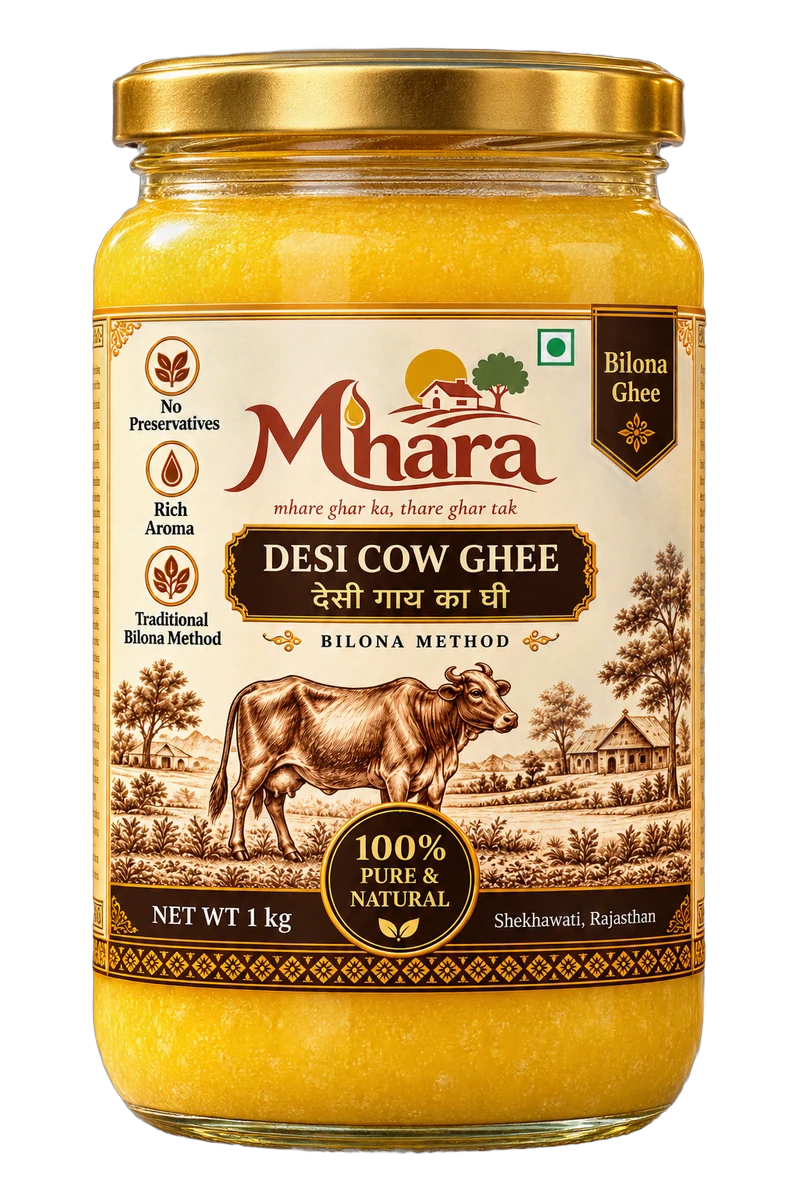
For daily use in winter we use our own Desi Cow Bilona Ghee, made in our village from desi cow milk set to curd, hand-churned and slow-cooked over a wood and kanda fire.
The honest answer
Ghee in winter is an old and sensible habit for people who work hard in the cold, and a pleasant one for everyone else, as long as the amount stays modest. It will not stop a cold, fix your skin from inside or keep you warm on its own. It will make a bajra roti taste like winter. Eat it for that, count it, and keep walking.
This is general information from a ghee-making family, not medical advice.
Questions people ask
Is it good to eat ghee in winter?
In modest amounts, ghee is a reasonable part of a winter diet for most healthy adults. It is dense energy, suits cold and active days, and helps the body absorb fat-soluble vitamins from winter vegetables. It is still mostly saturated fat, so keep the amount sensible and count it.
Does ghee keep the body warm in winter?
Tradition says it does. Science says all food warms the body slightly as it is digested, and fat does this least, so ghee is not a heater. The warm feeling comes from a hot, rich meal and from the hard work ghee fuels. Warm clothes and movement do more.
How much ghee should I eat in winter?
For most healthy adults, about two to three teaspoons a day across all cooking is a commonly suggested amount, winter or summer. People doing hard physical work may need more food overall. Count winter laddoos and halwa, which carry a lot of ghee, in the total.
Can people with high cholesterol eat ghee in winter?
Ghee is mostly saturated fat, which can raise LDL cholesterol in some people. If you have high cholesterol or heart disease, ask your doctor what amount suits you instead of following the winter habit. Small amounts may be allowed, but that is for your doctor to judge.
Does eating ghee help dry skin in winter?
There is no good evidence that eating more ghee fixes dry winter skin. Applied directly on cracked lips, heels and dry patches, a little ghee works as a simple balm for many people. Drink enough water and use a moisturiser too, and see a doctor for skin that cracks or bleeds.
Which ghee is better in winter, cow or buffalo?
Both have about the same calories. Cow ghee is lighter in taste with a stronger aroma, so many homes use it daily on roti and dal. Buffalo ghee is richer and thicker, so it is the traditional choice for laddoos, halwa and churma. Choose by the dish.