
Which ghee for puja and havan, and how much to use
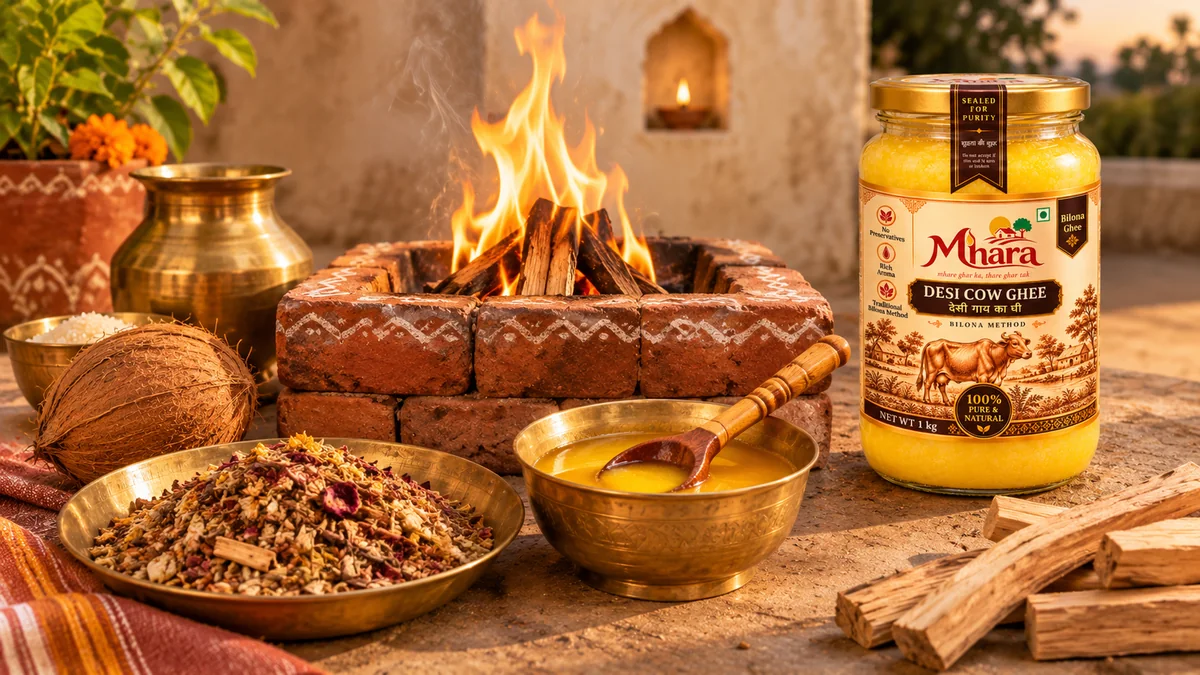
Ghee for havan is traditionally pure desi cow ghee, offered by the small spoon with each ahuti and mixed into the samagri. A small home havan of around 108 ahutis usually needs about 200 to 250 ml, while a griha pravesh or longer havan may need 500 ml to 1 litre. Avoid cheap blends sold as puja ghee.
When a new house is finished in our village, the first fire lit inside it is not the chulha but the havan kund. The family sits around a small square of bricks, mango wood stacked in the middle, and the pandit ji sets a steel bowl of melted ghee beside him. Each time he says swaha, a small wooden spoon of ghee goes into the flames, the fire leaps, and that warm, nutty smell fills the room and drifts out to the lane. Children wait for the moment the coconut goes in at the end.
Whether it is a griha pravesh, a birthday, a Sunday havan or the aarti every evening, the same two questions come up: which ghee, and how much. Here is what tradition says and what we see in practice.
Which ghee for havan is traditional
Desi cow ghee is the traditional ghee for havan in most Hindu homes. In the old texts and in everyday practice, the cow and what comes from her are treated as sacred, and cow ghee is one of the five offerings of panchagavya. Most pandits will ask for it by name. It also burns well: a clean, bright flame, a strong nutty smell, and very little residue when it is pure.
Some families use buffalo ghee, or a mix, for the diya or the havan, especially in buffalo-keeping areas, and nothing stops a home from following its own custom. If your pandit or your elders have a preference, follow it. If there is no rule in your house, cow ghee is the safe, traditional choice.
Pure ghee vs cheap "puja ghee"
In many markets you will find tins and pouches sold as "puja ghee" or "havan ghee", often far cheaper than real ghee. Read the label closely. Some of these say they are not meant for eating. Some are blends of vegetable fat, vanaspati or other oils with ghee flavour added. They may smoke more, smell different when they burn, and leave a sticky black residue in the diya.
Many families feel that what is offered to the fire should be good enough to eat. That is our view too. If a product will not tell you clearly what is in it, we would not use it for puja or for food. We explain how vanaspati differs from ghee in desi ghee vs vanaspati, and what home tests can and cannot tell you in how to check purity of ghee.
How much ghee for havan: a rough guide
There is no fixed rule, and the pandit doing the havan is the best guide. From what we see at havans in and around our village, this is a fair starting point:
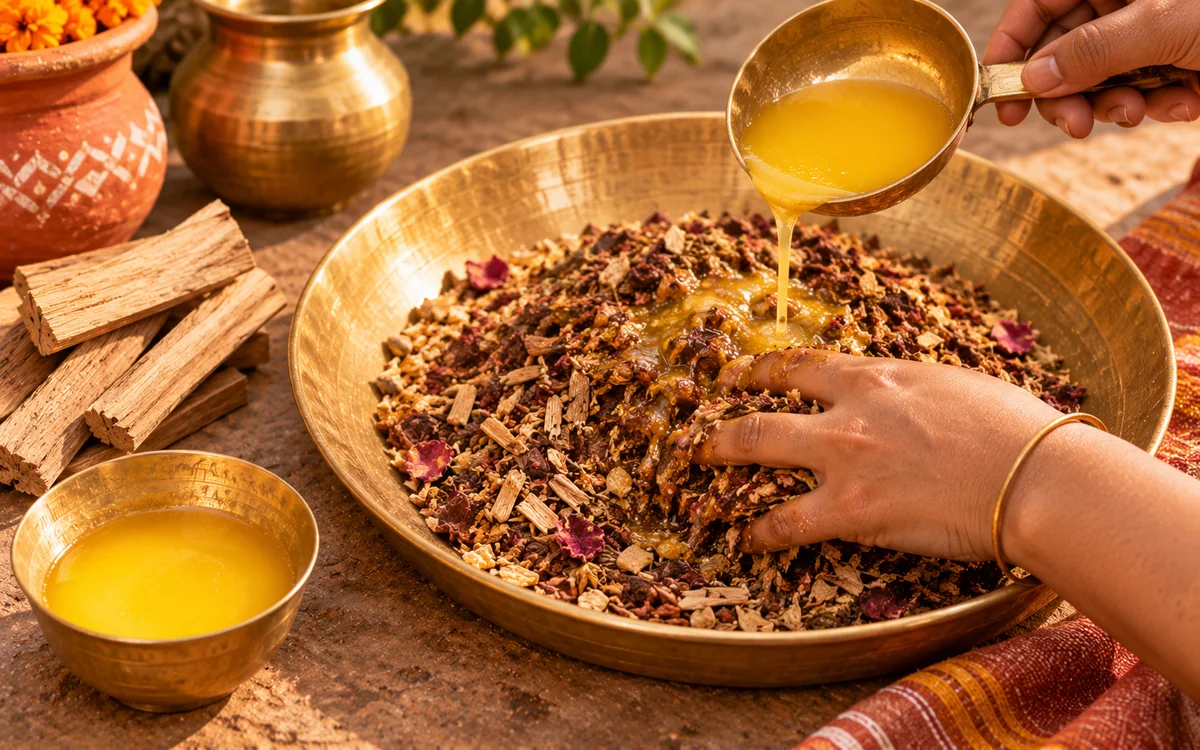
- Small home havan (one family, around 108 ahutis): about 200 to 250 ml. Each ahuti from the small wooden spoon (sruva) is roughly a few drops to half a teaspoon, and some goes into the samagri and to start the fire.
- Griha pravesh, katha or a longer havan with a pandit: about 500 ml to 1 litre, especially if many people are offering ahutis.
- Purnahuti: many families fill a dry coconut (gola) with ghee and samagri for the final offering. Keep an extra 50 to 100 ml for this.
- Large yagya, temple or community havan: several litres. Ask the organisers or the pandit for a number.
These are rough figures, not rules. It is better to have a little left over than to run out in the middle. Leftover ghee from a sealed jar can go back into puja use or the kitchen.
As for packs, a 500 ml glass jar is usually right for a home havan with a little to spare. A 1 litre jar suits a griha pravesh. For a temple or community havan, a 2 litre or 5 litre steel tin is simpler to carry and pour from.
Preparing ghee for the havan
- Melt it gently. In winter ghee sets solid. Stand the closed jar in a bowl of warm water for 10 to 15 minutes. Do not put a glass jar directly on the flame.
- Pour it into a separate bowl. Keep the jar closed and away from the fire. The sruva goes into the bowl, never into the jar.
- Moisten the samagri. Mix the havan samagri with just enough ghee that it holds together loosely when pressed. It should not be soaked or dripping.
- Start the fire with ghee and camphor on dry mango wood, then add the ahutis once the flame is steady.
Ghee for aarti and the diya
The daily aarti and the diya at the puja place use far less. A small clay diya takes about one to two teaspoons of ghee, and a few cotton phool battis soaked in ghee will last an aarti. Cow ghee is the usual choice here too, for the same steady flame and clean smell. Our guide to ghee diya for Diwali has the full method, and for festival days like this month's Ekadashi, see Dev Uthani Ekadashi 2026.
Smoke, safety and what is claimed
You will often read that havan smoke purifies the air or kills germs. We keep that as a matter of faith. We have not seen strong evidence for it, and smoke from any fire, including ghee and wood, is still smoke. So:
- Do the havan in a well-aired room or courtyard, with windows open.
- People with asthma, small babies and anyone with breathing trouble can sit a little further away.
- Keep a bucket of water or sand nearby, tie back dupattas and keep children at a safe distance.
- Put the havan kund on bricks or a metal stand, not directly on a tiled or wooden floor.
Storing a puja jar of ghee
Many homes keep one jar just for puja, separate from the kitchen. It is a good habit. A puja jar is opened only with a clean, dry spoon, never one that has touched food, and that also keeps the ghee fresh much longer.
- Keep it in a cool, dark place, not right next to the diya or the incense.
- Close the lid tightly after each use.
- If it starts to smell sharp or stale, use it up for the diya and open a fresh jar for bhog and havan.
The same dry-spoon rule is explained in how to store ghee.
The ghee we use
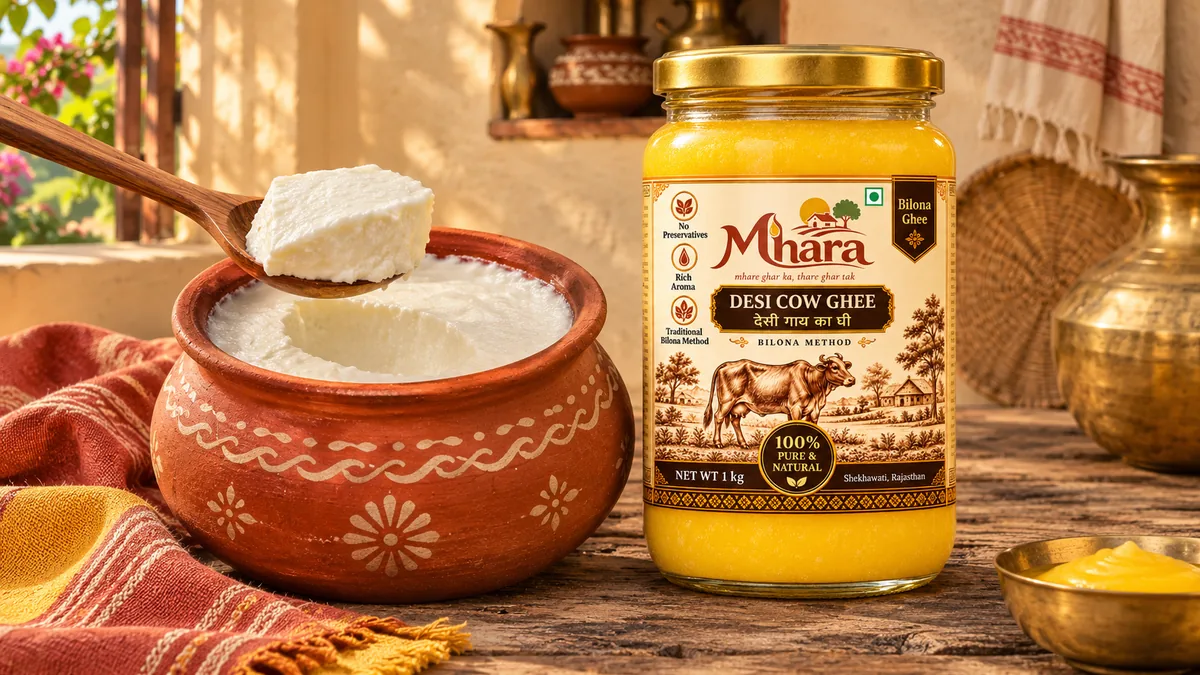
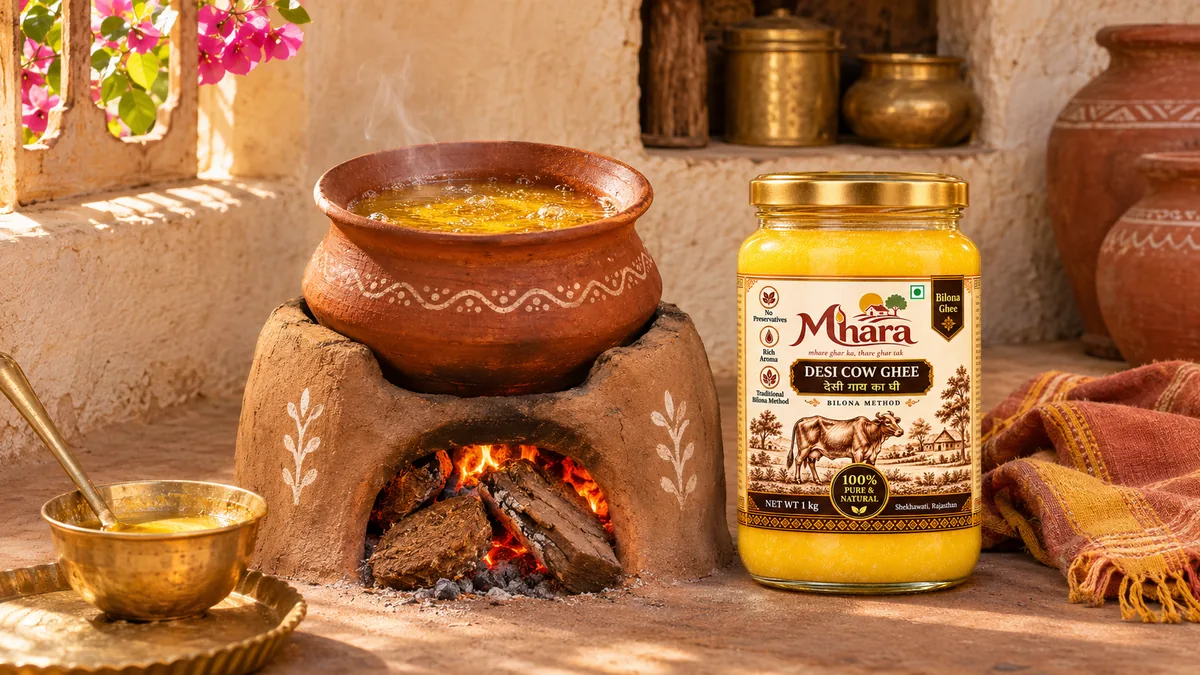
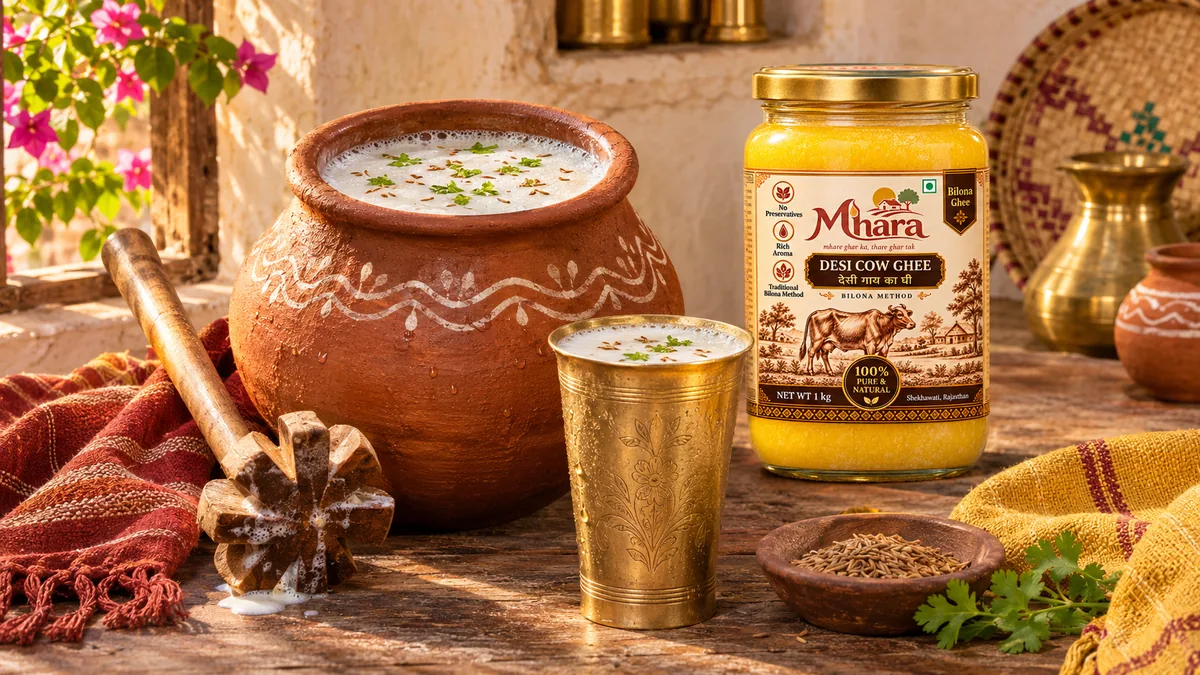
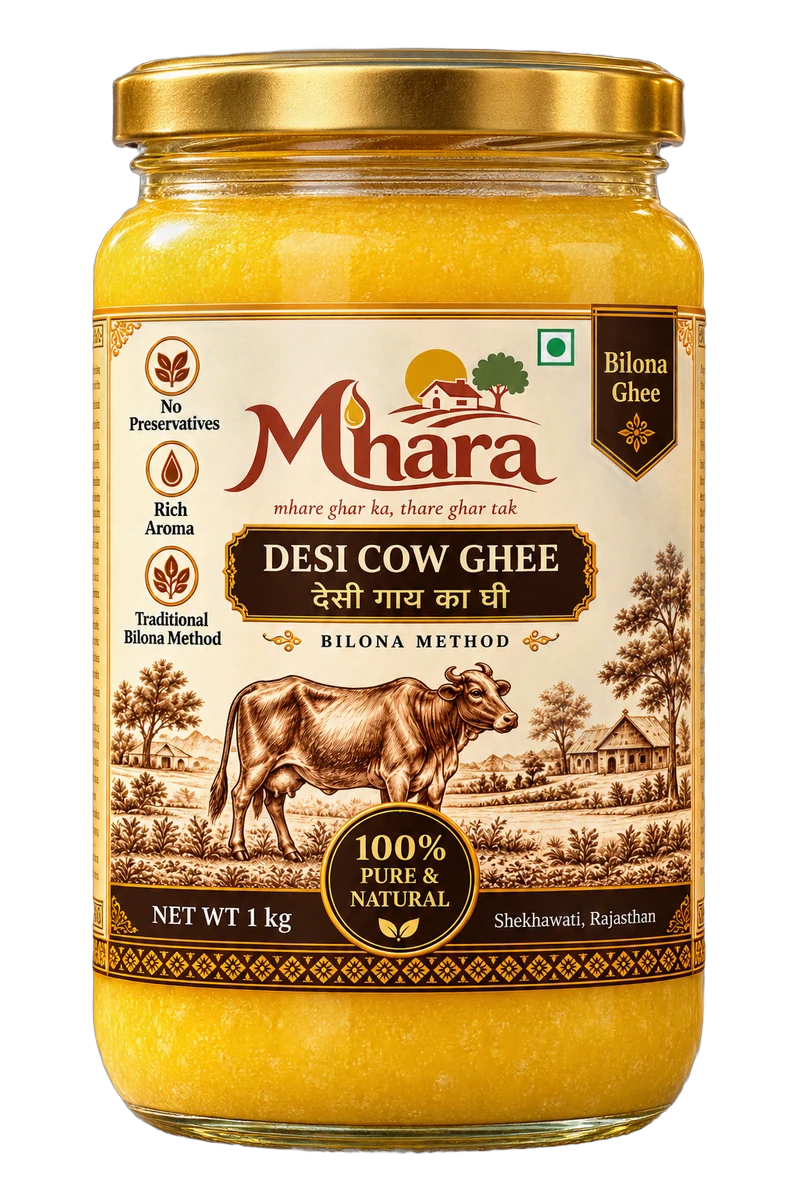
For havan, aarti and bhog at home we use our own Desi Cow Bilona Ghee. It is made in village kitchens near Pilani from desi cow milk set to curd in a clay matka, churned by hand with a wooden bilona at dawn and slow-cooked over a wood and kanda fire. Each lid has a tamper-evident seal, so you know no spoon has been in the jar before yours, which matters to many families when the ghee is for puja.
Whichever ghee you choose for havan, choose one you would happily eat. That is the oldest test there is.
Questions people ask
Which ghee is best for havan?
Pure desi cow ghee is the traditional choice in most homes, and most pandits ask for it. It burns with a clean, bright flame and a strong nutty smell. If your family or pandit follows a different custom, go with that. Avoid blends sold as puja ghee.
How much ghee is needed for a havan at home?
A small family havan of around 108 ahutis usually uses about 200 to 250 ml, including the samagri and starting the fire. A griha pravesh or longer havan may need 500 ml to 1 litre. These are rough figures, so check with your pandit and keep a little extra.
Can buffalo ghee be used in a havan?
Some families do use buffalo ghee or a mix, and nothing forbids a home from following its own custom. Tradition and most pandits prefer desi cow ghee for havan and aarti. If no one in your family has a rule, cow ghee is the safe, traditional choice.
Is puja ghee the same as pure desi ghee?
Not always. Some products sold as puja or havan ghee say they are not for eating, and some are blends of vegetable fat or other oils with ghee flavour. Read the label closely. Many families prefer to offer only ghee that is good enough to eat.
How do you mix ghee with havan samagri?
Melt the ghee gently, pour it into a separate bowl, and add it to the samagri a little at a time while mixing with your hand. Stop when the samagri holds together loosely when pressed. It should feel moist, not soaked or dripping.
Is it safe to do a havan indoors?
It can be, with care. Choose a well-aired room with windows open, place the kund on bricks or a metal stand, keep water or sand nearby and keep children back. People with asthma or breathing trouble should sit further away, because the smoke is still smoke.