Ghee in dal: when to add it, and how much
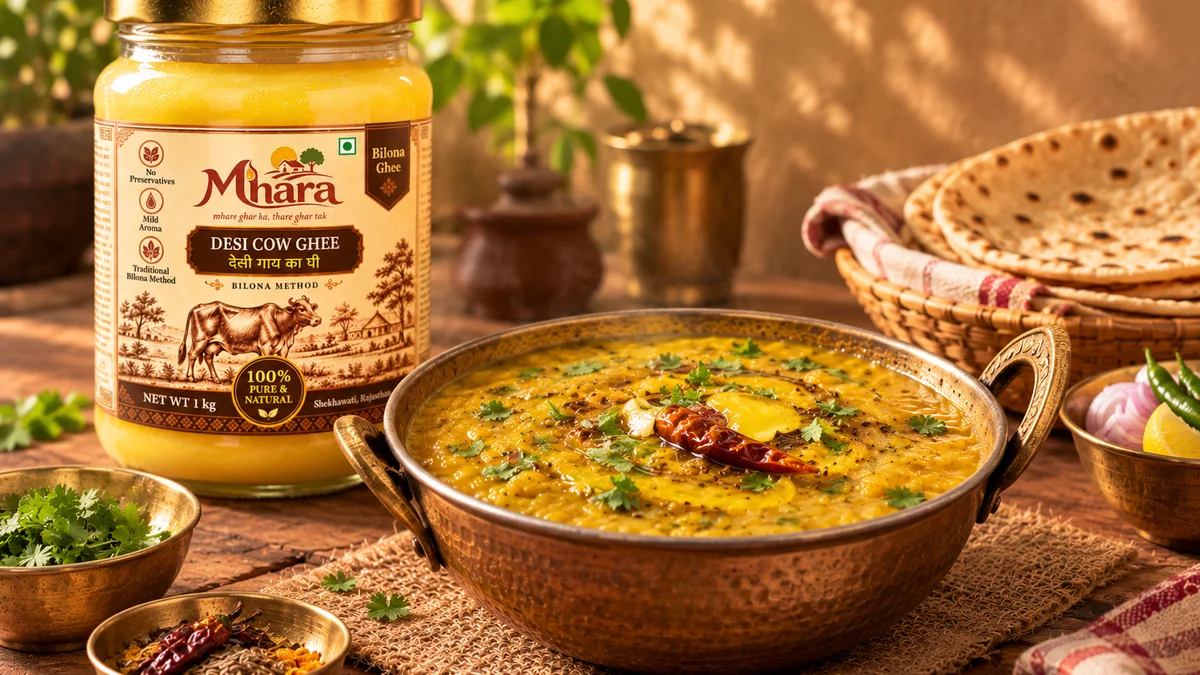
Add ghee in dal at two points: in the tadka at the end of cooking, where hot ghee fries jeera, hing and red chilli and carries their flavour, and as a small spoon on top just before eating, for aroma. About one to two teaspoons per bowl in all is a sensible home amount.
At lunch in a Shekhawati house, the dal comes to the thali in two stages. First the pot, already finished with a tadka of jeera and red chilli that hissed loudly enough to bring the children to the kitchen. Then, at the table, someone tips a small spoon of ghee from the jar over each bowl, and it melts into a golden pool on top. Ask anyone in our village why both, and they will look at you as if the question were strange.
There is good kitchen sense behind it, though. Ghee in dal does two different jobs depending on when it goes in. Hot ghee in the tadka carries the flavour of the spices. Ghee on top, unheated, carries its own aroma. Here is how to do both well, how much to use, and which dals and which ghee suit each other.
When to add ghee in dal: in the tadka, on top, or both
- In the tadka (chhaunk): ghee is heated, spices go in, and the whole sizzling spoon is poured over cooked dal, or the dal is added to it. This is where most of the flavour comes from.
- On top at the table: a spoon of ghee, warm or straight from the jar, on each bowl just before eating. This adds richness and the fresh smell of the ghee itself.
- While boiling: some cooks add half a teaspoon to the pressure cooker with the dal. It helps stop the froth that climbs up and spills from the whistle. It adds little flavour, so treat it as a practical trick.
If you have to choose one, choose the tadka. If you have a little more ghee, use some at the table too. That is how most Rajasthani homes do it.
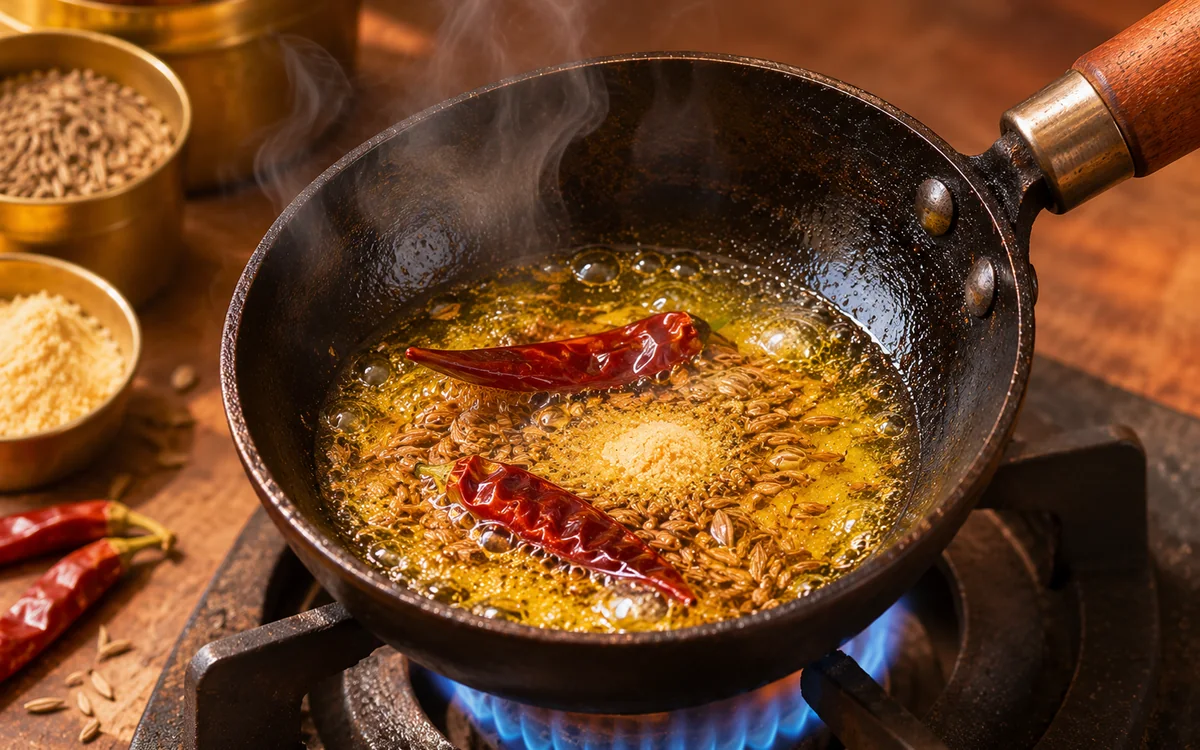
The ghee tadka: jeera, hing, red chilli, in that order
Most of the flavour molecules in jeera, hing and red chilli dissolve in fat, not in water. That is why a tadka in hot ghee tastes so much stronger than the same spices boiled into the dal. The order matters, because each spice burns at a different speed.
- Heat the ghee in a small tadka pan on a medium flame, about 1½ to 2 tablespoons for a pot of dal that serves four. It is ready when a single jeera seed sizzles at once.
- Jeera first, about 1 teaspoon, with 2 dried whole red chillies if you like them. Wait until the jeera crackles and darkens by one shade, a few seconds.
- Garlic or onion, if using, next. Cook chopped garlic until just golden, not brown.
- Hing, a good pinch, for two or three seconds only. It burns very fast.
- Red chilli powder last, off the flame. Take the pan off the heat, add ½ teaspoon of chilli powder, swirl, and pour it over the dal at once. Chilli powder in a pan still on the flame turns black and bitter within seconds.
Pour the tadka on and cover the pot for a minute so the smell stays in the dal instead of going out of the window. Ghee handles tadka heat comfortably. Its smoke point is around 250 °C, well above what a tadka needs, as we explain in the ghee smoke point guide. If your ghee is smoking hard before the jeera goes in, the flame is simply too high.
Ghee in dal at the table: the finishing spoon
The spoon on top is a different thing. Because it is not heated much, the ghee keeps its own aroma, the nutty, slightly tangy smell of bilona ghee, and it coats the tongue so the dal tastes fuller. This is the spoon that children ask for, and the one elders say makes dal "sit well" in the stomach.
That last idea is tradition. In many homes, dal with ghee and hing is believed to be easier to digest and less gassy than dal without. There is no good research that tests this directly, so we will not claim it. What is certain is simpler: a little fat makes dal more satisfying, and you will likely eat it more slowly.
For the finishing spoon, use ghee that is soft or just melted. If your jar has set hard in winter, warm a spoonful in a small katori over the hot dal pot for a minute rather than heating the whole jar.
How much ghee in dal per bowl?
A practical home amount for a bowl of dal is about one to two teaspoons in all:
- Tadka: 1½ to 2 tablespoons for a pot of four bowls works out to roughly one teaspoon per bowl.
- Finishing spoon: half to one teaspoon per bowl, more on a cold day if the rest of the meal is light.
One teaspoon of ghee is about 45 kcal. If there is also ghee on the roti and in the sabzi, the day adds up quickly, so count the dal as part of the whole, as we explain in how much ghee per day. People with high cholesterol, heart disease or a doctor's advice on fat should follow that advice first. This is general information, not medical advice.
Which dals take ghee best
- Arhar (toor) dal: the everyday dal of most of India, and the classic one for a jeera-hing ghee tadka.
- Moong dal: light and quick. A small ghee tadka with jeera and a little ginger is all it needs, and it is the dal we give to anyone unwell.
- Masoor dal: earthy, cooks fast, likes garlic in the tadka.
- Chana dal: firmer and nuttier, takes a stronger tadka with whole red chilli.
- Panchmel dal: the five-dal mix served with baati in Rajasthan, where ghee goes in generously, in the tadka and over the baati. See our dal baati churma recipe.
- Urad and rajma dishes: slow-cooked, rich dals that carry a spoon of ghee well, though many cooks use butter or a mix for these.
Dal with rice is where ghee in dal shows off most. A spoon of ghee over hot rice and dal is one of the oldest comfort meals there is, and we wrote about it in ghee rice.
Cow ghee or buffalo ghee for dal
For dal, most kitchens in our village reach for cow ghee. Desi cow bilona ghee has the stronger, nutty aroma, and that is exactly what you want floating on top of a bowl of dal. In the tadka, it blooms with the jeera and fills the room.
Buffalo ghee works perfectly well too. It is milder and creamier, so the dal tastes richer and rounder but smells less of ghee. Some families like it in heavy dals such as dal makhani. We compare the two properly in cow ghee vs buffalo ghee.
Mistakes that waste good ghee
- Burning the tadka. Black jeera or chilli makes the whole pot bitter. Lower the flame and add the spices in order.
- Adding the tadka too early. Pour it on at the end. Boiled for long after, the tadka loses most of its fresh smell.
- Using too much. A thick layer of ghee floating on dal is not more flavour, just more calories. The amounts above are enough.
- A wet spoon in the jar. Water in the jar spoils ghee. Always use a dry spoon.
Get the tadka right and keep the finishing spoon small, and ghee in dal will do what it has always done in Rajasthani homes: turn a simple pot of lentils into the part of the meal everyone remembers.
Questions people ask
Should I add ghee to dal before or after cooking?
After. Cook the dal first, then pour a hot ghee tadka over it at the end, and add a small spoon of ghee on top just before eating. Half a teaspoon in the pressure cooker only helps stop froth; it adds little flavour.
Is it better to make dal tadka in ghee or oil?
Both work. Ghee gives a rounder, nutty flavour and handles tadka heat well, with a smoke point around 250 °C. Many homes use oil for everyday cooking and ghee for the tadka or the top. Choose by taste, and keep the total amount moderate.
Why does my dal tadka taste bitter?
Usually the spices burnt. Jeera turned black, hing stayed too long in the hot ghee, or red chilli powder went into a pan still on the flame. Add spices in order, keep the flame medium, and add chilli powder off the heat just before pouring.
Can I put ghee in dal for weight loss?
Ghee does not make dal slimming. One teaspoon is about 45 kcal, so it adds energy. A small amount can make a meal more satisfying, which some people find helps them eat less. If you are cutting calories, keep it to a measured half to one teaspoon.
Which ghee is best for dal tadka?
Most Rajasthani homes prefer desi cow ghee for dal because its nutty aroma comes through clearly in the tadka and on top. Buffalo ghee is milder and creamier and suits heavier dals. Either is fine; it comes down to how strong you like the ghee smell.
Should ghee be melted before adding it on top of dal?
Not necessarily. A spoon of soft ghee melts in hot dal within seconds. If your jar has set hard in winter, warm a spoonful in a small katori over the dal pot rather than heating the whole jar again and again.