
Ghee on roti: how much, and does it matter which ghee?
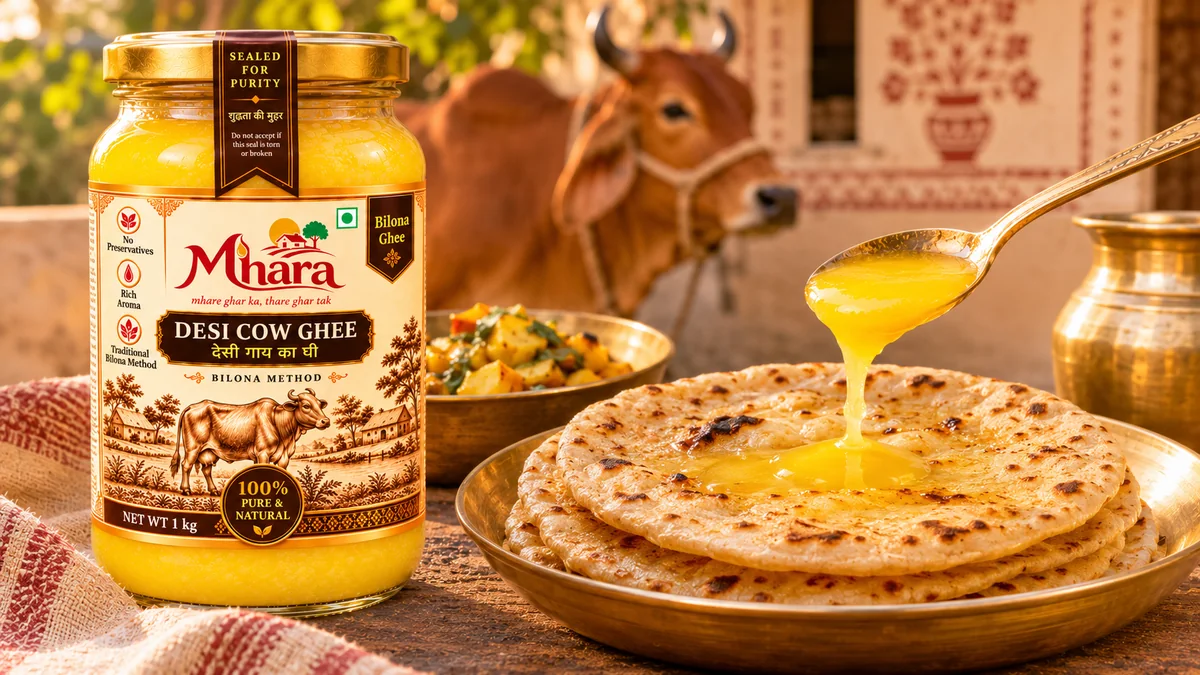
For ghee on roti, half to one teaspoon on a hot phulka is plenty, spread thin with the back of a spoon the moment it comes off the flame. Thick bajra roti and tawa parathas take one to two teaspoons. Cow bilona ghee gives the strongest aroma; buffalo ghee is milder and creamier.
Supper in a Shekhawati house runs on a rhythm you can hear. The roti slaps onto the tawa, gets turned, then goes straight onto the open flame, where it puffs up like a small moon. It is lifted onto the steel plate, and before it can fall flat, the back of a spoon goes round it once with ghee. The children call it chupdi roti, and nobody in our village would think of serving a plain one to a guest.
Ghee on roti is so ordinary that most people never ask how much is right, when to put it on, or whether the ghee in the jar makes any difference. It does, a little. Here is what we have learnt from a lot of rotis.
How much ghee on roti is sensible?
For a thin phulka, half a teaspoon to one teaspoon is plenty. That is about 2.5 to 5 grams, or roughly 22 to 45 kcal. Most of the taste comes from the first thin coat. The second spoon mostly adds calories.
The useful way to think about it is across the whole day, not per roti. If you eat four rotis at dinner with a teaspoon each, that is already four teaspoons, before the ghee in the dal or sabzi is counted. Our guide to how much ghee per day sets out a sensible range for adults, and when to ask a doctor about your own amount.
- Phulka or chapati: ½ to 1 teaspoon.
- Tawa paratha: 1 to 2 teaspoons, most of it on the tawa.
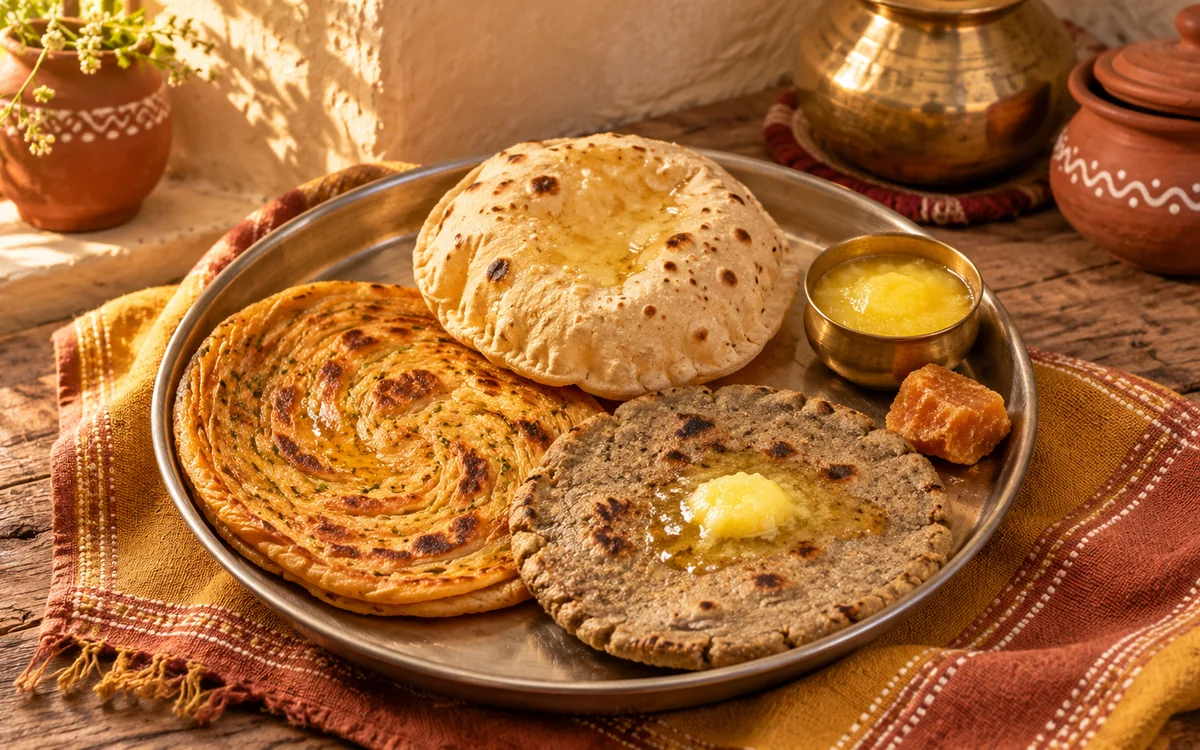
- Bajra or makki roti: 1 to 2 teaspoons, because the thick, rough roti soaks up more.
- Children: a thin smear is enough for flavour.
When to put ghee on roti: hot, straight off the flame
Put the ghee on within the first minute, while the roti is still puffed and steaming. A hot roti is open: the steam inside escapes through the surface, and melted ghee runs into the small cracks and is drawn into the layers. It soaks in, so you taste it without your fingers turning greasy.
On a cold roti, ghee sits on the surface like a film. You end up using more to get the same taste, and the roti feels oily rather than soft. If you are making a big batch, keep the finished rotis in a cloth-lined casserole and smear each one as it comes off the flame, not all of them at the end.
Most homes here put ghee only on the top, puffed side. The underside, which sat on the tawa, is firmer and takes less. One side is enough for most people.
Spread or drizzle?
There are three ways we see in village kitchens:
- Spread with the back of a spoon. Take a little ghee on the spoon and run it round the roti in a spiral. This gives the thinnest, most even coat and uses the least ghee.
- Dip and dab. Some cooks dip a folded piece of clean cloth or a small katori base in ghee and press it over the roti. Quick, and good for big batches.
- Drizzle. A thin stream poured over the roti, usually for bajra roti or for someone who wants extra. Pleasant, but you cannot see how much went on.
Phulka, paratha and bajra roti: different rotis, different ghee
Phulka wants a light hand and an aromatic ghee. It is thin and mild, so the smell of the ghee is the main thing you notice.
Paratha gets its ghee on the tawa. The ghee fries the surface and makes it crisp, so you need little on top afterwards. Ghee takes the heat of a tawa well without burning. For a stuffed one, see our aloo paratha recipe.
Bajra roti is the winter roti of Shekhawati: thick, coarse and slightly sweet. It has no gluten to hold it together, so it is patted by hand rather than rolled, and it drinks ghee. In our village it is eaten with a spoon of ghee and gud, or with garlic chutney. Our bajre ki roti recipe explains how to pat it without cracks.
Leftover roti is not wasted here either. Crumbled with ghee and a little gud or boora, it becomes churi, a breakfast many of us grew up on.
Does it matter which ghee you put on roti?
Yes, mostly for smell and texture.
- Cow bilona ghee has the stronger, nutty aroma, what we call sondhi. On a plain phulka that aroma is the whole point, and this is where a good desi cow bilona ghee shows the difference most.
- Buffalo ghee is milder, thicker and creamier. It suits bajra roti and churi, where you want richness more than smell.
- Butter works on a hot roti too, but it is about one-fifth water and milk solids, so it can make a roti a little soggy and does not keep as well. We compare the two in ghee vs butter.
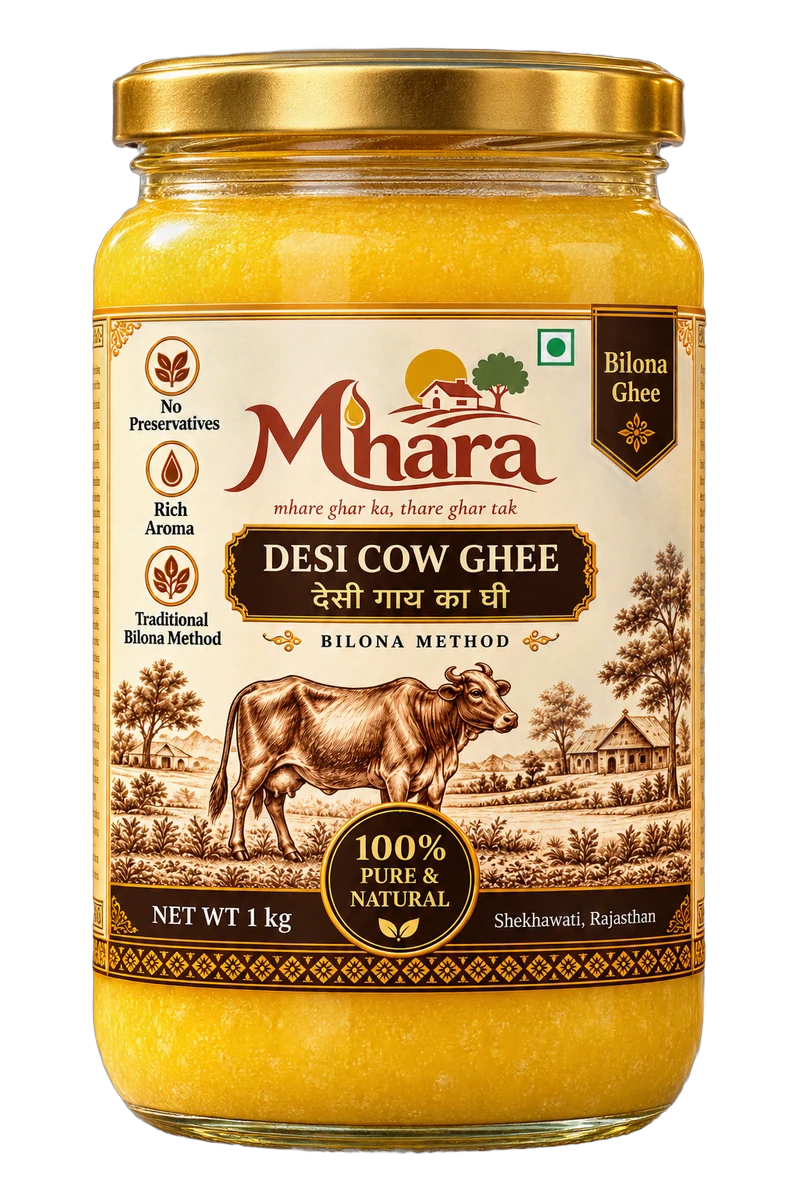
In winter, ghee sets in the jar. Do not heat the whole jar every evening. Scoop out what you need for the meal into a katori and leave it near the stove.
Is ghee on roti healthy?
Tradition in our homes holds that dry roti is hard on the stomach and that a little ghee makes it easier to eat and digest. Elders also say chupdi roti keeps you full longer in the fields.
Research is more modest. Fat in a meal slows how quickly the stomach empties, so a roti with ghee may raise blood sugar a little more slowly than a dry one and may keep you full for longer. That is general food science, not a reason to add more ghee. Ghee is mostly saturated fat and has about 45 kcal in every teaspoon. Half to one teaspoon on a phulka fits a normal diet for most healthy adults. If you have diabetes, heart disease or high cholesterol, ask your doctor or dietitian what amount suits you. This is general information, not medical advice.
Ghee on roti for tiffins and travel
Ghee on roti also helps it travel. A thin coat slows the roti from drying out, so a tiffin roti made at seven is still soft at lunch. Let the rotis cool a little before you stack them, wrap them in a cotton cloth or foil, and close the box. Steam trapped in a closed box makes them soggy.
For more ideas, see ghee for kids' tiffin. Whatever you pack, the habit is the same one our mothers had: a hot roti, a small spoon, one quick circle of ghee on roti, and no more than it needs.
Questions people ask
Is it good to eat roti with ghee every day?
For most healthy adults, a thin coat of ghee on daily rotis is fine as part of a balanced diet. Count it in your total for the day, along with the ghee in dal and sabzi. If you have diabetes, heart disease or high cholesterol, ask your doctor.
How much ghee should I put on one roti?
Half a teaspoon to one teaspoon on a thin phulka is enough for taste. A bajra roti or a tawa paratha takes one to two teaspoons. The first thin coat carries most of the flavour, so a second spoon mostly adds calories.
Should ghee go on roti when it is hot or cold?
Hot, within a minute of coming off the flame. A steaming roti draws the melted ghee into its layers, so you taste it without greasy fingers. On a cold roti the ghee sits on top, so you need more of it.
Is ghee or butter better on roti?
Both taste good on a hot roti. Ghee has no water, so it soaks in evenly and keeps the roti soft without making it soggy, and it keeps for months in the jar. Butter is about one-fifth water and milk solids and spoils sooner.
Does ghee on roti lower its glycemic index?
Fat slows how fast the stomach empties, so roti with a little ghee may raise blood sugar a bit more slowly than dry roti. It does not make roti a low-sugar food, and it adds calories. People with diabetes should follow their doctor's or dietitian's advice.
Does ghee keep roti soft for a tiffin?
Yes, a thin coat slows the roti from drying out, so it stays soft until lunch. Let the rotis cool slightly before stacking, wrap them in a cotton cloth or foil, then close the box so no steam gets trapped inside.