
Buffalo ghee price 1kg, and what you are paying for
Buffalo ghee usually costs a little less per kilo than desi cow bilona ghee because buffalo milk is much richer in fat, so fewer litres go into each kilo. The method, the time and the glass jar cost the same, which is why the gap is small rather than large.
If you are checking the buffalo ghee price 1kg before you order, you have probably noticed that buffalo ghee is usually priced a little below desi cow bilona ghee, even when both are made the same way. That is not because buffalo ghee is the lesser ghee. It is because buffalo milk is richer, so it takes fewer litres to make a kilo. The price comes down to milk, method and a few costs that sit on top, and this page goes through each, with our own prices and what to look at when you buy buffalo ghee online.
Buffalo ghee price 1kg: what ours costs
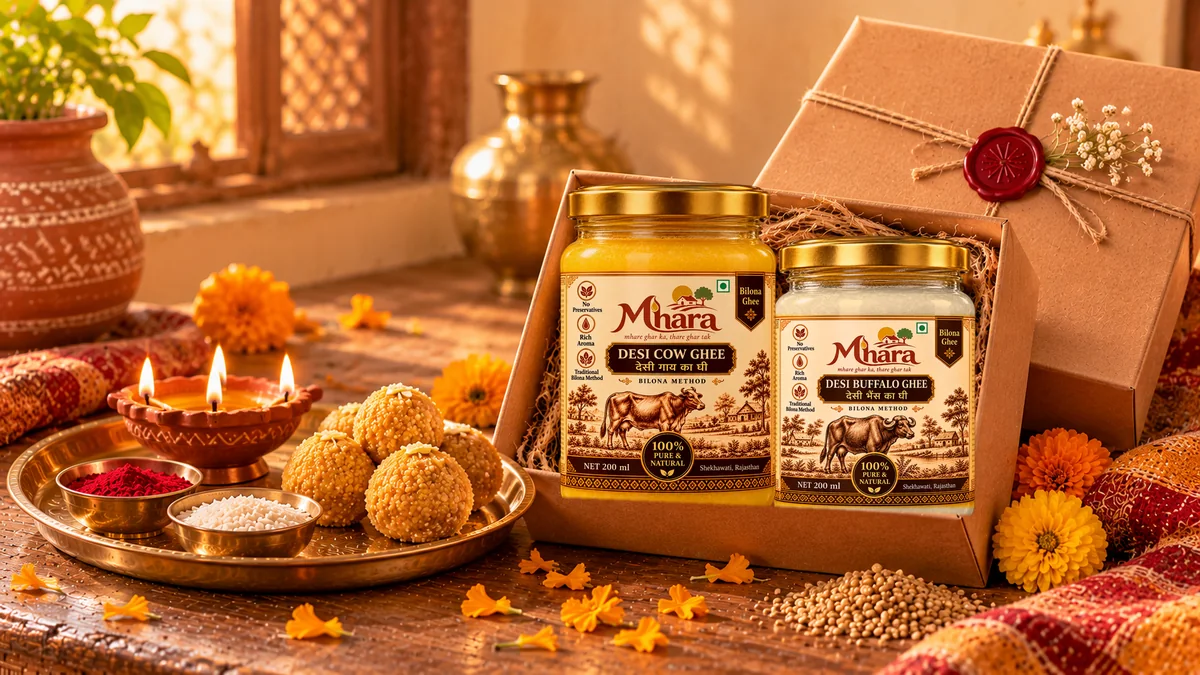
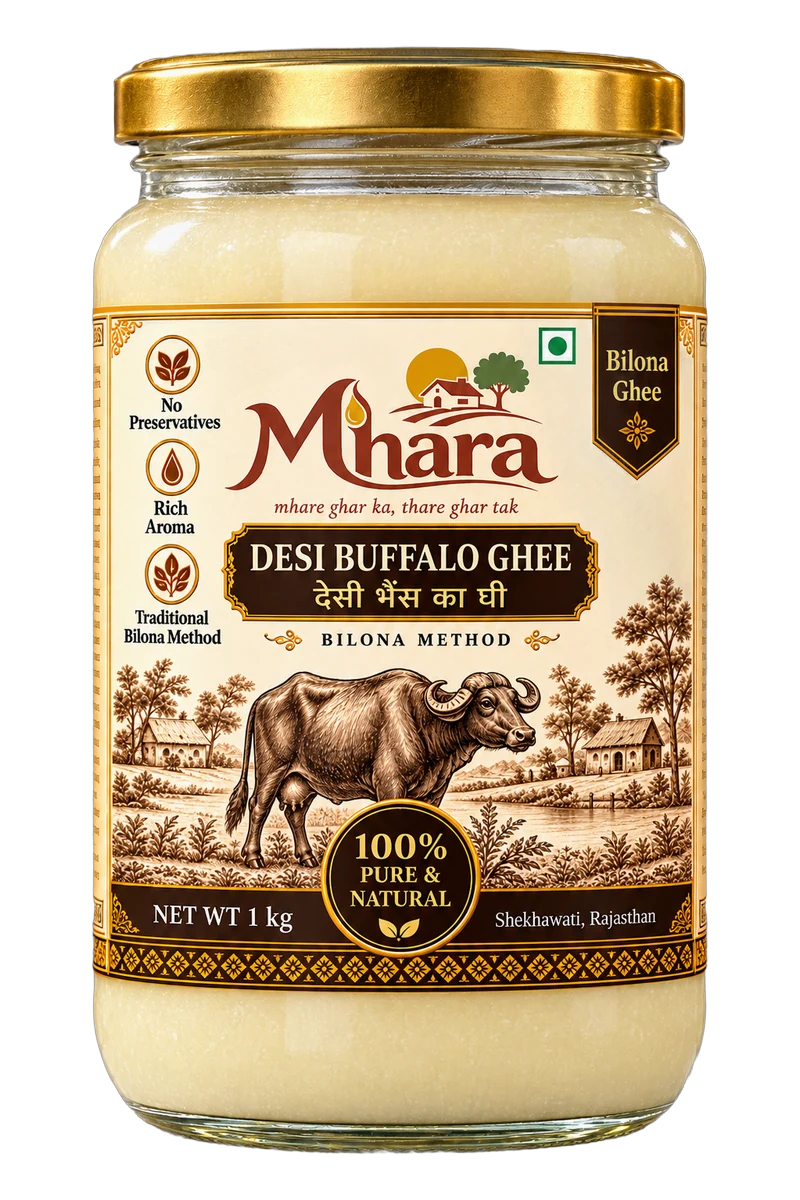
Our Desi Buffalo Ghee comes in four sizes, with free delivery across India:
- 500 ml glass jar: ₹1,049
- 1 litre glass jar: ₹1,899
- 2 litre steel tin: ₹3,699
- 5 litre steel tin: ₹8,999
For comparison, our Desi Cow Bilona Ghee is ₹1,999 for 1 litre. Both are made from whole-milk curd, churned with a wooden bilona and cooked slowly on a low flame. The difference in price comes almost entirely from the milk.
Why buffalo ghee usually costs less than cow bilona ghee
Ghee is almost pure milk fat, so the price of a kilo depends mostly on how much milk you need to collect that much fat. Buffalo milk carries a lot more fat than cow milk. You can see it when you boil it: the malai on buffalo milk is thick and heavy, and the milk itself feels creamier in the mouth.
That means a household making bilona ghee from buffalo milk needs noticeably fewer litres for the same kilo than it would with cow milk. A litre of buffalo milk usually costs more than a litre of cow milk, because milk is often paid for by its fat. But the drop in litres is bigger than the rise in price per litre, so the kilo of ghee still works out a little cheaper.
The rest of the work does not change. The milk is boiled, set into curd overnight, churned before sunrise, and the makkhan is cooked slowly and strained. We go through the cow side of this maths in detail in cow ghee price, where the figure is about 25 to 30 litres of desi cow milk per kilo.
What you are paying for in a jar of buffalo ghee
When you pay for a kilo of our buffalo ghee, this is roughly where the money goes:
- The milk. By far the biggest part. Buffalo milk from household animals, fed on bajra stalks, green fodder after the rains and khal.
- The method. Whole-milk curd set overnight, churned with a bilona, cooked slowly. Some fat is always lost to the chaach, and that loss is part of the cost.
- The time and hands. Setting, churning and watching the kadhai happen in a village kitchen, one small batch at a time.
- The glass jar. Heavier and dearer than plastic, but it keeps ghee clean and does not take on any smell.
- Delivery and the broken-jar promise. Free shipping across India, and a new jar free if one arrives broken. The details are on our guarantee page.
Nothing else goes in. No preservative, no colour, no flavour.
What makes buffalo ghee rates go up and down
If you buy buffalo ghee through the year, you may see rates move a little, ours included. These are the usual reasons:
- Milk supply. Animals give more milk in some months than others. When milk is short, it costs more, and every kilo of ghee costs more with it.
- Fodder. In a dry year, fodder costs more, and families pay more to keep their animals fed. That passes into the price of milk.
- Festival and wedding season. Around Diwali and the winter wedding season, demand for buffalo ghee goes up because so much mithai is made with it.
- Method. Buffalo ghee made from separated cream in a dairy needs less work and fewer losses than bilona buffalo ghee, so it can be sold for less. It is still real ghee, just made a different way.
- Pack size and delivery. A price that looks low can rise once delivery is added at checkout. Always compare the final amount for one kilo.
What good buffalo ghee looks and smells like
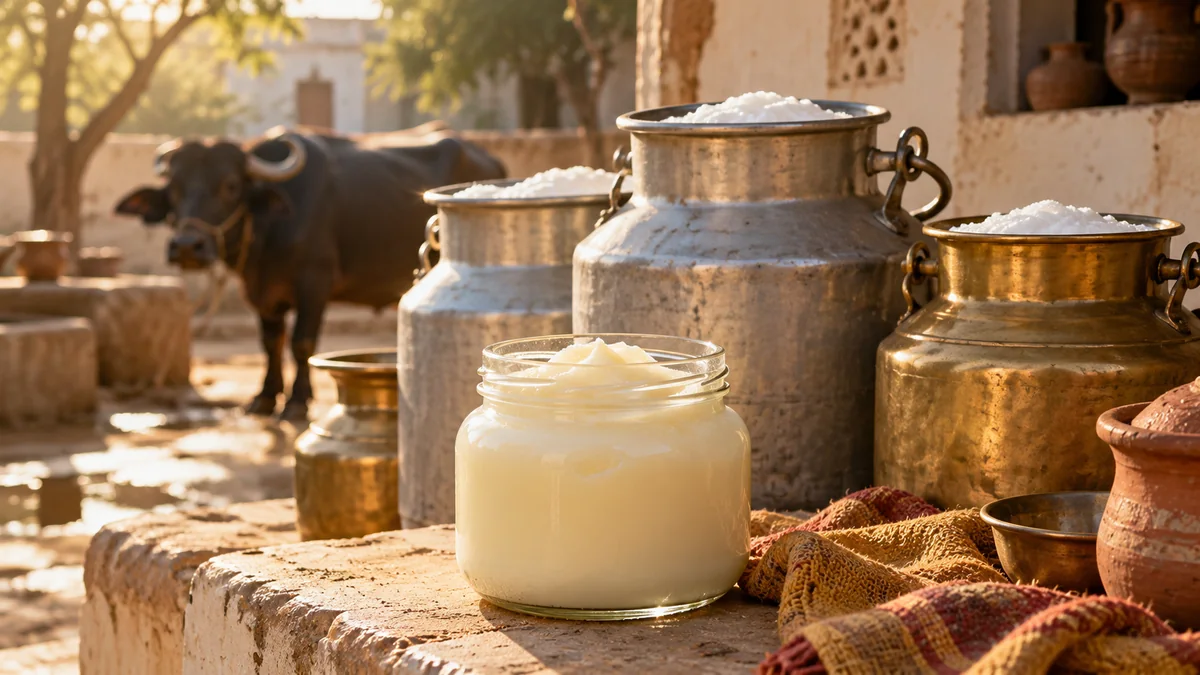
Buffalo ghee should be white or ivory. Cows pass the yellow beta-carotene from their feed into their milk fat, but buffalo turn it into vitamin A, so their ghee comes out pale. If a jar sold as pure buffalo ghee is clearly yellow, it is a fair question to ask whether it has cow ghee mixed in. That is not wrong in itself, but the label should say so.
Buffalo ghee also sets harder and earlier than cow ghee when the weather turns cool, because its fat has more of the parts that set at higher temperatures. A firm, grainy, white jar in winter is normal. The smell should be rich and milky. A sour or rancid smell means the ghee has gone off, usually from a wet spoon or moisture. We compare the two ghees side by side in cow ghee vs buffalo ghee.
How to buy buffalo ghee online
Buying buffalo ghee online is mostly about reading the page carefully before you pay. Three things matter most for buffalo ghee:
- The animal, stated plainly. Pure buffalo, or a mix of cow and buffalo? Both are fine if the label is honest.
- The method. Whole-milk curd and bilona, or cream? This explains much of the price difference between sellers.
- Final price per kilo with delivery. Compare that number, not the headline price.
The checks that apply to any ghee, such as the FSSAI licence, pack date, jar, breakage terms and reviews, are in our checklist on how to buy desi ghee online.
Who buys buffalo ghee, and for what
In our part of Rajasthan, buffalo ghee is the sweets ghee. It is rich and heavy, it binds well, and its white colour keeps laddoo, halwa and barfi looking clean. Churma made with buffalo ghee is a winter favourite, and our churma recipe uses it. Many families also like a spoon of it on bajra roti in the cold months.
For everyday tadka and dal, most homes here reach for cow ghee instead, because its aroma is lighter and it suits daily food. Plenty of kitchens keep one jar of each.
If you are wondering whether buffalo ghee suits your diet, our article is buffalo ghee good for health sets out what it contains and when to ask your doctor first. We do not make health claims about any ghee, ours included.
500 ml or 1 litre?
If you are trying buffalo ghee for the first time, or you only use it for sweets, the 500 ml jar is the sensible start. If your family makes mithai often or uses it through the winter, the 1 litre Desi Buffalo Ghee jar saves a reorder. Either way, use a dry spoon and keep the lid shut, and it will keep well for months.
Questions people ask
Why is buffalo ghee cheaper than cow ghee?
Buffalo milk has much more fat than cow milk, so it takes fewer litres to make a kilo of ghee. Even though a litre of buffalo milk often costs more, the kilo of ghee usually works out a little cheaper than cow bilona ghee made the same way.
What is the price of 1 kg buffalo ghee?
It depends on the method and the seller. Bilona buffalo ghee made from whole-milk curd costs more than buffalo ghee made from cream in a dairy. Our own 1 litre jar is made the bilona way, and its current price is on the product page, with free delivery across India.
Should buffalo ghee be white or yellow?
White or ivory. Buffalo turn the yellow beta-carotene in their feed into vitamin A, so their ghee comes out pale. A clearly yellow jar sold as pure buffalo ghee is worth asking about.
Why does the price of buffalo ghee change through the year?
Milk supply changes with the season, fodder costs rise in dry years, and demand goes up around Diwali and the wedding season when a lot of mithai is made. All of these show up in the price of milk and so in the price of ghee.
What should I check when buying buffalo ghee online?
Check that the page says plainly whether it is pure buffalo or mixed, how it is made, the FSSAI licence number, the pack date, the type of jar, and the final price per kilo including delivery. Also check what the seller does if a jar arrives broken.