
How to clean a ghee jar and reuse it at home
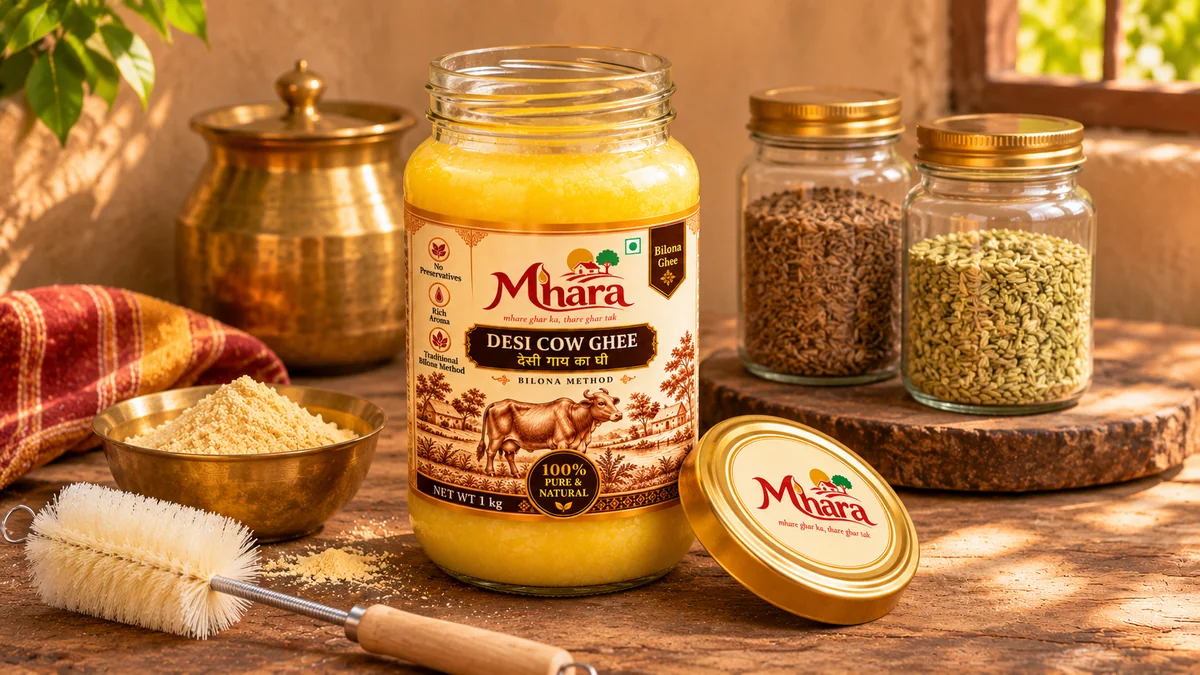
To reuse ghee jar glass at home, scrape out the last of the ghee, wipe the grease with paper, then wash the jar in warm water with a rub of besan or atta and a little soap. Dry it completely, ideally in the sun, before it holds anything. A clean, bone-dry jar is ideal for pickles, spices and dry fruit.
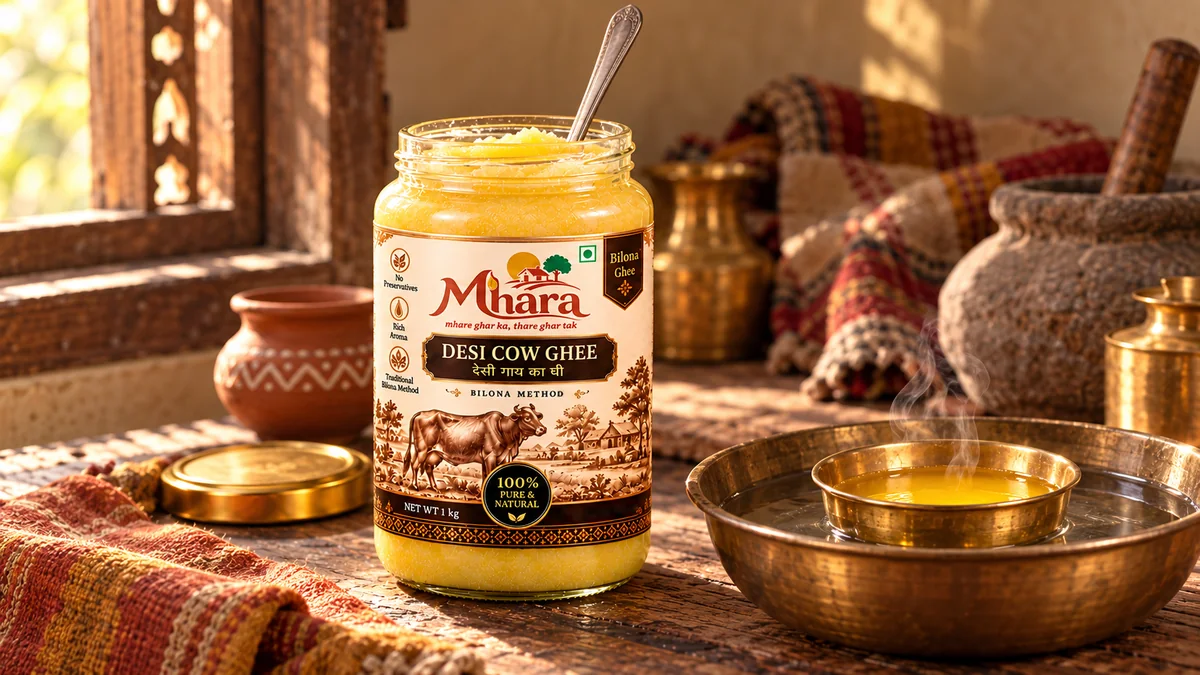
In our village nobody throws away an empty ghee jar. Walk into any kitchen in Shekhawati and look at the top shelf: a row of glass jars holding red chilli pickle, saunf, jeera, and a handful of kaju kept back for guests. Most of them once held ghee. The old steel tins hold atta, rice or bajra. In our house Maa still runs a finger round the rim of every jar before she puts anything in it, feeling for a trace of grease or damp.
Ghee is stubborn, though. A jar that looks clean can still carry a thin film of fat that turns stale and smelly within a few weeks. Here is how we clean a ghee jar properly, how we dry it, and what is worth keeping in it next.
Why a ghee jar is worth keeping
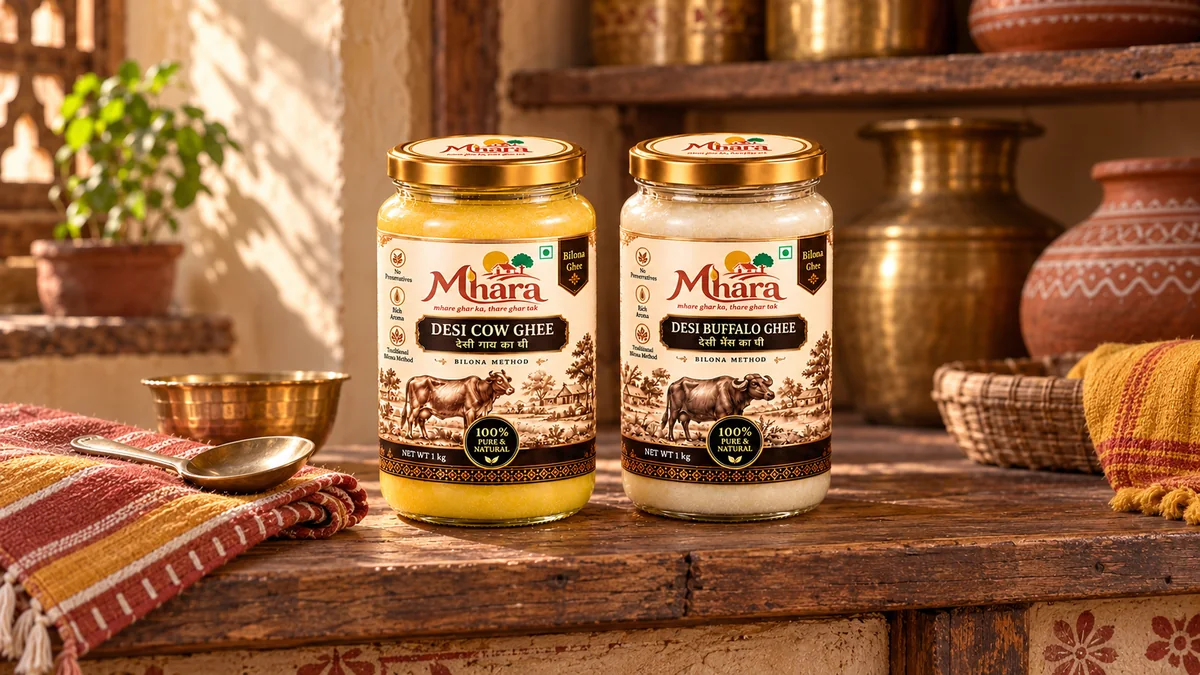
A good glass jar does not take on smells and stains the way plastic does, and you can see what is inside. That is one reason we pack Mhara ghee only in glass and steel: 500 ml and 1 litre glass jars, and 2 litre and 5 litre steel tins, never plastic. When the ghee is finished, the jar still has years of use left in it. Our guide on choosing a glass jar or a steel tin compares them.
One thing to know first. The tamper-evident seal on the lid is a one-time seal. It tells you nobody opened the jar before you did. Once you break it, the jar is simply a good kitchen jar, and the seal does not come back.
First, get the last of the ghee out
Do not wash a jar that still has a spoonful of ghee clinging to its sides. That ghee is food, and leaving it in makes washing far harder.
- In summer the ghee is soft or liquid. Tip the jar, scrape the walls with a dry spatula or spoon, and use what you collect in dal or on roti.
- In winter the ghee sets firm on the glass. Stand the closed jar in a bowl of warm water for five to ten minutes, or keep it in the sun for an hour, and the ghee loosens and slides down. We explain why it sets in why ghee solidifies in winter.
- The last film: wipe the inside with a piece of roti or kitchen paper.
If there is a little brown residue at the bottom, keep that too. Our post on ghee residue uses has seven ways to eat it.
How to clean a ghee jar with warm water and besan
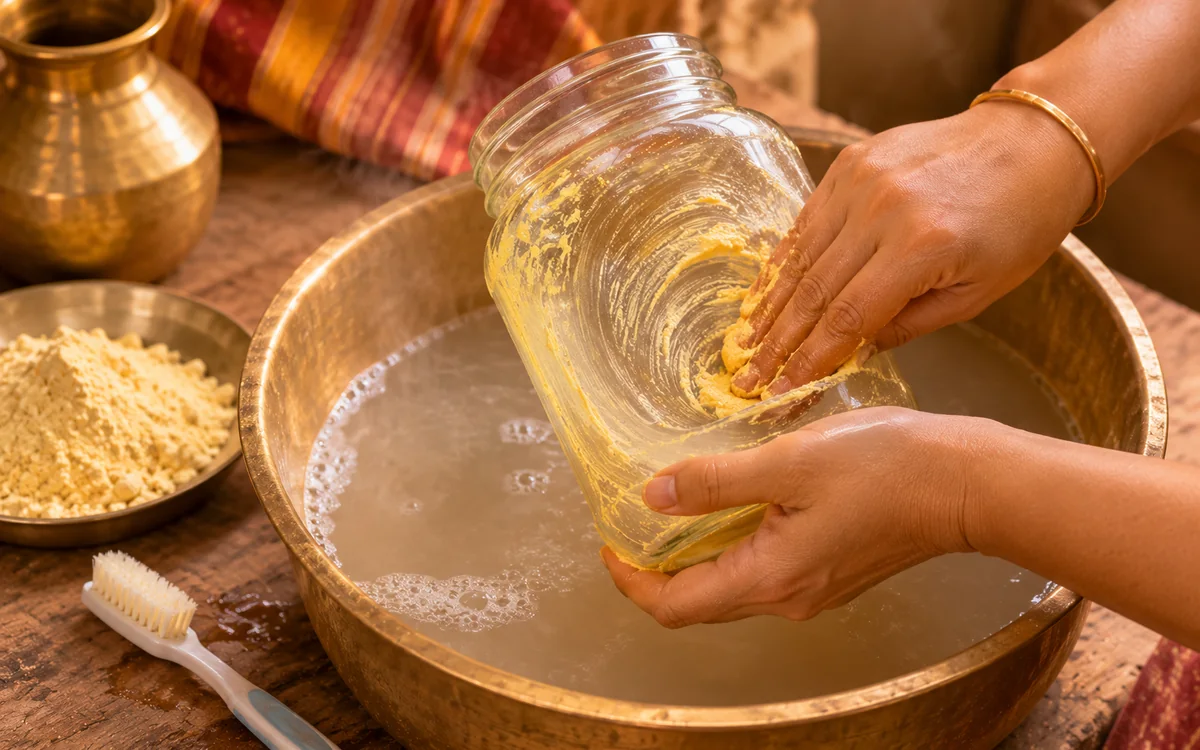
Cold water does nothing to ghee. It sets the fat harder and spreads it around. You need warm water and something that grips grease.
- Warm the jar gently. Rinse it under warm water first. Never pour boiling water into a cold glass jar, especially in winter. A sudden jump in temperature can crack glass.
- Rub with besan or atta. Put a tablespoon of besan or atta into the jar with a few drops of water and rub it round the walls with your fingers or a soft brush. The flour soaks up the fat and lifts it off. On a ghee film it works better than soap alone.
- Wash with soap. Rinse the flour out, then wash once with a little dishwashing liquid and warm water, using a bottle brush for the corners and the shoulder of the jar.
- Clean the lid and the threads. Ghee hides in the screw threads of both the jar and the lid. An old toothbrush gets it out.
- Rinse well in warm water until the glass squeaks under your finger.
If the jar still smells of ghee after this, rub the inside with half a lemon or a spoon of baking soda, rinse, and leave it open in the sun. Sunlight and air take away most of what is left. A faint smell of ghee does no harm if the jar will hold ghee again, but you do not want it in a jar of tea leaves.
Some people keep the label with its hand-written name strip. If you want plain glass, soak the jar in warm water for fifteen minutes and peel. Rub any leftover glue with a drop of oil or ghee, then scrub and wash again.
Dry it completely, then dry it again
This is the step people rush, and it is the one that matters most. Water is what spoils ghee, pickles and spices. A jar that is almost dry is not dry.
- Stand the jar upside down on a rack for an hour so the water drains out.
- Then put the jar and the lid, separately and open, in direct sun for two to three hours. In a Shekhawati winter a sunny afternoon on the roof is enough. On a cloudy day, leave them out overnight in a dry room.
- Check the inside of the lid and the threads, where drops hide. Run a dry finger round the rim. If the glass fogs when you close it, it is not ready.
Reuse ghee jar ideas: what we keep in ours
Once it is clean and dry, a ghee jar suits anything that needs to stay dry and closed. These are the uses we see most in village kitchens:
- Pickles. Mango, lemon, chilli and gunda pickles keep well in glass, which does not react with oil, salt or sourness.
- Whole spices and masala. Jeera, saunf, ajwain, methi dana and home-ground garam masala stay fresher in a closed glass jar than in a pouch.
- Dry fruit and makhana. A 1 litre jar holds a winter supply of almonds or roasted makhana, and you can see at a glance when it is running low.
- Tea, sugar, boora and shakkar. Keep these jars away from the stove so steam does not get in.
- Steel tins for atta, rice, dal or bajra. A 5 litre tin with a tight lid keeps flour dry through the monsoon.
One thing we would not do: put a glass jar on a direct flame or in an oven. It was not made for that.
Can you refill an old ghee jar with fresh ghee?
Yes, and many families do it when they make ghee at home or buy a big tin and decant some into a jar for the kitchen. Before you reuse ghee jar glass for ghee itself, the rules are short:
- Never pour ghee into a damp jar. Even a few drops of water give mould and sourness a place to start. The jar must be bone dry.
- Do not top up old ghee with new. Finish the old jar, clean it, then fill it again. If you mix batches, the oldest ghee decides how long the whole jar keeps.
- Follow the dry-spoon rule. Only a clean, dry spoon goes into the jar, never one that has been in dal or water.
- Keep the lid closed and the jar away from the stove and direct sun once it holds ghee.
Our guide on how to store ghee covers the dry-spoon rule and shelf life in full. A fresh batch of desi cow bilona ghee keeps its aroma for months in a clean, dry jar handled this way.
When a jar has done its time
Most jars last for years, but let one go when the rim is chipped, the glass has a crack, or a steel tin has started to rust inside. A chipped rim cannot close tightly, and a cracked jar can give way when the glass warms or cools. If a smell stays after washing and sunning, keep that jar for buttons or thread, not food.
So the whole method is simple: warm the jar, scrape out the last ghee, rub it with besan, wash it, and dry it in the sun until there is not a drop left. Do that and you can reuse ghee jar glass in your kitchen for years.
Questions people ask
How do you remove ghee smell from a glass jar?
Wash the jar with warm water and a besan or atta rub, then dishwashing liquid. If a smell remains, rub the inside with half a lemon or a spoon of baking soda, rinse, and leave the jar and lid open in direct sun for a few hours.
Can I pour hot water into a glass ghee jar?
Warm water is fine, but avoid pouring boiling water into a cold glass jar, especially in winter. A sudden change in temperature can crack the glass. Rinse with warm water first so the jar warms up gradually.
Can I store pickle in an old ghee jar?
Yes. Glass suits pickles well because it does not react with oil, salt or sourness. Clean off every trace of ghee first, then dry the jar and lid completely in the sun, because even a drop of water can start fungus in pickle.
Why does ghee spoil in a wet jar?
Ghee keeps well because it has almost no water in it. A damp jar or wet spoon brings water back, and that gives mould and sour, stale flavours a place to start. Always use a bone-dry jar and a dry spoon.
How do I clean ghee jar lids and threads?
Ghee collects in the screw threads of both the jar and the lid. Scrub them with an old toothbrush, warm water and a little soap, rinse, and dry the lid open in the sun, since drops of water often hide inside it.
When should I stop reusing a glass jar?
Retire a jar when the rim is chipped, the glass has a crack, or a smell stays even after washing and sunning. A chipped rim will not close tightly, and cracked glass can break when it warms or cools.