8 easy ways to add ghee to a child's tiffin

The easiest ghee for kids tiffin ideas are the ones where ghee is cooked into the food: a ghee paratha, ghee rice, dal-rice, poha or upma with a ghee tadka, a tawa sandwich, a small laddoo or roasted makhana. For most school-age children, one to two teaspoons in the tiffin is plenty, counted within the family's daily amount.
At seven in the morning in our village, the tawa is already hot and a school bag is waiting by the door. The tiffin is usually last night's dough turned into two parathas, a thin smear of ghee on each, rolled in a cotton cloth so they stay soft till the lunch bell. Nobody calls it a recipe. It is simply how a child's lunch gets packed in Shekhawati homes.
Ghee goes into a tiffin for plain reasons. It makes simple food taste good, it keeps rotis soft for hours, and a little fat makes a meal more filling. Below are eight easy ways we use it, how much is sensible, and the one problem every winter tiffin has: ghee that has set hard and white by lunchtime.
How much ghee for kids tiffin is sensible
Ghee is a cooking fat. It gives energy and carries flavour, and that is the honest case for it. It is not a brain food or a medicine, whatever the forwards on the family group say. For most school-age children, one to two teaspoons in the tiffin is plenty, and it counts as part of the family's fat for the day, not on top of it. If the child also has ghee on roti at breakfast and in dal at dinner, keep the tiffin lighter.
Our guide to how much ghee per day explains how to count it across meals. If there is a toddler at home too, read ghee for babies instead, because the amounts and the foods are different. A child with a milk allergy, a weight concern or any medical condition should have the doctor decide the amount.
Main-meal tiffins: paratha, ghee rice, dal-rice
1. Ghee paratha
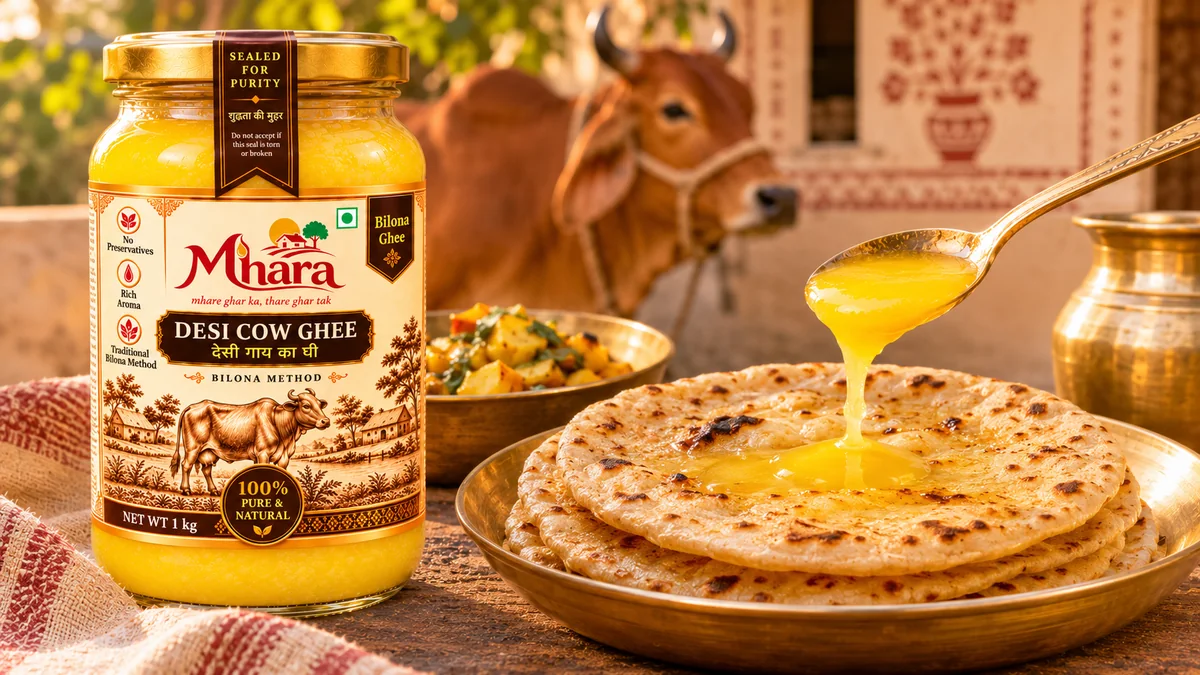
A plain or stuffed paratha cooked on the tawa with ghee is the most common ghee for kids tiffin in our part of Rajasthan. Brush about half a teaspoon of ghee on each side while it cooks, not a pool of it. Ghee that is cooked into the paratha stays soft and does not turn waxy when the box goes cold.
- Roll or fold the paratha while hot and wrap it in a cotton napkin or butter paper. Foil traps steam and makes it soggy.
- Aloo, paneer, grated gobhi and methi fillings all travel well. Keep the filling a little dry so it does not leak.
- Methi thepla stays soft through a long day, which makes it good for school trips.
2. Ghee rice
For children who find dal-roti dull, a box of jeera rice cooked in a spoon of ghee, with a few cashews or peas, usually comes back empty. Our ghee rice recipe has the method. Cook the ghee into the rice rather than pouring it on top at the end, and the grains stay loose even when cold.
3. Dal-rice or khichdi
Dal-rice with a ghee tadka of jeera and hing is comfort food at school too. Make the dal thicker than you would at home so it does not seep through the lid, and pack it in an insulated steel tiffin if the child likes it warm. Moong dal khichdi with a teaspoon of ghee stirred in while hot works the same way.

Quick morning tiffins: poha, upma, sandwich
4. Poha with a ghee tadka
Heat one teaspoon of ghee, add mustard seeds, curry leaves, a little onion and peas, then the rinsed poha, haldi, salt and a squeeze of lemon. Ghee gives poha a gentler, rounder taste than oil, which many children prefer. Rinse thick poha gently and let it drain for five minutes before cooking, or it turns mushy by noon. Add roasted peanuts only if the school allows nuts.
5. Upma or vegetable sooji
Roast the sooji in a teaspoon of ghee until it smells toasty, then cook it with water and chopped vegetables. Roasting in ghee keeps the grains separate, so the upma does not set into one solid block by lunch. Make it a little looser than you would for breakfast, because it firms up as it cools.
6. A tawa sandwich with ghee
Soft ghee works in place of butter. Spread a thin layer on the outside of two slices, fill them with grated paneer, mashed potato, or cucumber and green chutney, and toast on the tawa until crisp. Toasted bread holds the filling better than raw bread and does not go soggy as fast.
For the short break: laddoo and makhana
7. One small laddoo
One atta or besan laddoo, the size of a walnut rather than a lime, is a good sweet for a long school day. It does not spill and needs no box of its own. Our atta laddoo recipe makes a batch that lasts a couple of weeks. Keep it to one. Laddoos are dense with ghee and sugar or jaggery, and a lunch should not be built around sweets. If the school is nut-free, leave the dry fruit out of the tiffin batch.
8. Roasted makhana
Makhana roasted in a little ghee with a pinch of salt is light, crunchy and easy for small hands. Roast a batch on Sunday and pack a handful each day in a small airtight box so it stays crisp. Our recipe for makhana roasted in ghee has the timing and a sweet gud version. For younger children still learning to chew well, crush the makhana lightly first.
Why ghee sets in a winter tiffin, and how to stop it
Ghee is liquid in a warm kitchen and starts to set as it cools. By December, a classroom in Shekhawati can be cold enough that ghee poured over rice at seven turns into white flecks by one. The food is fine. It just looks and feels greasy, and children notice.
- Cook it in. Ghee in the dough, the tadka or the roasting stays part of the food. Ghee spooned on top is what sets.
- Use less. Half a teaspoon brushed on is enough for flavour. Excess is what you see.
- Keep it warm. An insulated steel tiffin helps rice, dal and upma. Parathas and laddoos are happy cold.
- Skip the drizzle. Save the spoon of ghee on hot rice for dinner at home, when it is eaten straight away.
Which ghee to use, and a simple week
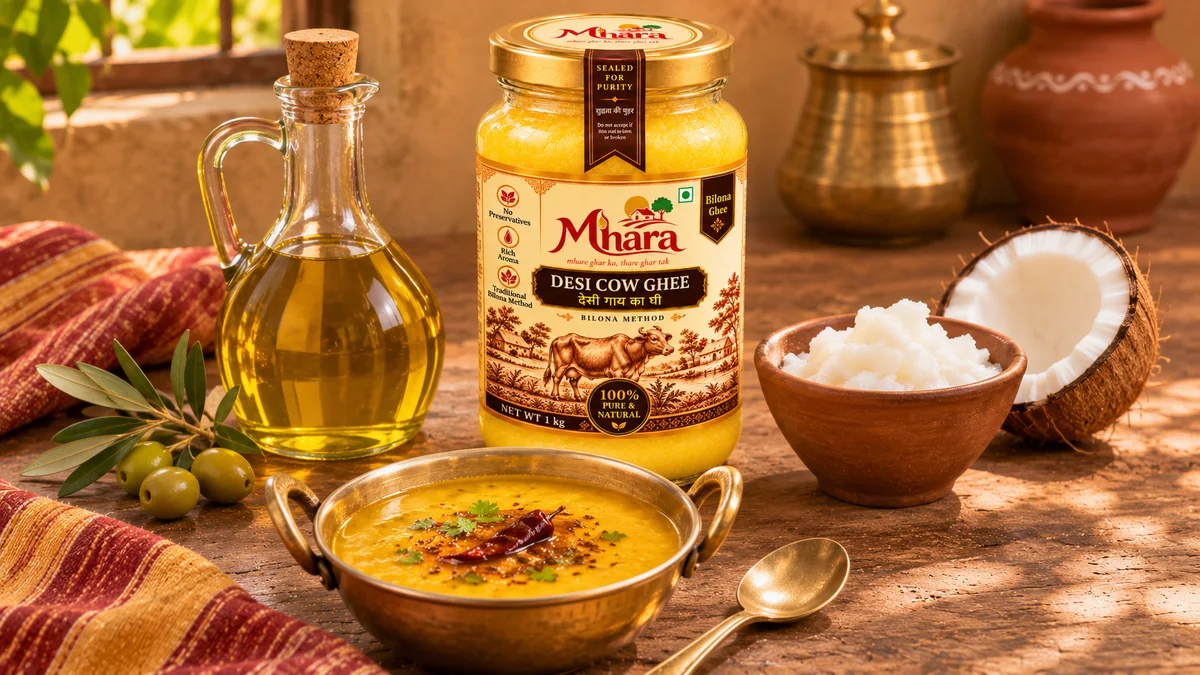
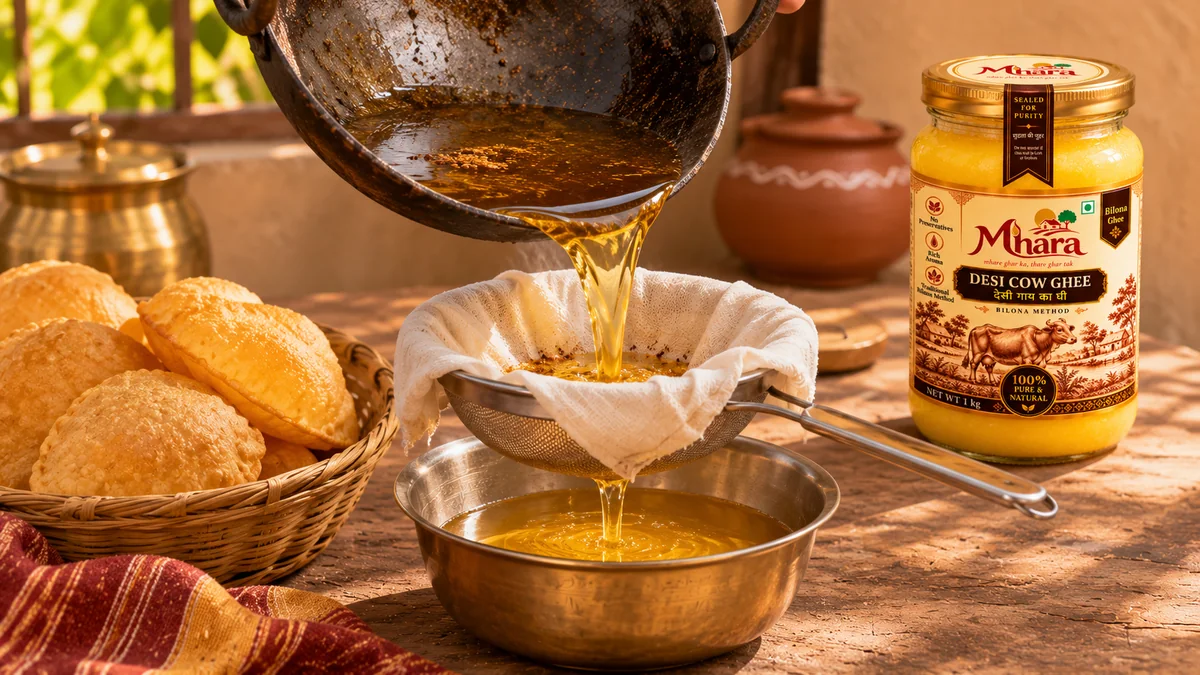
For daily tiffin cooking we use cow ghee. Our Desi Cow Bilona Ghee is churned by hand from curd and has a nutty smell that makes a plain paratha taste like home. Some children find a strong ghee smell too much. If yours does, use less, or try a milder buffalo ghee for parathas.
If mornings are rushed, plan the week loosely so the box does not repeat itself:
- Monday: aloo paratha and curd.
- Tuesday: vegetable poha and fruit.
- Wednesday: ghee rice with peas, and a few cucumber sticks.
- Thursday: upma and a small laddoo.
- Friday: tawa sandwich and a handful of roasted makhana.
Always use a dry, clean spoon in the ghee jar, even on busy mornings. A wet spoon is how jars go off. And if the box comes back half full, ask the child why before adding more ghee. Usually the answer is about taste or time to eat, not about fat. The best ghee for kids tiffin habit is a small one: a little ghee, cooked in, in food the child already likes.
Questions people ask
How much ghee should a school-age child eat in a day?
For most healthy school-age children, a few teaspoons spread across the day's meals is usual in Indian homes, with one to two teaspoons in the tiffin. Count ghee along with oil and butter. If your child has a weight concern, allergy or medical condition, ask your paediatrician.
Can I put ghee in my child's lunchbox?
Yes. Ghee keeps well for a school day at room temperature and travels better than butter. Cook it into the food, such as parathas, rice, poha or upma, rather than pouring it on top, so it does not set into greasy white flecks by lunchtime.
Why does ghee become hard in the tiffin by lunchtime?
Ghee sets as it cools, and a winter classroom is cool enough for ghee on top of rice or dal to turn solid. Cook the ghee into the food, use a smaller amount and pack warm dishes in an insulated steel tiffin.
Is ghee better than butter for kids' sandwiches?
Both are milk fats with similar calories. Ghee has almost no water, so it toasts bread crisp on the tawa and keeps longer at room temperature. Butter gives a softer, milder taste. Use whichever your child likes, thinly spread.
Is ghee paratha good for a child's tiffin every day?
A paratha with about half a teaspoon of ghee per side is a normal tiffin for many Indian children. Rotate it with rice, poha, upma and sandwiches so the week has variety, and add vegetables or curd and fruit alongside.
Can children with a milk allergy have ghee?
Ghee is mostly fat, but it can still carry tiny traces of milk protein. If your child has a diagnosed milk allergy, do not add ghee without asking the doctor who manages the allergy. Lactose intolerance is a different condition, so ask about that separately.