Lapsi recipe: the broken-wheat halwa of Rajasthan
This lapsi recipe roasts fine broken wheat (dalia) in desi ghee for 10 to 12 minutes until golden and nutty, cooks it in hot water until soft, then sweetens it with jaggery or sugar, cardamom and dry fruit. It takes about 40 minutes in a kadhai, less in a pressure cooker, and serves four.
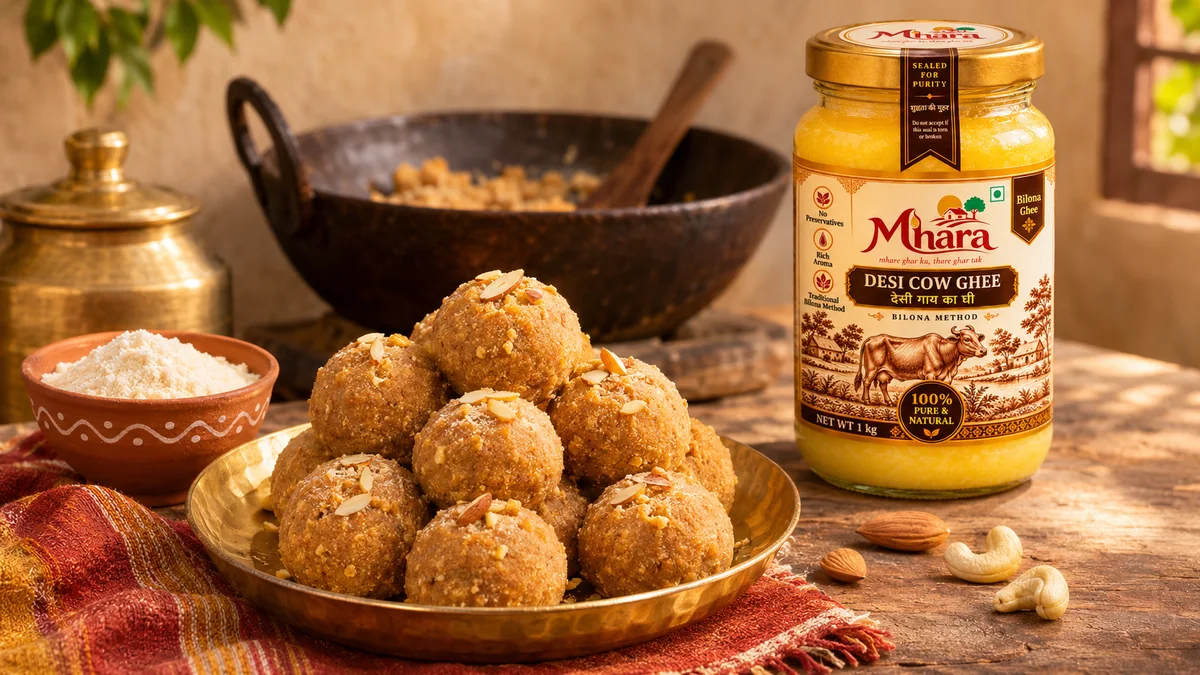
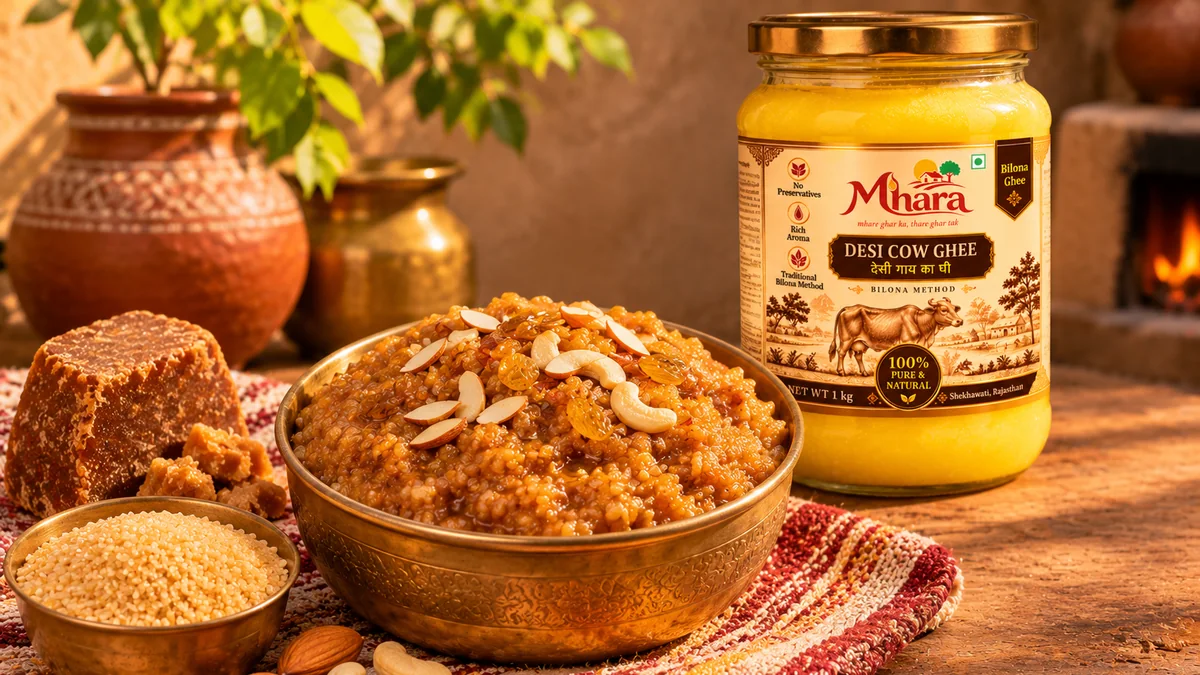
When there is good news in a Shekhawati house, someone heads to the kitchen and puts a kadhai on the flame. A new job, a griha pravesh, the first day of a wedding ritual, a festival morning: in many Rajasthani homes the sweet that marks the moment is lapsi. Broken wheat goes into hot ghee, the kitchen fills with a smell like toasted bread and nuts, and twenty minutes later there is a brown, glossy halwa studded with almonds, offered first to God and then passed around in small katoris.
It is one of the simplest sweets in our kitchen, and one of the oldest. This lapsi recipe is the way we make it at home, with dalia roasted slowly in desi cow ghee and sweetened with gud. Below we also give the pressure cooker method, the sugar version and the mistakes that turn lapsi gluey or hard.
What is lapsi?
Lapsi is a halwa made from broken wheat, called dalia or lapsi rava, cooked in ghee and water and sweetened with jaggery or sugar. It is made in Rajasthan and Gujarat, where it is a shagun sweet, something you cook to begin a good thing well. In Gujarat the coarse broken wheat is often called fada, and the dish fada lapsi.
Lapsi is not the same as sooji halwa. Semolina is fine and cooks in minutes into a soft, smooth halwa, as in our sooji halwa recipe. Dalia is coarser. It keeps a gentle bite even when fully cooked, each grain separate and glossy with ghee. Some families make it looser, like a thick porridge; others cook it until it holds a shape on the spoon. Both are right.
Which dalia to buy
Look for fine or medium broken wheat. Packets are often labelled "lapsi" or "fine dalia". The very coarse dalia sold for savoury khichdi takes much longer to soften and gives a chewier lapsi.
- Fine dalia: cooks in about 15 minutes after roasting, softer result. Best for a first try.
- Medium dalia: 20 to 25 minutes, more bite, the texture most of our elders prefer.
- Coarse dalia: use the pressure cooker method below.
Pick out any stones or husk and do not wash it. Dalia that goes into the kadhai wet will steam instead of roast.
Lapsi recipe in a kadhai, step by step
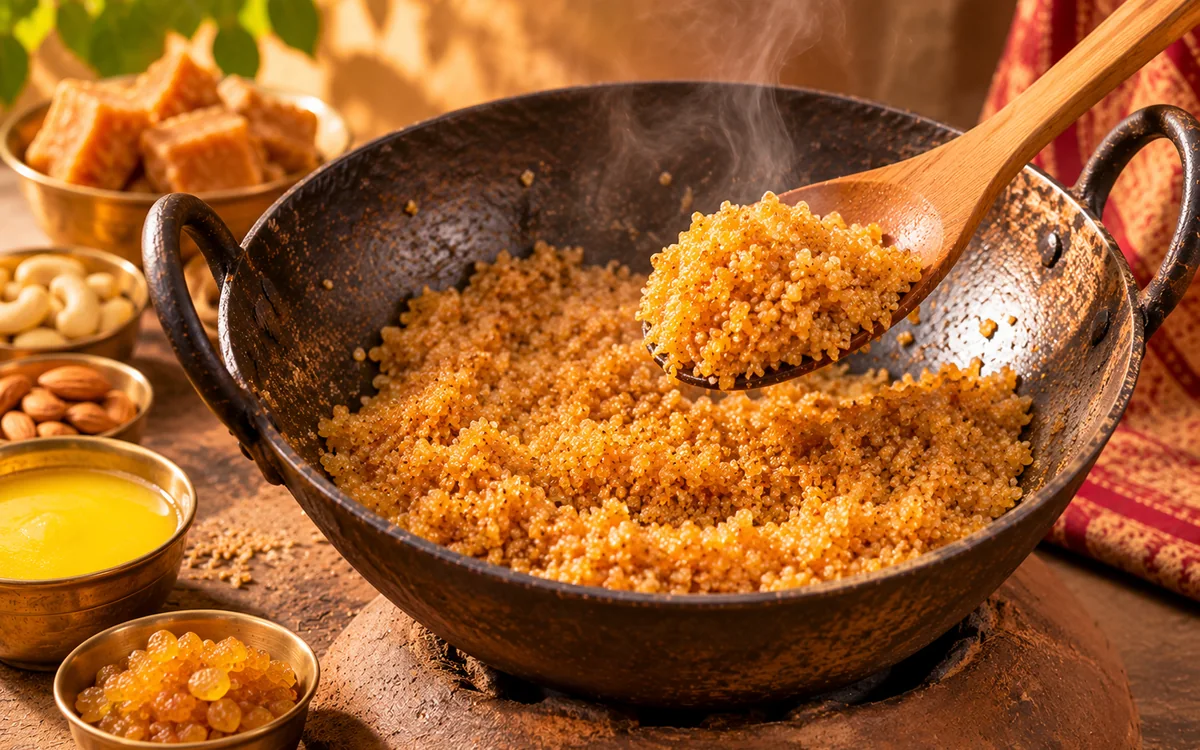
This makes four small bowls. You need 1 cup (about 160 g) of fine or medium dalia, ⅓ cup (about 70 g) of ghee, 3 cups of hot water, ¾ cup (150 g) of grated jaggery, cardamom and a handful of dry fruit.
- Put the water to boil in a separate pan. Lapsi needs hot water. Cold water seizes the roasted grain and makes it lumpy.
- Roast the dalia. Heat the ghee in a heavy kadhai on a low to medium flame. Add the dalia and stir it all the time for 10 to 12 minutes. It is ready when it turns a deep golden brown, smells nutty and the grains move freely in the ghee.
- Add the water. Turn the flame low and stand back, then pour in the hot water slowly while stirring. It will hiss and splutter hard for a few seconds.
- Cook the dalia. Cover and cook on a low flame for 15 to 20 minutes, stirring every few minutes, until the grains are soft when pressed between your fingers and most of the water has gone.
- Add the gud. Stir in the grated jaggery. It melts and loosens the lapsi for a minute, then thickens again. Keep stirring for 4 to 5 minutes until the lapsi leaves the sides of the kadhai and a thin line of ghee shines at the edge.
- Finish. Add ½ teaspoon of cardamom powder and the nuts, roasted in a spoon of ghee. Rest it covered for five minutes before serving.
The roasting is the part that matters most. Under-roasted dalia tastes raw and floury and turns pasty. Take it slowly and keep stirring, and the kitchen will tell you when it is done.
Lapsi in a pressure cooker
For medium or coarse dalia, or when the stove is busy, the cooker saves time.
- Roast the dalia in ghee directly in the open cooker, exactly as above, until golden and nutty.
- Add 2½ cups of hot water (a little less than in the kadhai, as less escapes as steam), stir and close the lid.
- Cook for 3 whistles on a medium flame and let the pressure drop on its own.
- Open, add the jaggery and cook uncovered for 4 to 5 minutes, stirring, until thick and glossy.
Cooker lapsi comes out a little softer and more even. Kadhai lapsi has more of the toasted flavour, because you watch it the whole time. In our village the kadhai still wins on festival days, and the cooker on ordinary Sundays.
Gud or sugar, and how much ghee
Jaggery gives the traditional lapsi: dark brown, with a deep, caramel taste that works with the roasted wheat. Sugar gives a lighter golden lapsi with a cleaner sweetness, the way many families make it for puja. Use the same ¾ cup (150 g) of either. Add a little more if you like it sweet, but taste first. The roasted dalia has its own sweetness.
If your jaggery is hard, dissolve it in ½ cup of warm water, strain out any grit, and add that syrup instead. Reduce the cooking water by the same ½ cup.
Ghee is not just for frying the dalia here. It carries the flavour of the whole dish. ⅓ cup for 1 cup of dalia is the home amount; halwais use more. This is a good place for desi cow bilona ghee, because its nutty smell deepens when the wheat roasts in it.
What goes wrong, and how to fix it
- Lumpy lapsi: the water was cold, or poured in all at once. Break the lumps with the back of the spoon while it cooks.
- Gluey or pasty: the dalia was not roasted long enough, or there was too much water. Roast longer next time, and cook off the extra water on a low flame.
- Grains still hard: add ¼ cup of hot water, cover and cook a few minutes more. Coarse dalia may need the cooker.
- Too dry or hard once cool: lapsi thickens as it sits. Add a splash of hot water or milk and a spoon of ghee and warm it again.
- Bitter taste: the dalia scorched on a high flame. There is no fix; start again on a lower flame.
Variations and serving
For a festive lapsi, add a tablespoon of grated dry coconut and a few strands of saffron soaked in warm water. Some families finish it with a spoon of extra ghee on top. Others stir in a little milk at the end for a softer, creamier lapsi, which should then be eaten the same day.
Serve lapsi warm in small katoris, with a few slivered almonds on top. It goes on the thali at weddings and festivals beside dal baati and Rajasthani churma, and in winter it sits with other slow sweets like moong dal halwa. We have more of those in winter halwas made in Rajasthani homes.
Leftover lapsi keeps for two days in the fridge in a covered steel box. Warm it in a kadhai with a splash of hot water. Because this lapsi recipe uses only dalia, ghee, water and gud, it reheats well, and many people say it tastes better the next morning.
Recipe card
Ingredients
- 1 cup (about 160 g) fine or medium dalia (broken wheat)
- 1/3 cup (about 70 g) desi cow bilona ghee, plus 1 tbsp to roast the nuts
- 3 cups (720 ml) hot water for the kadhai method (2 1/2 cups for the pressure cooker)
- 3/4 cup (150 g) grated jaggery, or 3/4 cup (150 g) sugar
- 1/2 tsp green cardamom powder
- 2 tbsp (about 15 g) almonds, slivered
- 2 tbsp (about 15 g) cashews, halved
- 1 tbsp (about 10 g) raisins
- A pinch of saunf (fennel seeds), optional
- 1 tbsp grated dry coconut and a few saffron strands, optional
Method
- Put the water to boil in a separate pan and keep it hot.
- Heat the ghee in a heavy kadhai on a low to medium flame. Add the dalia and roast, stirring all the time, for 10–12 minutes until deep golden brown and nutty. Add the saunf, if using, in the last minute.
- Lower the flame, stand back, and pour in the hot water slowly while stirring. It will splutter.
- Cover and cook on a low flame for 15–20 minutes, stirring every few minutes, until the grains are soft and most of the water has gone.
- Stir in the grated jaggery or sugar. Cook, stirring, for 4–5 minutes until the lapsi leaves the sides and ghee shines at the edge.
- Roast the almonds, cashews and raisins in 1 tbsp ghee for a minute.
- Add the cardamom powder and the nuts, and the coconut and saffron if using. Mix well.
- Rest covered for 5 minutes and serve warm. Pressure cooker: roast in the open cooker, add 2 1/2 cups hot water, cook 3 whistles on medium, let the pressure drop, then add the jaggery and cook open for 4–5 minutes.
Questions people ask
What is lapsi made of?
Lapsi is made of broken wheat (dalia) roasted in ghee, cooked in water and sweetened with jaggery or sugar. Cardamom and dry fruit such as almonds, cashews and raisins are added at the end. Some families also add saunf, coconut or saffron.
What is the difference between lapsi and dalia?
Dalia is the ingredient: whole wheat broken into small pieces. Lapsi is the sweet made from it, roasted in ghee and cooked with gud or sugar. Plain dalia is also cooked as a savoury khichdi or a milk porridge, which is not lapsi.
How much water do I need for lapsi?
For 1 cup of fine or medium dalia, use about 3 cups of hot water in a kadhai and about 2 1/2 cups in a pressure cooker. Coarse dalia may need a little more. Always use hot water, because cold water makes the roasted grain lumpy.
Why is lapsi made on auspicious occasions?
In Rajasthan and Gujarat, lapsi is a shagun sweet, cooked to begin something well, such as a new home, a wedding ritual or a festival morning. It is simple, made from wheat, ghee and gud that every house has, which is part of why it became the sweet for good news.
Can I make lapsi with sugar instead of jaggery?
Yes. Use the same amount, about 3/4 cup for 1 cup of dalia. Sugar gives a lighter, golden lapsi with a cleaner sweetness, while jaggery gives the darker, deeper-tasting traditional version. Add either only after the dalia is fully cooked and soft.
How do I reheat leftover lapsi?
Lapsi thickens as it cools. Put it in a kadhai with a splash of hot water or milk and a spoon of ghee, and warm it on a low flame, stirring, until soft again. Covered in the fridge, it keeps about two days.