Bajre ka khichda: Rajasthan's winter one-pot with ghee
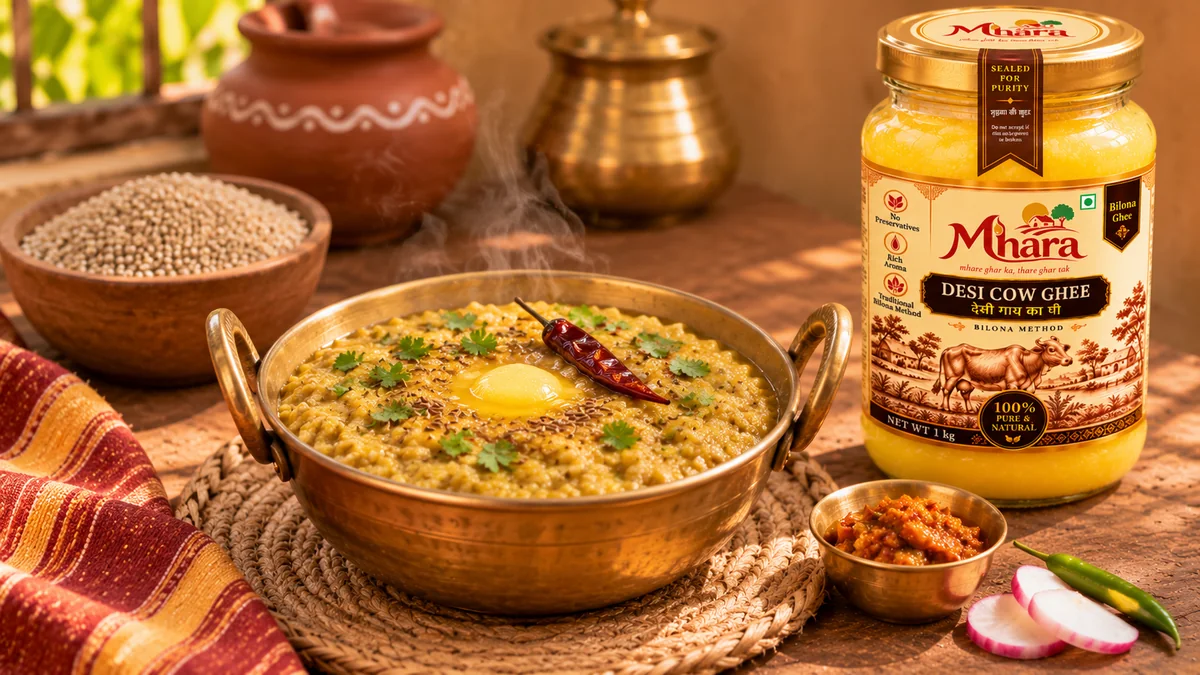
Bajre ka khichda is a Rajasthani winter one-pot of pounded pearl millet (bajra) and moong dal, cooked slowly with salt and water until soft and thick, then served with a pool of ghee on top. It needs about 20 minutes of pounding and an hour of gentle cooking, or less in a pressure cooker.
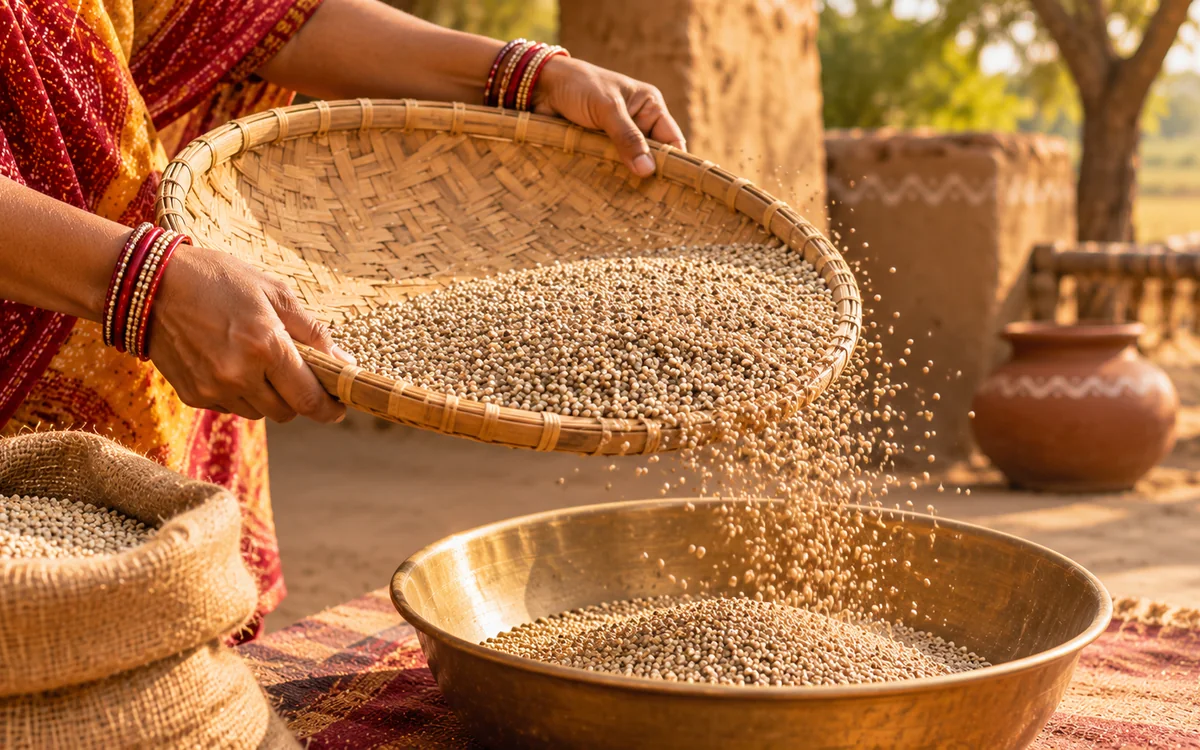
On a January morning in our village, the first sound after the milking is the thud of a musal in the okhli. Someone in the courtyard is pounding bajra, sprinkling a little water, pounding again, and tossing the grain in a chhaj so the husk flies off in the cold wind. By noon a heavy pot of khichda has been bubbling for an hour at the back of the chulha, and every plate gets a hollow pressed into the middle and filled with hot ghee.
Bajre ka khichda is the dish we make when it is properly cold. It is filling, cheap, and it tastes of the grain itself. Here is how we make it, including the city version with a mixer and a pressure cooker.
What is bajre ka khichda?
Khichda is the thicker, heartier cousin of khichdi. Instead of rice, it uses bajra, pearl millet, which is the main grain of the Shekhawati dry lands. The bajra is lightly pounded to loosen the husk and break the grain, then cooked with moong dal until it turns soft and porridge-thick, with a little bite left in it. Salt and water are often all that go into the pot. The flavour comes from the bajra, the long cooking, and the ghee at the end.
In many Rajasthani homes it is cooked on Makar Sankranti, and some families give bajra and moong as daan that day. But nobody waits for the festival. From the first cold nights of November to the end of February, bajre ka khichda turns up in our kitchens every week. It sits alongside bajre ki roti as the backbone of winter food here. Our list of winter foods with ghee has the rest.
Choosing and pounding the bajra
Buy whole bajra grain, not flour. Bajra flour goes stale and bitter quickly, and old grain does too, so buy from a shop with a fast turnover and taste one grain raw. It should taste mild and nutty, not bitter.
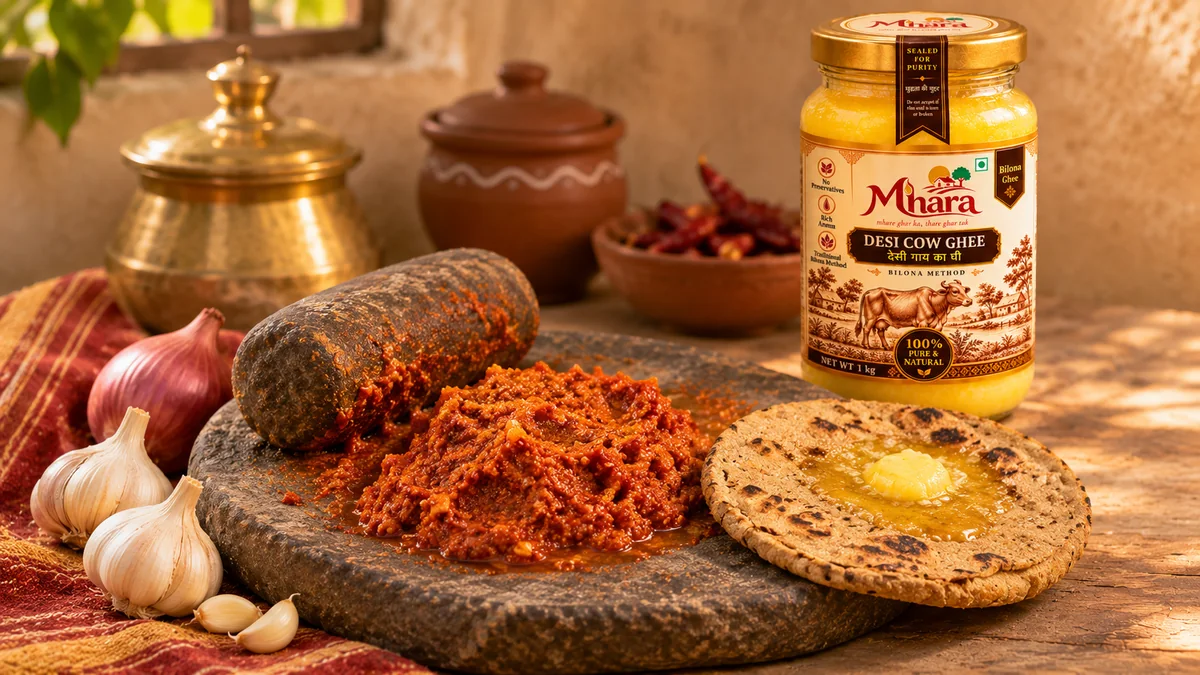
The village way: sprinkle about 2 tablespoons of water over 1 cup of bajra, rub it through, and leave it for 10 to 15 minutes so the husk softens. Pound it in an okhli with a musal for a few minutes, then winnow it in a chhaj to blow off the husk. Pound once more, lightly, so the grains break into two or three pieces. You want something like coarse dalia, not flour.
The mixer way: moisten and rest the bajra the same way. Pulse it in the small jar of a mixer, three or four short pulses, no more. Spread it on a plate and blow gently, or toss it in a sieve, to lose the loose husk. Pulse once more if most grains are still whole. Long grinding turns it to flour and makes the khichda pasty.
Moong dal and the right amount of water
We use half as much moong dal as bajra. Split green moong with the skin, moong chilka, is the village choice and holds its shape well. Yellow moong dal cooks softer and gives a smoother khichda. Rinse the dal and soak it with the pounded bajra for 30 to 60 minutes. Longer soaking, even overnight, shortens the cooking.
Khichda takes a lot of water: about 4 cups of water for every cup of bajra and dal together, so 6 cups for this recipe, with hot water kept ready to add later. It thickens a great deal as it cools, so it should look slightly loose when you take it off the flame.
How to cook bajre ka khichda
In a heavy pot or handi: bring the water to a boil with 1 teaspoon of salt and a teaspoon of ghee. Add the drained bajra and dal, stir, and bring back to the boil. Turn the flame down low, half cover, and cook for 60 to 75 minutes, stirring every few minutes and scraping the bottom. Add hot water whenever it gets thick and starts to catch. It is done when the bajra is soft right through and the pot looks like a thick, creamy porridge with visible grains.
In a pressure cooker: add the soaked bajra and dal, 5 cups of water, salt and a teaspoon of ghee. Cook on high for one whistle, then on the lowest flame for 25 to 30 minutes. Let the pressure drop on its own. Open, mash lightly with the back of a ladle, add a cup of hot water and simmer for five minutes, stirring, until it comes together.
Some families add a simple tadka at the end: a tablespoon of ghee, half a teaspoon of jeera and a pinch of hing, poured over and stirred in. Our house leaves it plain and lets the ghee on the plate do the work.
Bajre ka khichda with ghee: how to serve it
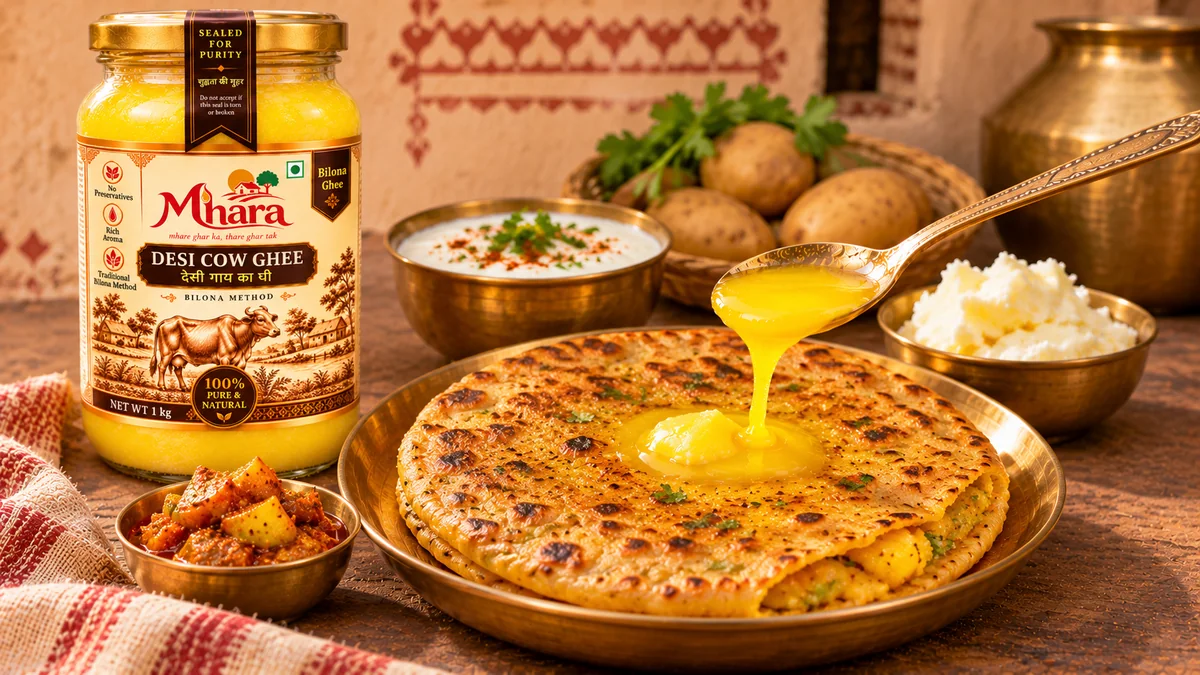
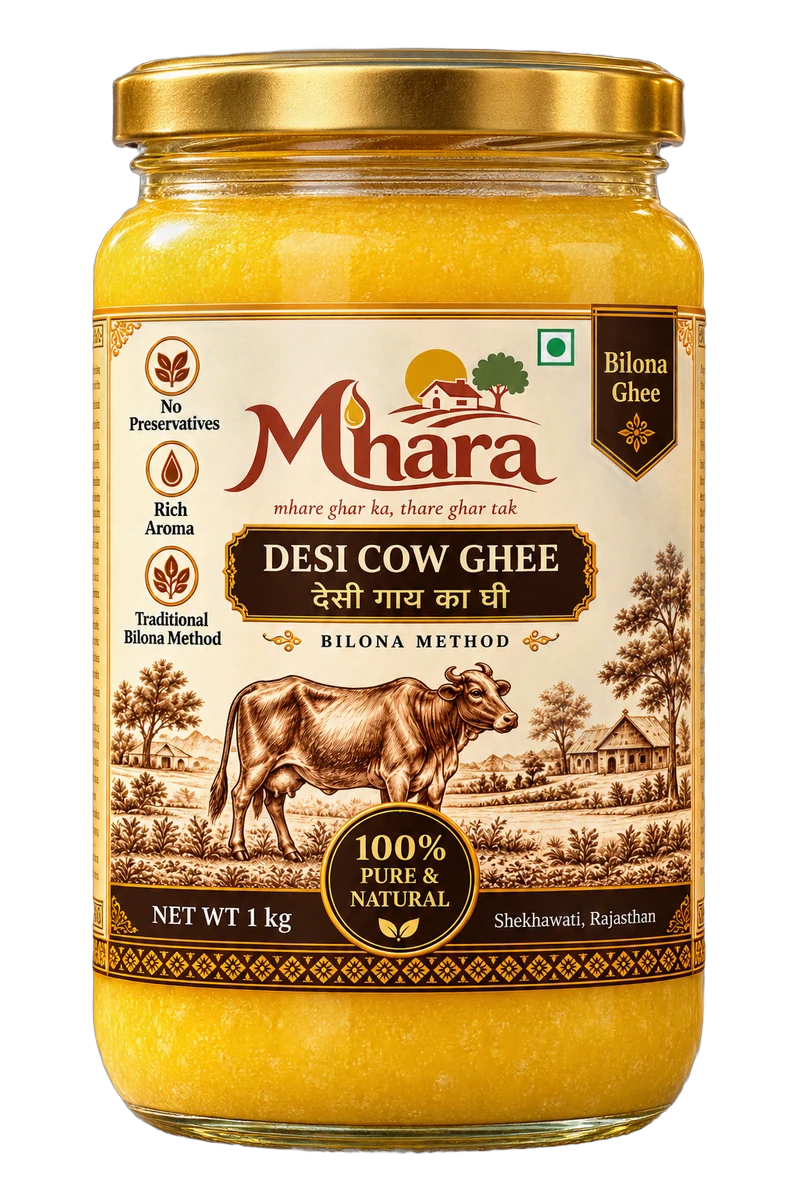
Spoon the khichda hot onto a plate or into a bowl. Press a hollow in the middle with the back of the spoon and pour in a tablespoon of melted ghee. That pool is the heart of the dish. Each spoonful is dragged through it. With ghee this much in front, use one you enjoy tasting, like our desi cow bilona ghee, whose nutty aroma suits the earthy bajra.
What goes with it depends on the house and the mood:
- Sweet: a piece of gud or a spoon of shakkar crumbled over the ghee. Children love it this way.
- Savoury: a bowl of Rajasthani kadhi poured over, the most common pairing in our village.
- Hot: a little lahsun ki chutney on the side, with a glass of chhach.
- Full thali: with ker sangri, papad and pickle.
Most adults are happy with a tablespoon of ghee on a bowl. More is a habit, not a rule.
What goes wrong, and how to fix it
- Grains still hard: not soaked or pounded enough, or not cooked long enough. Add hot water and keep cooking on low. Next time, break the grain a little more.
- Bitter taste: old or stale bajra. There is no fix in the pot. Buy fresher grain next time.
- Sticky and pasty: bajra ground too fine. Pulse less next time.
- Burnt at the bottom: thin pot or too little stirring. Move to a heavy pot and do not scrape the burnt layer into the rest.
- Too thick by the time it reaches the table: stir in hot water. Khichda always sets as it cools.
Leftovers and a few honest notes
Leftover khichda sets firm overnight. Loosen it with hot water and warm it in a pan with a spoon of ghee, or eat it cold with chhach the way older people in our village do on a sunny afternoon. Keep it in the fridge and finish it within a day or two.
In our tradition bajra is called a warming grain, which is why bajre ka khichda belongs to winter. What we can say with confidence is that bajra is a whole grain with fibre, and khichda with dal is a filling, plain meal. If you have diabetes or a digestive problem, ask your doctor how much suits you, and go easy at first if you are not used to millet. Our note on why villages eat more ghee in winter sorts the old reasons from the new evidence.
Recipe card
Ingredients
- 1 cup (190 g) whole bajra (pearl millet)
- 1/2 cup (100 g) split green moong dal with skin (moong chilka), or yellow moong dal
- About 6 cups (1.4 litres) water, plus hot water to adjust
- 1 tsp salt, or to taste
- 1 tsp desi cow bilona ghee for cooking
- 4 tbsp desi cow bilona ghee to serve, 1 tbsp per bowl
- Optional tadka: 1 tbsp ghee, 1/2 tsp jeera, a pinch of hing
- To serve: gud or shakkar, Rajasthani kadhi, lahsun chutney, chhach
Method
- Sprinkle 2 tbsp water over the bajra, rub it through and leave for 10–15 minutes so the husk softens.
- Pound the bajra in an okhli for a few minutes, or pulse it 3–4 times in the small jar of a mixer.
- Winnow or blow off the loose husk. Pound or pulse once more, lightly, until most grains break into 2–3 pieces, like coarse dalia.
- Rinse the moong dal and soak it with the pounded bajra for 30–60 minutes. Drain.
- Pot method: boil 6 cups water with the salt and 1 tsp ghee, add the bajra and dal, return to the boil, then cook half covered on a low flame for 60–75 minutes, stirring often and adding hot water whenever it thickens.
- Pressure cooker method: cook the bajra, dal, 5 cups water, salt and 1 tsp ghee on high for one whistle, then on the lowest flame for 25–30 minutes. Let the pressure drop naturally.
- Open the cooker, mash lightly with a ladle, add a cup of hot water and simmer for 5 minutes, stirring, until thick and creamy with visible grains.
- If you like, pour over a tadka of ghee, jeera and hing and stir it in.
- Serve hot. Press a hollow in each bowl and fill it with 1 tbsp melted ghee.
- Eat with gud or shakkar, or with kadhi, lahsun chutney and chhach. Refrigerate leftovers and finish within 1–2 days.
Questions people ask
What is the difference between khichdi and khichda?
Khichdi is usually rice and dal cooked together. Khichda in Rajasthan is made with pounded bajra or wheat instead of rice, cooked longer with moong dal, and comes out thicker and grainier. Both are finished with ghee, but khichda is the heavier winter dish.
Do you need to soak bajra for khichda?
Yes, it helps. Sprinkle the bajra with a little water before pounding so the husk loosens, then soak the pounded bajra with the moong dal for 30 to 60 minutes. Soaking overnight cuts the cooking time further.
Can I make bajre ka khichda without an okhli?
Yes. Lightly moisten the bajra, rest it for 10 to 15 minutes, then pulse it three or four times in the small jar of a mixer. Blow off the loose husk and pulse once more if needed. Stop before it turns into flour.
How many whistles for bajra khichda in a pressure cooker?
Cook on high for one whistle, then on the lowest flame for 25 to 30 minutes, and let the pressure drop on its own. Open, mash lightly, add a cup of hot water and simmer for a few minutes until it comes together.
What do you eat with bajre ka khichda?
In Rajasthan it is eaten with a pool of ghee and gud or shakkar for a sweet bowl, or with kadhi, lahsun chutney and chhach for a savoury meal. Ker sangri, papad and pickle make it a full thali.
Why does my bajra khichda taste bitter?
Usually the bajra is old or stale. Millet turns bitter faster than wheat or rice once it ages. Buy whole bajra from a shop that sells a lot of it, taste a raw grain before cooking, and store it airtight in a cool place.